



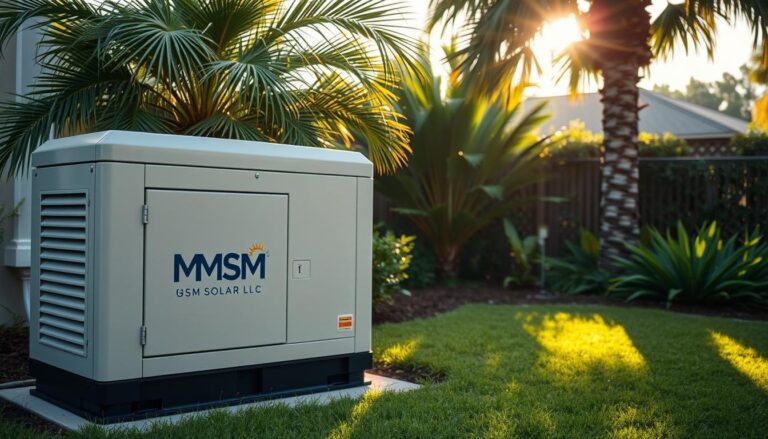
When hurricanes or severe thunderstorms roll through the Florida Panhandle, power outages can stretch for hours, or even days. That’s why more homeowners are pairing solar with battery backup. But one of the biggest decisions you’ll face is whether to go with a whole-home backup or an essential-loads backup system.
This guide breaks down the differences, the role of hybrid inverters, and how load shedding and generator integration can create a more resilient setup in Florida’s Panhandle counties.
Also Read: Ground-Mount vs Roof-Mount in the Panhandle: Wind Zones, Sandy Soil & Setback Rules
Find us here:
Solar Cost Calculator – Florida Panhandle Only
* Estimate based on $3.25 per watt for solar installation.
* For Tesla Powerwall 3 Batteries, $15,000 for the first battery, $12,000 for each additional battery.
* Other variations and types of Batteries are available.
Whole-Home Backup: Maximum Coverage
A whole-home solar battery is designed to keep every circuit in your house running during an outage.
Pros
- Seamless living, your HVAC, water heater, pool pump, and appliances all stay powered.
- Peace of mind, no need to choose what stays on or off.
- Property value boost, whole-home systems are seen as premium upgrades in Florida real estate.
Cons
- Higher cost, multiple batteries often required.
- Shorter runtime if loads aren’t managed carefully.
- Large footprint, more storage space needed for battery cabinets.
In the Panhandle, where extended outages after hurricanes are common, whole-home backup works best for larger households or those with medical equipment that can’t go down.
You might also be interested in reading: Do Solar Panels Work on Cloudy Days? Florida Panhandle’s Trusted Solar Experts
Essential-Loads Backup: Targeted Reliability
Instead of covering your entire house, an essential-loads setup only backs up critical circuits.
Typical essential loads include:
- Refrigerator and freezer
- Well pump or sump pump
- Wi-Fi/router and outlets for phones/laptops
- A few lights and ceiling fans
Benefits
- Lower upfront cost, requires fewer batteries.
- Longer backup duration, by limiting what runs, stored energy lasts longer.
- Customisable, you decide which loads matter most.
This option is popular with Santa Rosa and Walton County homeowners who want resilience without the high price tag of a whole-home setup.
Hybrid Inverters: The Brains of the System
Both whole-home and essential-loads setups rely on hybrid inverters. These smart devices:
- Switch seamlessly between grid, battery, and solar.
- Allow load shedding, automatically turning off heavy appliances when the battery runs low.
- Integrate with generators for extended backup.
In fact, many Okaloosa and Bay County installs now use hybrid inverters because they future-proof your home, making it easier to add more batteries or a standby generator later.
Generator Integration: Layered Protection
Solar + batteries alone may not cover multi-day outages after a hurricane. That’s why many Panhandle systems now include:
- Automatic transfer switches (ATS) for generators.
- Solar + battery + generator hybrids, where solar runs daily loads, batteries cover the night, and generators step in when storms drag on.
This layered approach ensures you’ll always have a power source, even if clouds block the sun for days.
Cost Comparison
- Essential-loads setup: $12,000–$18,000 (1–2 batteries, hybrid inverter, installation).
- Whole-home backup: $25,000–$40,000+ (3–6 batteries, advanced load management).
- Add a generator: $5,000–$10,000 depending on fuel type and size.
Federal tax credits apply to both solar and batteries, helping offset upfront costs.
Which Setup Is Right for You?
- Choose whole-home backup if: you want uninterrupted living, run large appliances daily, or rely on medical equipment.
- Choose essential-loads backup if: you’re focused on affordability and stretching runtime during outages.
Final Word
The Florida Panhandle’s mix of hurricanes, sandy soil, and humid climate makes resilient solar battery setups essential. Whether you go with a whole-home solar battery or an essential-loads system, pairing it with a hybrid inverter, and possibly a generator, ensures your family stays safe, comfortable, and powered through the next storm.
