
Solar system additions for home and business
Your solar system should grow with your energy needs. We add panels, battery storage, generator inlets and EV charging to existing systems across the Panhandle — designed around the equipment you already own, not ripped out and replaced.
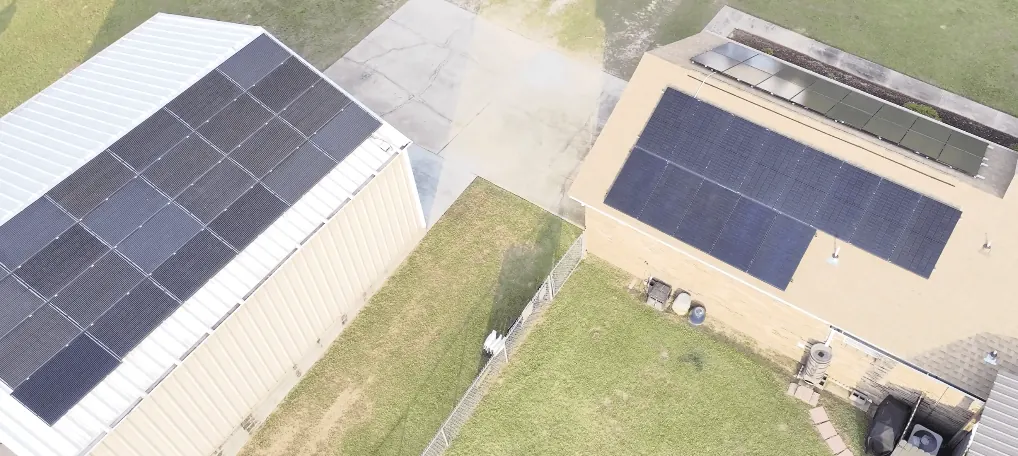
Four ways to get more
from what you own
More solar panels for increased power
Energy needs grow — a new addition on the house, a pool pump, a workshop, a growing business, or simply a household using more than it did five years ago. Extra modules raise production and savings, and we design the expansion to match your existing array so it looks and performs like one system rather than two.
Battery storage for energy independence
Stay powered when the sun is not shining. Storage banks your excess daytime production for night-time use, cloudy stretches and outages — less reliance on the grid and far more control over your electricity. Powerwall 3 runs about $15,000 for the first battery and $12,000 for each additional; other battery manufacturers are available.
Generator plug installations for backup power
Do not let a blackout shut your home or business down. A generator inlet lets you keep essential circuits running when the grid goes down, integrated properly with your solar system and main panel — safely interlocked, code-compliant, and simple enough to use in the dark during a storm.
EV chargers powered by the sun
Charging an electric vehicle from the grid undoes part of the point. A solar-integrated Level 2 charger lets your own roof fuel the car — cheaper per mile, lower carbon, and sized so your charger and your house are not fighting over the same service capacity.
Want more out of the system you already own?
Tell us what equipment you have and what you are trying to solve. We will tell you what is possible and what it costs.
Additions fail when nobody checks compatibility.
Bolting extra panels onto a system is easy. Bolting them on correctly is the part that decides whether you gain production or create a fault. Before we quote an addition, we check four things — and occasionally one of them is the reason we advise against the work.
- Inverter headroom — whether your existing inverter can accept more DC without clipping away the gain.
- Interconnection limits — what your utility permits on your service, which caps system size regardless of roof space.
- Panel and breaker capacity — whether the main service panel can carry a battery, EV charger or generator inlet.
- Roof life and layout — remaining shingle life, and where new modules actually belong for production and appearance.
Sometimes the right answer is a new inverter
If your existing inverter has no headroom, adding panels behind it buys nothing. We will show you both options — a second inverter or a replacement — with the production difference for each, so the decision is yours on real numbers.
Why choose us for your additions
| What you get | Why it matters |
|---|---|
| Seamless additions | Compatibility with your existing setup verified before anything is ordered. |
| High-quality equipment | Durable, efficient components chosen for long-term output, not lowest bid. |
| Expert installation | Licensed technicians with 40+ years of aircraft mechanical and electrical background. |
| Customised solutions | Upgrades sized to your actual energy use and the loads you care about. |
| Financing options | Affordable payment plans, including non-collateral solar loans. |
| We service what we add | The crew that installs the addition is the crew that comes back if it ever needs attention. |
What a battery actually does
during an outage
The most common disappointment in home storage is expecting a battery to run the whole house exactly as before. It can — with enough batteries. The honest approach is deciding what must stay on, then sizing to that.
| Load | Realistic expectation on storage |
|---|---|
| Fridge, freezer, lights, internet | Comfortably carried, typically for a day or more with solar recharging by day. |
| Well pump / septic pump | Supported, and usually a priority circuit for homes outside city water. |
| Central air conditioning | Possible, but it is the load that drains a battery fastest. Often needs more than one unit. |
| Electric range, dryer, water heater | Generally excluded from backup — very high draw for the benefit returned. |
| Pool pump | Usually excluded during an outage; easy to run again once the grid returns. |
| EV charging | Not during an outage. Charge from solar and grid, not from your backup reserve. |
Storage is about resilience more than savings
In Florida's current rate structure, batteries rarely pay for themselves on arbitrage alone. What they buy you is a house that keeps running through hurricane season. We would rather you understood that before buying than after.
Solar addition FAQs
Can I add panels to my existing solar system?
Usually yes. The deciding factors are your inverter's remaining headroom and your utility's interconnection limit — we check both before quoting. If the existing inverter is maxed out, we will show you the cost and production difference of adding a second one versus replacing it.
Can you add a battery to a system you did not install?
Yes. We add Powerwall and other storage to existing systems of any brand, including orphaned systems whose original installer has closed. Compatibility with your inverter and main panel is checked first.
How much does battery storage cost?
Powerwall 3 runs approximately $15,000 for the first battery and $12,000 for each additional unit, installed. Other battery manufacturers are available and sometimes suit a smaller backup goal better. The right number of batteries depends on which loads you want to keep running.
Will a battery let me run my air conditioning in an outage?
It can, but AC is the heaviest load in the house and will drain a single battery quickly. If whole-home cooling through an outage is the goal, plan for multiple units — we will size it honestly rather than optimistically.
Is a generator plug better than a battery?
Different tools. A generator inlet is far cheaper and runs as long as you have fuel, but it is manual and noisy. A battery is silent, automatic and recharges from your roof. Plenty of Panhandle homes end up with both.
Can I charge my EV from my solar panels?
Yes, with a properly sized Level 2 charger integrated into your system. The key check is service capacity — a charger and a battery and an expanded array all draw on the same main panel, so the design has to account for all of it.
Do additions affect my existing warranties?
Manufacturer warranties on your existing equipment remain intact; our work carries its own workmanship warranty. Where an addition touches original equipment, we document what was done so no future claim gets muddied.
Is financing available for additions?
Yes — affordable payment plans including non-collateral solar loans, so an upgrade does not have to be paid in one lump sum.
Find us for solar
system additions
Florida Panhandle areas we service — additions, storage, generator inlets and EV charging:
Grow your system with your needs.
Panels, storage, backup power or EV charging — tell us the goal and we will design the addition around what you already own.