



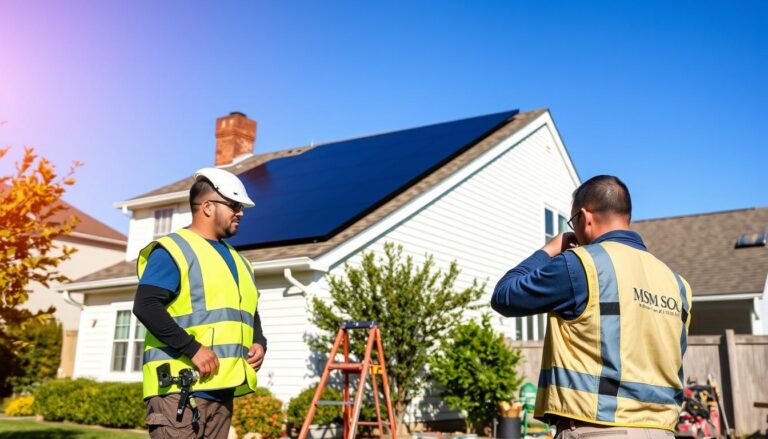
Florida’s sunshine isn’t just great for beach days, it’s also a money-saver for homeowners who invest in solar. One of the least understood but most valuable incentives is the Florida solar property tax exemption, which ensures that adding solar panels won’t raise your property tax bill.
If you live in the Florida Panhandle, Santa Rosa, Okaloosa, Escambia, Walton, Bay, Gulf, Jackson, or Washington County, this benefit can make a big difference to your return on investment.
Let’s break it down with numbers, examples, and what it means for you.
Also Read: Selling a Home with Solar in the Panhandle: Appraisals, Transfer, & What Buyers Ask
Find us here:
What the Florida Solar Property Tax Exemption Covers
Since 2018, Florida law has guaranteed:
- 100% exemption on the added value of residential solar systems.
- Applies to rooftop PV, ground-mount arrays, and battery storage.
- Runs through December 31, 2037 (renewed and locked in by state voters).
In simple terms: your county appraiser will not increase your assessed value based on your solar system.
Solar Cost Calculator – Florida Panhandle Only
* Estimate based on $3.25 per watt for solar installation.
* For Tesla Powerwall 3 Batteries, $15,000 for the first battery, $12,000 for each additional battery.
* Other variations and types of Batteries are available.
Example: How Much Do You Actually Save?
Let’s put the math into dollars and cents:
- Average 7 kW system cost in NW Florida (2025): $18,000
- Assessed value if not exempt: $18,000
- Typical property tax rate in the Panhandle: ~1%
Without exemption: $18,000 × 1% = $180 extra tax every year
With exemption: $0 additional tax
Over a 25-year panel lifespan, that’s $4,500 in avoided property taxes.
What About Commercial & Rental Properties?
- Residential (homestead & second homes): 100% value exemption
- Commercial (businesses, rentals, Airbnbs): 80% exemption
So if you own a short-term rental in Destin or Panama City Beach, you’ll only be assessed on 20% of the added system value. Still a significant savings if your goal is lowering turnover costs and boosting ADR.
County Appraiser Process in the Panhandle
Each county handles paperwork slightly differently, but here’s what to expect:
- Permit filed for your solar installation.
- County Property Appraiser receives notice of the improvement.
- Exemption automatically applied—no separate application required.
- Your TRIM (Truth in Millage) notice will reflect solar as “exempt value.”
Tip: Always double-check your TRIM notice in the first tax cycle after going solar to make sure the exemption applied correctly.
Why This Matters for ROI
Solar already cuts your electric bill, adds resale value, and shields you from utility hikes. The property tax exemption is like icing on the cake—ensuring that your home’s value goes up without your tax bill doing the same.
Combine this with the 30% federal solar tax credit and net metering, and Florida Panhandle homeowners are positioned for some of the strongest solar savings in the country.
Key Takeaways
- Florida’s solar property tax exemption prevents your property taxes from increasing when you add solar.
- Homeowners save $100–$300+ per year depending on system size.
- Exemption lasts until 2037 and covers both PV and storage.
- Rental & commercial properties enjoy an 80% exemption.
- Always verify the exemption on your TRIM notice after installation.
Ready to see what solar + exemptions can save you in the Panhandle?
MSM Solar helps homeowners in Escambia, Okaloosa, Walton, Bay, and beyond design systems with maximum ROI.
Get your free savings estimate today.
