



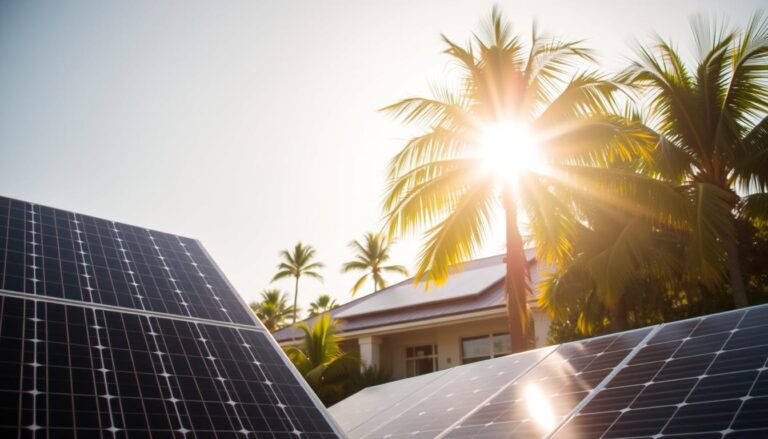
In rural Northwest Florida, electricity isn’t just for comfort, it’s critical for daily operations. Whether you’re running a barn, a metal workshop, or a well pump on your property, reliable power is essential. And in areas where outages are common or utility connections are expensive, off-grid solar for well pumps and ag loads in Florida can be a game-changer.
Here’s how Panhandle property owners are designing smart rural solar setups with critical load coverage, hybrid inverters, and generator pairing.
Also Read: Mobile & Manufactured Homes: Can You Go Solar in the Panhandle? Requirements & Options
Find us here:
Solar Cost Calculator – Florida Panhandle Only
* Estimate based on $3.25 per watt for solar installation.
* For Tesla Powerwall 3 Batteries, $15,000 for the first battery, $12,000 for each additional battery.
* Other variations and types of Batteries are available.
Why Go Off-Grid in Rural Florida?
- Unreliable grid power: Storms and hurricanes often leave farms and rural properties without power for days.
- Distance from service lines: Running new utility connections can cost tens of thousands.
- Critical water needs: Well pumps for livestock, irrigation, or household use can’t go down during outages.
With solar + storage + generator pairing, you can build a resilient system that keeps operations moving, even when the grid fails.
Well Pumps: The Core Load
A 240V well pump is one of the biggest drivers in a rural solar setup.
- 1 HP pump: ~1,000 watts running load, but 3,000+ watts surge at startup.
- 2 HP pump: ~1,500 watts running load, with 4,000–5,000 watt surge.
- Pumps usually cycle 1–3 hours daily, depending on irrigation or livestock needs.
This surge requirement means your inverter must be sized for short bursts of high load, a common mistake when people undersize off-grid systems.
Metal Buildings & Barn Loads
Typical rural structures in Escambia, Washington, and Jackson counties use power for:
- LED lighting and fans
- Small refrigeration units or freezers
- Tools and welders in metal shops
- Security cameras and Wi-Fi routers
These can often be separated into an “essential loads panel”, ensuring only critical functions draw from the battery bank during outages.
Hybrid Inverters: The Flexible Solution
Unlike simple off-grid inverters, hybrid inverters allow you to:
- Run directly from solar when the sun is shining.
- Charge batteries for nighttime and storm use.
- Auto-start a generator when batteries run low.
- Seamlessly switch between sources without downtime.
For the Panhandle’s rural properties, this three-layered approach (solar + storage + generator) is the gold standard.
Generator Pairing for Resilience
While solar and batteries can cover daily loads, cloudy weeks after hurricanes make generators a must-have backup.
- Propane or diesel gensets integrate with hybrid inverters.
- Auto-transfer switches (ATS) ensure hands-free switching.
- Keeps well pumps and refrigeration powered even when batteries are drained.
This redundancy is especially important for farmers with livestock or property owners far from service crews.
Cost Snapshot for Rural Setups
- 4–6 kW off-grid solar + battery bank: $18,000–$28,000 (after tax credit).
- Hybrid inverter: $3,000–$5,000.
- Generator pairing: $5,000–$8,000 depending on size.
Annual savings aren’t just about offsetting bills, they’re about avoiding spoiled feed, dead crops, or costly downtime.
Key Takeaways
- Off-grid solar well pumps in Florida ensure water access during outages.
- Metal barns and rural shops benefit from hybrid inverters with generator pairing.
- Inverter surge capacity is critical for well pump startup loads.
- Redundant power protects both property value and agricultural operations.
Final Word
For rural homeowners and farmers in the Florida Panhandle, designing a solar + battery + generator system isn’t just about savings, it’s about security. Whether powering a well pump, barn, or metal workshop, off-grid solar in Florida delivers independence and resilience where it matters most.
