



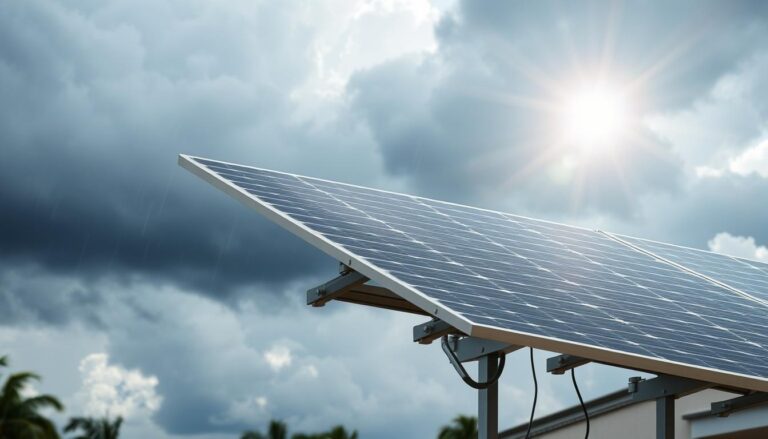
Living in Pensacola, Florida, means sunshine and sea breezes, but also the occasional hurricane. For homeowners considering solar, one of the first questions is natural: “Can solar panels really survive a hurricane?”
The short answer? Yes, when they’re installed correctly.
Today’s hurricane-rated solar panels and mounting systems are engineered for Florida’s toughest weather. In fact, many homes with solar have fared better than their neighbors during storms, keeping the lights on when the grid went down.
Also Read: Best Roof Types for Solar in Panama City Homes (2025 Guide)
In this guide, we’ll explain how hurricane-proof solar panels in Pensacola are designed, tested, and installed, and what you should know before adding solar to your coastal home in 2025.
Find us here:
Solar Cost Calculator – Florida Panhandle Only
* Estimate based on $3.25 per watt for solar installation.
* For Tesla Powerwall 3 Batteries, $15,000 for the first battery, $12,000 for each additional battery.
* Other variations and types of Batteries are available.
Florida Building Codes: Built for Hurricanes
Florida has the most rigorous wind and uplift codes in the United States, and Pensacola is no exception. Located in Escambia County, the city lies in a 150–160 mph wind zone under the ASCE 7 building code.
That means:
- Solar systems must be engineered for winds stronger than most Category 4 hurricanes.
- Installers must provide PE-stamped (Professional Engineer) designs for permitting.
- Racking, anchors, and fasteners must meet specific uplift resistance standards.
In other words, your system isn’t just “tough”, it’s code-certified hurricane resilient.
How Solar Panels Are Tested for Storms
Solar panels undergo rigorous durability tests before they ever reach your roof.
Key Tests Include:
- Wind Load Tests: Simulate hurricane-force gusts up to 170 mph.
- Uplift and Pressure Testing: Ensures frames and glass won’t separate from racking.
- Hail Impact Tests: 1-inch ice balls shot at 50 mph to mimic debris impacts.
- Salt Mist Corrosion Tests: Required for coastal installations to prevent rusting.
Panels that pass these tests earn UL and IEC certifications, your assurance that they can handle Pensacola’s combination of salt air and storms.
The Real Hero: The Mounting System
When it comes to hurricane safety, the mounting system is just as important as the panels themselves.
1. Roof Attachments
- Anchors are drilled directly into roof rafters, not just decking.
- Stainless steel lag bolts are sealed with flashing to prevent leaks.
- For metal roofs, clamps attach directly to seams, no penetrations required.
2. Racking Systems
- Aluminum rails are hurricane-rated to specific uplift standards.
- Spacing and attachment points are calculated based on wind load zones.
- In Pensacola, most racking systems are rated up to 160–170 mph.
3. PE-Stamped Design
Every install must include an engineer’s certification letter confirming compliance with Florida’s structural wind codes. This is required for both permitting and insurance.
How Hurricane-Proof Panels Perform in Real Storms
After hurricanes like Michael (2018) and Sally (2020), researchers surveyed solar installations across the Florida Panhandle. The results were impressive:
- Systems installed to Florida code survived winds over 150 mph with minimal damage.
- Failures were usually due to roof damage, not panel detachment.
- Homes with solar often regained power faster, especially those with batteries.
Example: Pensacola Homeowner Case Study
A 9.6 kW system in Escambia County, installed in 2019, went through Hurricane Sally with 100+ mph gusts. The panels stayed intact; only a few shingles lifted nearby. The inverter shut down automatically for safety and resumed operation once power was restored.
Roof Type Matters in Hurricane Zones
Not all roofs handle storms, or solar, the same way.
| Roof Type | Hurricane Performance | Solar Suitability |
|---|---|---|
| Standing Seam Metal | Best – Clamps on seams, no penetrations, high uplift rating. | Ideal |
| Asphalt Shingle | Good if new and nailed to code. | Excellent |
| Tile Roof | Heavy and durable, but tiles can break during install. | Good with special mounts |
| Flat Roof | Works well with penetrated racking; ballasted systems not recommended. | Moderate |
If your roof is over 10–12 years old, reroofing before installing solar is smart.
Adding Batteries for Storm Resilience
Panels alone can’t power your home during a grid outage, they automatically shut off for safety. But pair them with batteries, and you’ll have reliable backup.
Benefits of Solar + Battery Systems in Pensacola
- Keep refrigerators, lights, and Wi-Fi running during blackouts.
- Avoid food spoilage and medication loss.
- Automatically disconnect from the grid when utility lines go down.
- Recharge during daylight hours.
Many local homeowners install Tesla Powerwall or Enphase IQ Battery units alongside solar for seamless power through storms.
Insurance & Warranties
Homeowner’s Insurance
Most policies in Florida cover solar panels as part of the dwelling. You’ll need to:
- Notify your insurer after installation.
- Ensure panels are listed in your replacement cost coverage.
- Keep copies of your engineering letters and invoices.
Warranties
- Panels: 25-year product and power warranty.
- Inverters: 10–25 years depending on brand.
- Racking: 10–20 years, often transferable.
Manufacturers like Qcells, REC, and Silfab now publish hurricane resistance data, which your installer can include with your warranty documents.
Tips for Hurricane-Proof Solar Installation in Pensacola
- Choose a Florida-licensed contractor.
- Look for CVC or EC license numbers.
- Ask for a PE-stamped plan.
- This ensures compliance with Florida wind codes.
- Use stainless steel hardware.
- Prevents corrosion from salt air.
- Request uplift-tested racking.
- Brands like IronRidge XR or Unirac Solarmount are rated for 160+ mph winds.
- Clean gutters and check flashings annually.
- Keeps roof integrity strong.
- Add surge protection.
- Protects inverters from lightning surges common along the Gulf Coast.
What Happens If a Hurricane Damages Your System?
If panels are damaged by debris or roof failure, here’s what to do:
- Document Immediately: Take timestamped photos before moving anything.
- Pull Inverter Data: Show when production dropped.
- Call Your Installer: Have them inspect and issue a report.
- File an Insurance Claim: Include photos, logs, and reports.
- Repair or Replace: Most insurers cover full replacement if damage is storm-related.
Systems installed to Florida standards rarely fail, but proper documentation ensures you’re covered if they do.
Cost vs. Peace of Mind
Yes, hurricane-rated solar systems cost slightly more, typically 5–10% higher than basic setups. But in Pensacola’s climate, that extra investment is worth it.
- Standard 7.5 kW system: ~$20,000 before incentives.
- Hurricane-rated equivalent: ~$21,500–$22,000.
- With the 30% federal tax credit: ~$15,000 net.
Considering that Florida homeowners face hurricanes almost every season, that extra $1,500–$2,000 provides priceless protection and confidence.
Key Takeaways
- Hurricane-proof solar panels in Pensacola are built and tested for 150+ mph winds.
- Florida’s ASCE 7 code and engineering requirements ensure durability.
- Roof type and mounting method are critical, metal roofs perform best.
- Add batteries for outage resilience and peace of mind.
- Always work with licensed, local installers familiar with Gulf Coast conditions.
Final Word
Hurricanes are part of life on Florida’s Emerald Coast, but that doesn’t mean you have to sacrifice clean energy or energy independence. With hurricane-rated panels, certified racking, and a properly engineered design, your solar system can weather Pensacola’s toughest storms and keep powering your home for decades.
When installed by an experienced Florida contractor, solar is not just a smart financial investment, it’s a resilient one.
