



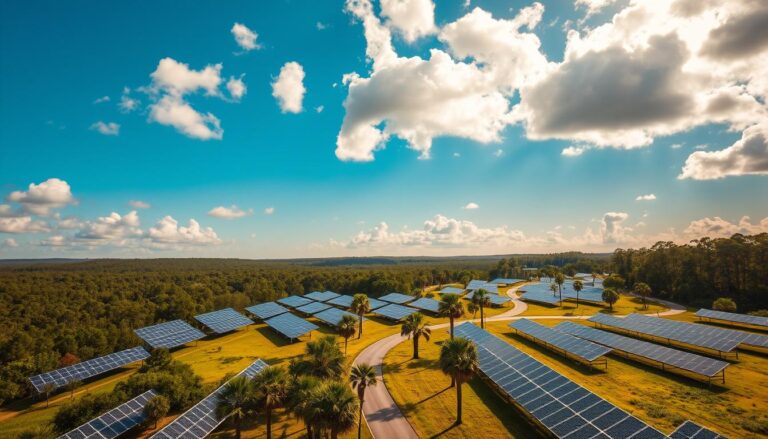
Solar panels are built to last 25–30 years, but like every technology, they eventually reach the end of their useful life. With thousands of systems now installed across the Florida Panhandle, from Pensacola to Panama City to Tallahassee, the question is no longer “Should I go solar?” but “What happens to my panels when they’re done?”
This is where solar panel recycling comes in, a growing part of Florida’s clean energy ecosystem that ensures yesterday’s renewable energy technology doesn’t become tomorrow’s landfill problem.
Also Read: Solar for Vacation Rentals on 30A & PCB: Boosting ADR with Clean Energy
In this guide, we’ll explore solar panel recycling options in the Florida Panhandle, how the process works, which materials are recovered, and what homeowners and installers should plan for as the first generation of solar panels begin reaching end-of-life.
Solar Cost Calculator – Florida Panhandle Only
* Estimate based on $3.25 per watt for solar installation.
* For Tesla Powerwall 3 Batteries, $15,000 for the first battery, $12,000 for each additional battery.
* Other variations and types of Batteries are available.
Why Solar Panel Recycling Matters
Solar panels are incredibly durable and sustainable during their lifetime, but when improperly disposed of, they can pose environmental risks.
Each panel contains materials like glass, aluminum, silver, and silicon, most of which can be recovered and reused. But panels also include trace amounts of heavy metals such as lead or cadmium in certain models, which require responsible handling.
With more than 3 million solar installations nationwide and tens of thousands in the Panhandle alone, recycling ensures that:
- Valuable raw materials are recovered and reused.
- Toxic materials are safely handled and kept out of landfills.
- The carbon footprint of solar manufacturing continues to decline.
In short, recycling completes the renewable energy lifecycle, turning yesterday’s panels into tomorrow’s clean technology.
When Do Solar Panels Reach End-of-Life?
Most panels are warrantied for 25 years, but that doesn’t mean they suddenly stop working afterward.
Instead, efficiency slowly decreases, typically 0.5% per year. A 25-year-old panel might still operate at 85–90% of its original capacity.
That said, panels may need replacement earlier due to:
- Storm or hurricane damage.
- Roof replacements or remodeling.
- Upgrading to higher-efficiency modules.
- Fire or electrical damage.
When this happens, homeowners often face a new question: Where can I take old solar panels in the Florida Panhandle?
How Solar Panel Recycling Works
Solar panels are mostly made from recyclable materials, about 80–95% of their total mass can be recovered. The recycling process typically involves:
1. Collection and Transport
Installers or waste handlers collect panels from project sites and transport them to specialized recycling facilities.
2. Disassembly
Frames, junction boxes, and wiring are removed first, usually made of aluminum and copper, both highly recyclable.
3. Material Separation
Depending on the type of panel (crystalline silicon or thin-film), recyclers use different processes:
- Mechanical shredding and sieving (for silicon-based panels).
- Chemical baths and heat treatment (for thin-film panels).
4. Material Recovery
Recovered materials include:
- Glass (75% of the panel) – repurposed into new glass or insulation.
- Aluminum frame – recycled into new building materials.
- Silicon wafers – refined for new solar cells or electronics.
- Silver and copper – extracted and reused in wiring and circuits.
Where Can You Recycle Solar Panels in the Florida Panhandle?
As of 2025, there isn’t a large-scale dedicated solar recycling plant in the Panhandle yet, but there are several regional and national options available to homeowners, installers, and solar companies.
1. Recycle PV Solar (Nevada, Nationwide)
One of the first companies to specialize in solar recycling across the U.S., Recycle PV Solar accepts panels from anywhere in the country. They partner with freight companies for pickup or shipment.
Website: recyclepv.solar
What they accept: Crystalline silicon and thin-film modules.
How to ship: Palletize panels and coordinate pickup.
2. We Recycle Solar (Arizona + Florida Network)
This company offers nationwide solar panel recycling, with drop-off points and logistics support throughout Florida. They work with residential, commercial, and utility-scale projects.
Website: werecyclesolar.com
Florida coverage: Miami, Tampa, Jacksonville, and expanding to the Panhandle.
Bonus: They issue certificates of recycling, ideal for installers or real estate compliance.
3. Sunnking Electronics Recycling (Partnership Collection)
Some electronics recycling firms like Sunnking or ERI accept solar panels as part of larger e-waste programs. These are best for homeowners replacing small quantities (1–10 panels).
Check with your county solid waste department before drop-off:
- Escambia County: Beulah Landfill or designated hazardous waste collection.
- Bay County: Steelfield Landfill, accepts e-waste by appointment.
- Leon County: Solid Waste Management Facility, Tallahassee.
Always call ahead to confirm solar panel acceptance.
4. Manufacturer Take-Back Programs
Several major panel manufacturers now run take-back or recycling programs for old or damaged modules:
| Manufacturer | Program Name | Notes |
|---|---|---|
| First Solar | Global Recycling Services | Closed-loop recycling for thin-film panels. |
| SunPower | Product Stewardship Program | Works with installers to collect old panels. |
| LG (Legacy Panels) | Partner with recycling vendors | Contact local LG Energy reps. |
| Q CELLS / REC Group | Offer partner-based take-back solutions | Requires proof of purchase. |
If your installer used one of these brands, check your original warranty packet, many programs include recycling options.
What About Hurricane-Damaged Panels?
In the Florida Panhandle, storm-damaged panels are a growing concern. When hurricanes or high winds strike, some panels may break, crack, or lose their seal integrity.
If the internal cells are compromised, they can’t be reused, but they can be recycled.
Do NOT:
- Dispose of them in household trash or standard landfill bins.
- Attempt to remove broken glass without protective gear.
Instead:
- Photograph the damage for insurance claims.
- Contact your solar installer or manufacturer.
- Request safe pickup by an e-waste or solar recycler.
Recycling prevents toxic leaching from damaged modules and allows metals and glass to be recovered safely.
Florida Regulations & Recycling Initiatives
Currently, Florida does not have a statewide solar recycling mandate, but several policy frameworks are emerging:
- Florida DEP (Department of Environmental Protection) classifies solar panels as “universal waste”, similar to batteries and electronics, meaning they can’t be disposed of with normal household waste.
- HB 741 (2024 Session) introduced provisions encouraging voluntary recycling and labeling for panel composition.
- Florida Solar Energy Industries Association (FlaSEIA) has begun coordinating with recyclers to establish regional processing hubs.
As solar adoption grows, the Panhandle will likely see local partnerships between counties, waste facilities, and installers to create more convenient recycling options.
