



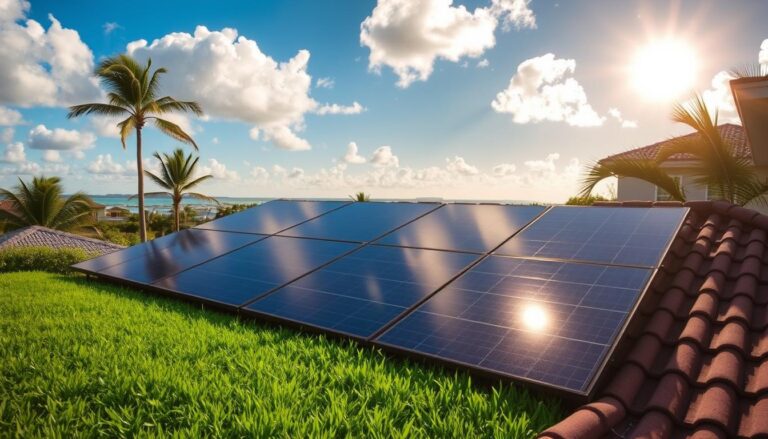
If you live in Marianna, Florida, you probably spend plenty of time outdoors, and if you’re lucky enough to have a pool, you already know that keeping it sparkling clean takes energy. A lot of it.
Pool pumps are one of the largest single energy users in Florida homes, running for hours each day to circulate and filter water. But there’s good news: solar energy isn’t just for powering your home, it can also run your pool pump efficiently, quietly, and at a fraction of the cost.
In this guide, we’ll break down how to size, install, and benefit from a solar + pool pump combo in Marianna, including cost ranges, equipment options, and estimated payback.
Solar Cost Calculator – Florida Panhandle Only
* Estimate based on $3.25 per watt for solar installation.
* For Tesla Powerwall 3 Batteries, $15,000 for the first battery, $12,000 for each additional battery.
* Other variations and types of Batteries are available.
Why Solar for Pool Pumps Makes Sense in Marianna
Marianna sits in the heart of the Florida Panhandle, blessed with abundant sunshine, averaging over 220 sunny days per year. That makes it a prime location for solar-powered systems, especially for outdoor equipment like pool pumps that operate during daylight hours.
Running your pool pump with solar offers several advantages:
- Free daily energy: Pool pumps consume energy during the same hours solar panels produce it, perfect alignment.
- Lower utility bills: Pool circulation can represent 20–30% of your home’s energy usage.
- Eco-friendly operation: Zero emissions, lower carbon footprint.
- Long-term ROI: With a 25-year lifespan, solar easily pays for itself through savings.
In short, Marianna’s sunlight doesn’t just heat your backyard, it can power it.
Option 1: Solar-Powered Pool Pump (Direct DC System)
The simplest and most direct option is a standalone solar pool pump system. These setups use DC-powered pool pumps connected directly to solar panels, no grid connection required.
How It Works
- Solar panels generate electricity during daylight hours.
- Power flows directly to the DC pump motor.
- Pump runs automatically whenever sunlight is available.
These systems are ideal if you want your pump to run during the day (when you’d normally circulate and filter your pool anyway).
Pros
- Off-grid, continues running even during power outages.
- Lower installation cost (no inverter or net metering needed).
- Simple setup with fewer components.
Cons
- Only runs when the sun is shining (unless paired with batteries).
- Flow rate may fluctuate with light intensity.
Best for: Smaller residential pools or homeowners looking for a low-maintenance, green upgrade.
Option 2: Grid-Tied Solar System Powering Your Pool
Most Marianna homeowners already have or plan to install a whole-home grid-tied solar system. You can easily size it to offset your pool pump’s energy use.
How It Works
- Your pool pump stays connected to household power.
- Your home solar array generates energy during the day.
- The energy produced offsets your pump’s consumption, effectively powering it “for free.”
This setup provides more flexibility and stability (your pump works even when it’s cloudy or at night), and it can also power other appliances.
Best for: Homeowners installing full solar systems who want to include pool energy in their offset calculation.
Understanding Pool Pump Energy Use
Let’s start with a baseline:
| Pump Type | Horsepower | Runtime | Daily Energy Use | Monthly Cost (Grid Power)* |
|---|---|---|---|---|
| Single-Speed | 1.5 HP | 8 hrs/day | 12 kWh/day | ~$50–$60 |
| Variable-Speed | 1.5 HP | 6 hrs/day (avg) | 4–6 kWh/day | ~$20–$30 |
*Based on $0.13/kWh typical residential rate in Marianna.
If you have a single-speed pump, it’s worth upgrading to a variable-speed model before or along with your solar system. Variable-speed pumps are 60–70% more efficient and pair beautifully with solar systems because they can adjust their output as sunlight varies.
How to Size Your Solar for a Pool Pump
Sizing depends on your pump’s horsepower, runtime, and efficiency.
Example 1: Direct Solar Pool Pump System
For a 1 HP DC pump running 6 hours daily:
- Energy use ≈ 5 kWh/day.
- Required array size ≈ 1.5–2 kW (about 4–6 panels).
Example 2: Grid-Tied System Offset
For a standard home in Marianna with a 10 kW solar array:
- Pool pump may consume ~20% of annual energy.
- Add ~2 kW of panel capacity to offset that usage fully.
This ensures your solar system covers both your household and pool load without relying heavily on grid imports.
Typical Installation Costs in Marianna
| System Type | Components | Installed Cost (Before Incentives) | After 30% Federal Tax Credit | Notes |
|---|---|---|---|---|
| Standalone DC Pool Solar Pump | Pump + 4–6 panels | $5,000–$6,500 | ~$3,500–$4,500 | Off-grid setup. Simple and efficient. |
| Grid-Tied Add-On (2 kW) | Panels + inverter | $6,000–$7,500 | ~$4,200–$5,200 | Offsets pool pump + household loads. |
| Full 8–10 kW Home Solar System | Whole-house + pool offset | $24,000–$30,000 | ~$16,800–$21,000 | Most common choice for Marianna homeowners. |
Since Marianna residents qualify for the 30% Federal Investment Tax Credit (ITC), these costs come down substantially, and that includes systems designed specifically to power pool equipment.
Annual Savings
Let’s run a basic savings example:
- Pool Pump Usage: 12 kWh/day (single-speed)
- Annual Cost (Grid): $570
- After Solar Offset: $0–$100 (depending on utility connection)
If you upgrade to a variable-speed solar pump:
- Energy usage drops by 60%.
- Annual cost drops to ~$200 on grid, or nearly $0 if powered fully by solar.
That means you can save $400–$600 per year, just on pool circulation alone.
Payback Period
| System | Payback (After Incentives) | Lifetime Savings |
|---|---|---|
| Standalone Solar Pump | 6–7 years | $6,000–$8,000 |
| Add-On Solar Offset | 7–9 years | $10,000–$12,000 |
| Full Solar Array | 8–10 years | $30,000+ |
The panels and equipment are designed to last 25–30 years, so you’ll continue reaping savings long after your initial investment is recovered.
Bonus: Solar Pool Heating vs. Solar Pool Pumping
Homeowners often confuse solar pool heaters with solar-powered pumps, but they serve different purposes:
| Feature | Solar Pool Pump | Solar Pool Heater |
|---|---|---|
| Purpose | Powers circulation pump | Heats pool water |
| Type | Electrical system | Thermal system |
| Panels | PV (photovoltaic) | Thermal collectors |
| Benefit | Cuts electric bills | Extends swim season |
| Works Together? | ✅ Yes! | ✅ Yes! |
Many Marianna homeowners install both systems together, using PV panels to power the pump and separate solar collectors for heating. Together, they create a fully solar-powered pool setup that’s efficient and sustainable.
Storm & Hurricane Considerations
Marianna is no stranger to strong weather. Any solar installation, even for pool pumps, must meet Florida Building Code (FBC) and ASCE 7-16 wind ratings (up to 160 mph).
Look for:
- Hurricane-rated racking with uplift certification.
- PE-stamped engineering documents for permitting.
- Corrosion-resistant hardware (stainless steel or anodized aluminum).
Reputable installers in Jackson County will handle all necessary engineering and permitting with the county building department.
Battery Backup for Pool Pumps
While most homeowners don’t need battery backup for pool operation, it can be helpful for:
- Homes using solar-charged well pumps or irrigation systems.
- Properties with variable weather or frequent outages.
Adding a 5–10 kWh battery allows your pool pump to run even when the grid is down, useful after storms when you want to prevent stagnation or algae growth.
Maintenance & Longevity
Solar systems and DC pool pumps require minimal upkeep:
- Solar Panels: Clean 2–3 times a year, or after pollen season.
- Pump Motor: Check seals and bearings annually.
- Inverter (if applicable): Monitor production via app monthly.
Most equipment carries:
- Solar panel warranties: 25 years.
- Pump warranties: 5–10 years.
- Inverter warranties: 10–15 years.
With basic maintenance, your system can provide decades of reliable, low-cost pool operation.
Environmental Benefits
Switching your pool pump to solar has big environmental advantages too:
- Offsets 1,000–1,500 pounds of CO₂ annually.
- Reduces grid demand during peak summer loads.
- Prevents power surges during high A/C and pool pump usage hours.
It’s a small change with a significant impact, one that aligns perfectly with Florida’s push toward renewable energy and sustainability.
Local Installers & Incentives in Marianna
As of 2025, several solar installers serve Jackson County and surrounding Panhandle regions, offering both residential solar systems and pool-specific setups.
When choosing a contractor, make sure they:
- Are Florida Certified Solar Contractors (CVC license).
- Provide Florida Product Approval (FPA) documents for mounting systems.
- Offer post-install support for monitoring and warranty claims.
Incentives to note:
- 30% Federal ITC (through 2032).
- Sales tax exemption on solar equipment.
- Property tax exemption on system value.
Together, these incentives make solar more accessible than ever for Marianna homeowners.
Key Takeaways
- Marianna’s sunlight makes it perfect for powering pool pumps with solar.
- You can choose between standalone DC pumps or grid-tied offsets.
- Typical system size: 1.5–2 kW for standalone pumps.
- Costs after incentives: $3,500–$5,000.
- Annual savings: $400–$600 on electricity.
- Lifetime ROI: 6–8 years payback, decades of free operation.
Whether you’re looking to cut energy costs, go green, or simply modernize your backyard, a solar + pool pump combo is one of the smartest investments you can make in Marianna’s sunny climate.
Final Word
Florida pools are meant to be enjoyed, not to drain your wallet. By using the sunshine that fills your backyard to power your pump, you can keep your pool crystal-clear, your energy bills low, and your home greener than ever.
For Marianna homeowners, the solar pool pump represents a practical, efficient, and eco-friendly upgrade that pays for itself, in savings, sustainability, and peace of mind.
