



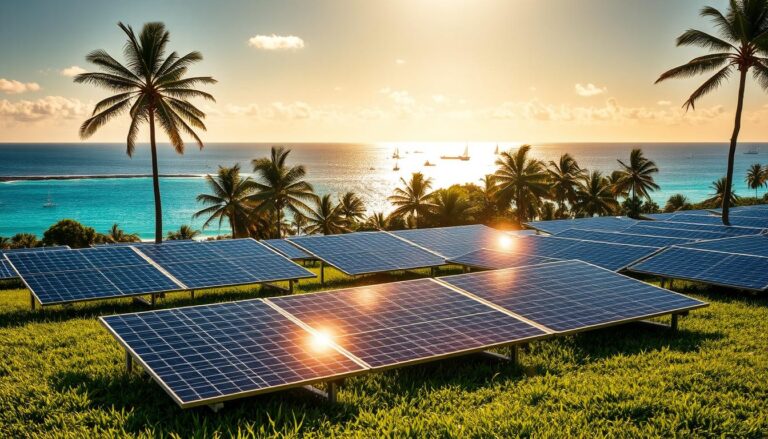
When you live on Florida’s Gulf Coast, hurricane readiness isn’t optional, it’s a way of life. For Panama City homeowners, that means preparing not only for wind and water, but also for what often follows: extended power outages.
As storms grow stronger and more frequent, residents are turning to solar panels with battery backup systems to keep lights, refrigerators, and air conditioners running even when the grid goes dark.
This 2025 guide explains how solar energy fits into your hurricane preparedness plan, what kind of systems work best for coastal Florida, and how to design a setup that can power your essentials safely and reliably during storm season.
Solar Cost Calculator – Florida Panhandle Only
* Estimate based on $3.25 per watt for solar installation.
* For Tesla Powerwall 3 Batteries, $15,000 for the first battery, $12,000 for each additional battery.
* Other variations and types of Batteries are available.
Why Solar Belongs in a Hurricane-Ready Home
Hurricanes don’t just bring high winds, they bring days or even weeks of grid disruption. In the aftermath of storms like Hurricane Michael (2018), large parts of Bay County went without power for 10–14 days.
Solar energy gives Panama City homeowners a way to:
- Generate their own power during clear weather, reducing dependency on utilities.
- Store excess energy in batteries for nighttime or emergency use.
- Avoid fuel shortages that make running generators difficult post-storm.
When paired with hurricane-rated installation hardware, a solar + battery system becomes a silent, self-sustaining power source that requires no fuel, no refills, and minimal maintenance.
Solar Panels Alone vs. Solar + Battery Backup
It’s important to understand the difference between standard grid-tied solar and solar with battery storage.
| System Type | Works During Outages? | Description |
|---|---|---|
| Grid-Tied Solar (No Battery) | ❌ No | Shuts down automatically during outages for lineworker safety. |
| Solar + Battery Backup (Hybrid) | ✅ Yes | Disconnects from grid and powers selected home circuits via stored energy. |
| Off-Grid Solar (Standalone) | ✅ Yes | Fully independent of grid — more costly, used for rural or remote properties. |
Most homeowners in Panama City opt for hybrid solar systems, which combine grid connection (for net metering) with batteries for resilience.
When the utility grid fails, your inverter automatically switches to “island mode”, pulling power from the battery to keep your essentials running.
How Long Can Solar Power Last During an Outage?
That depends on battery capacity, daily usage, and weather conditions after the storm.
Typical Example:
- Battery: Tesla Powerwall 3 (13.5 kWh)
- Average essential loads: 5–7 kWh/day (fridge, lights, fans, Wi-Fi, sump pump)
- Autonomy: 1.5–2 days on a single charge
With partial sun after the storm, the system can recharge during daylight and extend operation indefinitely, something fuel-based generators simply can’t match when supply lines are down.
Top Battery Options for Panama City Homes
| Model | Capacity | Chemistry | Ideal Use | Warranty |
|---|---|---|---|---|
| Tesla Powerwall 3 | 13.5 kWh | LiFePO₄ | Whole-home or hybrid backup | 10 years |
| Enphase IQ Battery 10T | 10.5 kWh | LiFePO₄ | Modular, scalable design | 15 years |
| FranklinWH aPower | 13.6 kWh | LiFePO₄ | Strong peak power for A/C units | 12 years |
| LG Chem RESU 10H | 9.8 kWh | NMC | Compact wall mount | 10 years |
LiFePO₄ batteries (lithium iron phosphate) are ideal for Florida, they’re more heat-stable, safer, and have longer cycle life than older NMC (nickel-manganese-cobalt) batteries.
Designing a Hurricane-Ready Backup Strategy
Step 1: Identify Your Critical Loads
List the circuits you absolutely need during an outage. A typical “essential loads” panel includes:
- Refrigerator & freezer
- Wi-Fi router & modem
- LED lighting circuits
- Well pump or sump pump (if applicable)
- A/C or mini-split (if supported by battery)
- Medical equipment (if applicable)
Avoid connecting heavy-draw items like electric ovens, dryers, or water heaters, they can drain your battery quickly.
Step 2: Right-Size Your Battery Bank
Here’s a basic sizing example for a 1,800–2,200 sq ft Panama City home:
| Appliance | Daily Use (kWh) | Days Covered by 13.5 kWh Battery |
|---|---|---|
| Refrigerator | 1.5 | ✅ 9 days |
| Lights & Fans | 1.2 | ✅ 5–6 days |
| Wi-Fi, Electronics | 0.5 | ✅ 10 days |
| TV / Chargers | 0.3 | ✅ 15 days |
| A/C (mini-split 12k BTU) | 2.5 | ⚠️ 4 days (with recharging) |
A single Powerwall can comfortably cover two days of partial household operation, and indefinitely with solar recharging during clear daylight hours.
Step 3: Integrate Surge & Lightning Protection
The Gulf Coast is lightning-prone. Your system should include:
- DC surge arrestors on the solar array
- AC surge protectors on the main panel
- Grounding per NEC 250.166 to dissipate strikes safely
A licensed Florida CVC or EC contractor must file this design with Bay County Building Department for code compliance.
Wind & Mounting Requirements for the Panhandle
Your solar array itself must also survive hurricane conditions.
Florida Building Code (8th Edition, 2025) – Wind Zone Summary
- Panama City: 150–160 mph wind design speed (ASCE 7-22)
- Exposure Category C: Open terrain with scattered obstructions
- Mounting hardware: Florida Product Approved (FPA) or Miami-Dade NOA certified
Hurricane-Resilient Mounting Tips
- PE-Stamped Engineering: Always require a Professional Engineer letter verifying uplift resistance.
- Use Stainless Steel Hardware: 316-grade preferred for salt-air corrosion protection.
- Panel Placement: Avoid roof edges and corners where pressure is highest.
- Rails & Flashings: Choose hurricane-rated systems like IronRidge XR100 or Unirac Solarmount.
- Seal & Inspect Annually: Prevent moisture intrusion and maintain roof integrity.
A properly designed system will remain intact even through Category 4 winds, proven by post-storm performance in Michael (2018) and Sally (2020).
Integrating Generators with Solar
Some Panama City homeowners prefer to combine solar batteries with generators for extended outages.
Hybrid Setup Benefits
- Solar powers daytime loads and charges the battery.
- Battery handles night hours and small appliances.
- Generator kicks in automatically when battery charge drops below threshold.
This “triple-layer” approach offers nearly indefinite resilience, useful for households that rely on air conditioning or medical devices.
Important: Always use an automatic transfer switch (ATS) to isolate systems safely. Improper generator connections can backfeed the grid and endanger utility workers.
Maintenance & Preparedness Tips
To ensure your solar system is ready before hurricane season:
🔧 Pre-Storm Checklist
- Check inverter and battery app readings.
- Confirm all clamps and bolts are torqued to spec.
- Clean panels for maximum pre-storm charge.
- Ensure backup circuits are clearly labeled.
- Keep batteries at >80% charge when storms are forecast.
🌤️ Post-Storm Actions
- Inspect panels from ground level, don’t climb the roof.
- Verify inverter lights or app indicate “operational” or “island mode.”
- Log outage duration and power consumption for insurance records.
- Schedule a professional inspection if any debris impact or water pooling occurred.
Insurance & Incentives for Hurricane-Ready Solar
Homeowner’s Insurance
Most policies in Florida now treat solar panels as permanent fixtures under dwelling coverage. To qualify for full protection:
- Provide your insurer with engineering drawings & wind-speed certification.
- Request “solar equipment” listed on your policy declaration page.
Some insurers (like Tower Hill and Citizens) now offer premium discounts for hurricane-rated rooftop systems, similar to wind mitigation credits.
Federal Incentives
The 30% Federal Investment Tax Credit (ITC) remains available through 2032 for both solar and battery systems.
For example:
- 10 kW solar + Powerwall = ~$42,000 total cost
- Federal credit = -$12,600
- Net cost = $29,400
- Payback = 7–8 years, with full backup capability for storms
Utility Interconnection & Permitting in Panama City
Solar and battery systems in Panama City require permits through the Bay County Building Department, even for retrofit installations.
Permit Package Includes:
- Structural PE-stamped drawings
- Electrical one-line diagram
- Racking product approvals
- Battery data sheets & UL 9540A fire certification
Fees: $200–$300 typical
Review Time: 7–10 business days
After final inspection, FPL will perform a net-metering meter swap within 10–14 days.
Case Study: Hybrid Solar + Battery in Panama City
Homeowner: The Martins, North Lagoon Drive
System: 9.8 kW rooftop array + Enphase IQ Battery 10T
Installed: April 2024
Total Cost: $31,500 (before ITC)
Performance During 2024 Hurricane Season:
- Two outages (5 hours & 19 hours), never lost power.
- Essential loads: fridge, fans, two A/C units (on rotation), lights, Wi-Fi.
- Daily solar recharge rate: 90% capacity within 6 hours of sunlight.
“We didn’t even realize the neighborhood was out of power until our neighbor’s generator started roaring. Our system switched over instantly and kept everything running silently.”
– Lisa M., Panama City homeowner
Common Questions from Panama City Homeowners
Will solar panels survive a hurricane?
Yes, if properly engineered and installed with hurricane-rated racking. Modern systems in Bay County must meet 150–160 mph wind standards.
Can I run my A/C from a solar battery?
Yes, but you’ll need either multiple batteries or a smart load controller (e.g., FranklinWH or Span Smart Panel) to manage usage intelligently.
Do I need to disconnect during storms?
No. The system automatically isolates itself when grid power fails, no manual shutoff needed.
Can solar charge after a hurricane?
As soon as clouds clear, panels begin producing again. Even partial sunlight can recharge your battery enough for lights and refrigeration.
Key Takeaways
- Hurricane readiness in Panama City now includes energy independence.
- Solar + battery systems provide clean, silent, long-duration power after storms.
- Engineering and permitting are critical, insist on wind-rated, PE-stamped designs.
- Hybrid setups with generators or smart panels deliver maximum resilience.
- The 30% federal credit makes backup solar systems more affordable than ever.
Final Word
When the next hurricane season arrives, you’ll want more than bottled water and flashlights, you’ll want confidence that your home will stay powered no matter what happens to the grid.
With the right solar + backup battery strategy, Panama City homeowners can face storm season with peace of mind, lower bills, and a home built for the realities of life on Florida’s Gulf Coast.
