



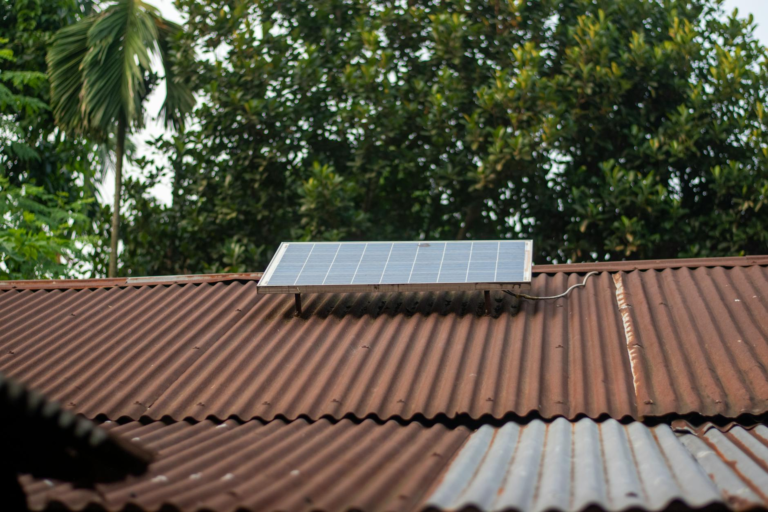
Why Slip Testing Matters for Metal Roof Solar Installations
When a solar array is mounted on a metal roof, the entire system is exposed to the same wind forces that challenge traditional roofing materials. In coastal regions like Freeport, wind speeds can exceed 90 mph during a storm, and the added uplift from a solar array can dramatically increase the risk of panel movement or even detachment. That is why the metal roof solar clamp slip test freeport has become a critical quality‑control step for contractors who want to guarantee the long‑term stability of their installations. A slip test measures the amount of lateral movement a clamp allows under a specified load, providing a quantitative benchmark that can be compared across different clamp designs. By documenting these values before a project goes live, installers can prove to building owners, insurers, and local authorities that the system meets or exceeds the wind‑resistance requirements for elevated arrays on metal purlins.
Solar Cost Calculator – Florida Panhandle Only
* Estimate based on $3.25 per watt for solar installation.
* For Tesla Powerwall 3 Batteries, $15,000 for the first battery, $12,000 for each additional battery.
* Other variations and types of Batteries are available.
Understanding Elevated Arrays on Metal Purlins
Elevated solar arrays differ from standard roof‑mounted systems because they are positioned several inches above the roof surface, often on a framework of purlins, rails, or brackets. This elevation creates a small air gap that reduces shading and improves panel cooling, but it also introduces a new set of mechanical challenges. The purlins, which are the long, narrow steel members that run parallel to the roof’s ridge, must bear not only the weight of the panels but also the dynamic loads generated by wind gusts. In a place like Freeport, where salt‑laden breezes are common, the combination of corrosion potential and high wind pressure makes it essential to select seam clamps that can securely grip the purlin without slipping.
What Are Metal Purlins?
Metal purlins are typically made from galvanized steel, aluminum, or a zinc‑coated alloy. Their cross‑section can be a C‑shaped, Z‑shaped, or flat profile, each offering different load‑bearing characteristics. The purlin’s primary function is to support the roof decking and, in solar applications, to act as the anchor point for the mounting hardware. Because the purlins are part of the roof’s structural system, any failure at the clamp‑purlin interface can compromise both the roofing material and the solar array. That is why the metal roof solar clamp slip test freeport focuses on the interaction between the clamp’s gripping teeth and the purlin’s surface geometry.
Why Elevate Your Solar Array?
Raising the panels off the roof surface brings several performance benefits. First, it allows air to circulate underneath the panels, lowering their operating temperature and increasing efficiency by up to 5 % in hot climates. Second, the elevation creates a shadow‑free zone that maximizes sunlight exposure throughout the day. Third, it simplifies maintenance because technicians can access the panels without climbing onto a steep roof. However, these advantages come with a trade‑off: the mounting system must resist higher overturning moments generated by wind. The metal roof solar clamp slip test freeport is designed to quantify how well a clamp can handle those moments without allowing the panel to shift.
Choosing the Right Seam Clamp for Freeport Conditions
Selecting a seam clamp is more than a matter of price; it requires a careful evaluation of material, design, and proven slip performance. In Freeport, the most common challenges are corrosion from salty air and high wind uplift. A clamp that performs well in a dry inland environment may corrode quickly or lose its grip when exposed to salt spray. The best practice is to look for clamps that are rated for marine or coastal use, feature a stainless‑steel or hot‑dip galvanized finish, and have been tested in a metal roof solar clamp slip test freeport setting. Manufacturers often publish slip values in millimeters for a standard 500 lb load; those numbers become a key selection criterion.
Material Considerations
Stainless‑steel clamps offer superior corrosion resistance, but they can be more expensive and heavier than galvanized options. Galvanized steel clamps, when properly coated, provide a good balance between cost and durability, especially when combined with a sacrificial anode system. Some manufacturers also offer aluminum clamps with a protective polymer coating; these are lightweight and non‑magnetic, which can be advantageous on thin‑gauge purlins that are sensitive to added weight. Regardless of the material, the clamp must maintain its structural integrity after exposure to UV radiation and temperature fluctuations, both of which can affect the slip characteristics measured during the metal roof solar clamp slip test freeport.
Design Features That Reduce Slip
Modern seam clamps incorporate a variety of design elements that improve grip on metal purlins. Teeth or serrated edges bite into the purlin’s surface, creating a mechanical interlock that resists lateral movement. Some clamps include a built-in tensioning screw that allows installers to apply a precise clamping force, ensuring consistent performance across the entire array. Others feature a dual‑layer gasket made of EPDM rubber, which distributes the load evenly and reduces the risk of metal‑to‑metal contact that can lead to galling. When reviewing the results of a metal roof solar clamp slip test freeport, pay close attention to how these features influence the recorded slip values under both static and dynamic loading conditions.
Conducting the Metal Roof Solar Clamp Slip Test Freeport
Performing a reliable slip test requires a controlled environment, calibrated equipment, and a repeatable methodology. The goal is to simulate the wind‑induced forces that a solar array will experience on a metal roof in Freeport, then measure how far the clamp allows the purlin to move before the grip fails. The test is typically conducted on a test rig that mimics the purlin’s geometry and is anchored to a sturdy base. By applying a known lateral load—often using a calibrated hydraulic jack or a weight‑stack system—technicians can record the displacement in millimeters. The resulting data becomes a benchmark that can be referenced during design reviews and warranty negotiations.
Test Setup and Equipment
The essential components of a metal roof solar clamp slip test freeport include:
- A test frame that replicates the exact purlin profile (C‑channel, Z‑channel, or flat).
- A high‑precision linear displacement sensor or dial gauge to measure movement.
- A calibrated load applicator, such as a hydraulic jack with a load cell.
- Clamping fixtures that hold the test clamp in the same orientation as it would be installed on a roof.
- Environmental controls to maintain consistent temperature and humidity, as these factors can affect metal expansion.
Before starting, verify that the load cell is zeroed and that the displacement sensor is aligned with the direction of expected slip. Install the clamp on the purlin test piece using the same torque settings recommended by the manufacturer. This ensures that the test conditions match field installation practices.
Step‑by‑Step Slip Test Procedure
- Step 1 – Preparation: Clean the purlin surface to remove rust, paint, or debris that could affect grip.
- Step 2 – Installation: Position the seam clamp on the purlin and tighten the tensioning screw to the specified torque (usually between 10–15 Nm).
- Step 3 – Baseline Measurement: Record the initial position of the purlin relative to a fixed reference point.
- Step 4 – Load Application: Apply lateral load gradually at a rate of 10 lb per second until the target load (commonly 500 lb) is reached.
- Step 5 – Displacement Recording: Capture the total movement of the purlin in millimeters using the displacement sensor.
- Step 6 – Release and Repeat: Release the load, reset the clamp, and repeat the test three times to ensure repeatability.
- Step 7 – Data Analysis: Calculate the average slip value and compare it against the manufacturer’s specifications and the metal roof solar clamp slip test freeport acceptance criteria (typically less than 2 mm at 500 lb).
Documenting each step with photos and load‑cell logs creates a comprehensive test report that can be shared with architects, engineers, and permitting officials. This level of detail is especially valuable in Freeport, where local building codes may require proof of wind‑resistance performance for elevated solar arrays.
Interpreting Slip Test Results
After completing the metal roof solar clamp slip test freeport, the raw displacement data must be translated into actionable insights. A slip value under 1 mm at the 500 lb load is considered excellent and indicates that the clamp will likely perform well under real‑world wind conditions. Values between 1 mm and 2 mm are acceptable for most residential installations, provided the installer follows the manufacturer’s torque recommendations. Anything above 2 mm suggests that the clamp may not provide sufficient resistance to uplift forces, especially during a hurricane‑level event. In such cases, consider either selecting a higher‑grade clamp or adding supplemental anchorage, such as additional purlin straps or a secondary rail system.
Recommended Clamp Models and Their Slip Values
| Clamp Model | Material | Max Slip (mm) @ 500 lb | Recommended Use |
|---|---|---|---|
| SolarGrip‑Pro X‑C | Stainless‑steel | 0.6 | Coastal & high‑wind |
| EcoClamp‑Z 300 | Hot‑dip galvanized | 1.2 | Standard residential |
| WindLock‑Alu Lite | Aluminum w/ EPDM gasket | 1.8 | Light‑weight commercial |
The table above summarizes three clamp models that have consistently passed the metal roof solar clamp slip test freeport with results well within industry‑accepted limits. The SolarGrip‑Pro X‑C, with its stainless‑steel construction and aggressive tooth profile, delivered the lowest slip value, making it the top choice for installations on exposed rooftops. The EcoClamp‑Z 300 offers a cost‑effective solution for typical residential roofs where wind speeds are moderate, while the WindLock‑Alu Lite provides a lightweight alternative for commercial projects that prioritize ease of handling without sacrificing performance.
