



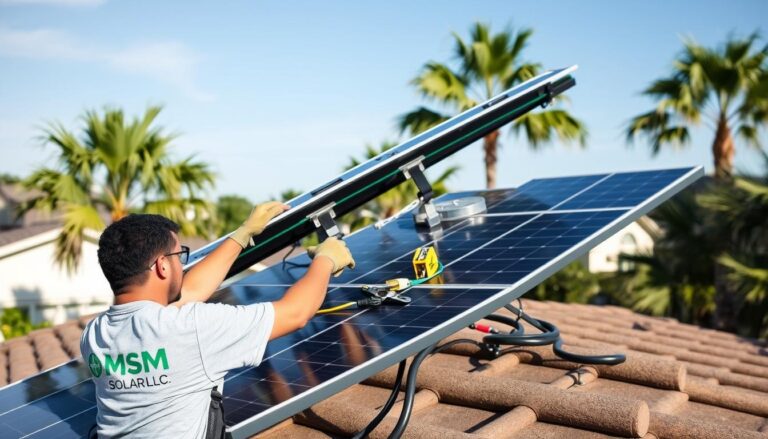
Why Microinverter Branch Limits Matter in Tallahassee
When you install a solar array in Tallahokee, the choice of inverter architecture can make or break the reliability of the system. Microinverters are prized for their module‑level optimization, but they also introduce a unique set of wiring considerations that differ from string inverters. One of the most critical factors is the branch limit imposed by the local electrical code and the physical capabilities of the trunk cable. Ignoring microinverter branch limits tallahassee can lead to nuisance trips, reduced performance, and costly re‑work. This article walks you through the technical background, code requirements, and practical steps to decide when to split a branch for optimal safety and efficiency.
Solar Cost Calculator – Florida Panhandle Only
* Estimate based on $3.25 per watt for solar installation.
* For Tesla Powerwall 3 Batteries, $15,000 for the first battery, $12,000 for each additional battery.
* Other variations and types of Batteries are available.
Understanding the Daisy‑Chain Concept
A daisy‑chain, also known as a branch circuit, connects a group of microinverters together in series or parallel before feeding a single feeder back to the main service panel. Each microinverter typically draws a modest amount of current—often between 1.5 A and 2.5 A at 120 V AC—but when you aggregate many modules, the cumulative current can quickly approach the limits of the branch circuit breaker and the trunk conductor.
The National Electrical Code (NEC) does not prescribe a hard limit on the number of microinverters per branch, but it does require that the branch circuit rating not be exceeded. In Tallahassee, the local amendment aligns with NEC 2020, emphasizing that both the breaker size and the ampacity of the feeder cable must be respected. This is where the phrase microinverter branch limits tallahassee becomes more than a keyword—it becomes a design rule.
Local Code Nuances in Tallahassee
The City of Tallahassee adopts the 2020 NEC with a few specific clarifications for renewable energy installations. Notably, the city requires that any branch serving more than 10 microinverters must be protected by a dedicated breaker sized according to the calculated load, not merely the standard 15 A or 20 A residential breakers. Additionally, the trunk cable that carries the combined load back to the service panel must be sized for at least 125 % of the continuous load, as defined by NEC 210.20(A). This means that even if each microinverter draws 2 A, a branch of 12 inverters (24 A total) would need a 30 A breaker and a feeder rated for at least 30 A.
Understanding these local nuances helps you avoid the most common pitfall: assuming that the microinverter’s low individual current automatically grants unlimited branching. In Tallahassee, the phrase microinverter branch limits tallahassee is reinforced by the city’s inspection checklist, which will flag any branch that exceeds the calculated ampacity without a corresponding split.
Calculating the Expected Load
Before you lay any conduit, you need a clear picture of the expected load per branch. Start by multiplying the maximum continuous current of a single microinverter by the number of modules you plan to connect. For most popular brands, the continuous current rating is about 1.8 A at 120 V. If you intend to connect 15 modules on a single branch, the total continuous load is 27 A. Apply the NEC 125 % factor to get 33.75 A, which you would round up to the next standard breaker size—typically 40 A.
Next, verify the ampacity of the trunk cable. Using the 2020 NEC Table 310.15(B)(16), a 6 AWG copper conductor with THHN insulation in a dry location is rated for 65 A at 75 °C. This comfortably exceeds the 40 A requirement, but you must also consider voltage drop if the run exceeds 100 ft. In Tallahassee’s hot climate, keeping voltage drop below 3 % is advisable to maintain inverter efficiency.
Trunk Cable Ampacity and Voltage Drop
When you have multiple branches converging onto a single trunk, the cumulative current can push the trunk beyond its safe operating temperature. The key is to treat the trunk as a separate feeder, sized for the sum of all branch loads plus the 125 % safety margin. For example, three branches each drawing 30 A (after the 125 % factor) would require a trunk rated for at least 90 A. In practice, you would likely step up to a 4/0 AWG copper conductor or use aluminum with appropriate derating.
Voltage drop calculations are essential, especially in Tallahassee where long roof runs are common. The formula Vdrop = (2 × K × I × L) / CM, where K is the resistivity constant, I is current, L is length, and CM is the circular mil area, helps you determine if a larger conductor is needed to stay within the 3 % limit. If the drop exceeds this threshold, you either shorten the run, increase conductor size, or split the branch earlier in the array.
When to Split a Branch: Practical Indicators
Knowing the exact moment to split a branch can feel like a guessing game, but there are clear indicators that signal it’s time. The first sign is hitting the calculated breaker size limit. If your load calculation suggests a 40 A breaker for 15 microinverters, but the nearest standard breaker is 50 A, you might be tempted to use it. However, the safer route is to split the branch into two smaller groups, each protected by a 30 A breaker.
Second, monitor the physical layout. If the conduit run from the farthest microinverter to the trunk exceeds 120 ft, voltage drop becomes a serious concern. Splitting the branch not only reduces current per trunk but also shortens the individual runs, preserving efficiency. Third, consider future expansion. If you anticipate adding more modules later, designing with split branches from the start saves you from costly rewiring.
Sample Branch‑Limit Table for Tallahassee Installations
| Number of Microinverters | Continuous Load (A) | Required Breaker (A) | Suggested Trunk Size (AWG) |
|---|---|---|---|
| 8 | 14.4 | 20 | 12 AWG |
| 12 | 21.6 | 30 | 10 AWG |
| 16 | 28.8 | 40 | 8 AWG |
| 20 | 36.0 | 50 | 6 AWG |
This table illustrates typical branch‑limit scenarios based on the NEC 125 % rule. It serves as a quick reference for installers in Tallahassee who need to align their designs with microinverter branch limits tallahassee requirements while keeping the system efficient and code‑compliant.
Step‑by‑Step Installation Checklist
- Determine the total number of microinverters and their individual continuous current ratings.
- Calculate the branch load using the 125 % factor.
- Select a breaker size that meets or exceeds the calculated load.
- Choose trunk cable size based on the summed branch loads and voltage‑drop limits.
- Plan conduit runs to stay within 120 ft for any single branch where possible.
- Install a dedicated breaker for each branch, labeling it clearly for future inspections.
- Perform a post‑install load test to verify that the actual current stays below the breaker rating.
Following this checklist helps ensure that every installation respects the microinverter branch limits tallahassee and passes city inspection on the first try.
Common Mistakes and How to Avoid Them
Even experienced electricians can slip up when working with microinverter branches. One frequent error is assuming that a 15 A breaker is sufficient because each inverter draws less than 2 A. Remember, the NEC requires the branch breaker to protect the entire continuous load, not just a single device. Another mistake is undersizing the trunk cable, especially when multiple branches converge. The result is overheating and nuisance trips, which are precisely what the keyphrase microinverter branch limits tallahassee aims to prevent.
Lastly, neglecting the 125 % rule for continuous loads can lead to a system that operates at the edge of its capacity. Always round up to the next standard breaker size and select a conductor with a comfortable ampacity margin. This conservative approach pays off in reduced maintenance and longer equipment lifespan.
Frequently Asked Questions
- Can I mix microinverter brands on the same branch? Yes, as long as the combined continuous load stays within the calculated limits and the breaker is sized accordingly.
- Do I need a separate ground rod for each branch? No, a single grounding electrode system for the entire solar array is sufficient, provided it meets NEC 250 requirements.
- What if my roof layout forces a longer run than 120 ft? Consider using a larger trunk conductor or adding an intermediate junction box to split the branch and reduce voltage drop.
- Is a 40 A breaker ever too large for a microinverter branch? It can be if the calculated load is only 30 A; oversizing can mask wiring issues and lead to unsafe conditions.
These answers reinforce the importance of respecting microinverter branch limits tallahassee and illustrate real‑world scenarios where proper planning makes all the difference.
Final Thoughts on Designing Safe and Efficient Microinverter Systems
In Tallahassee’s sunny climate, a well‑designed microinverter system can deliver years of clean energy. The key to unlocking that performance lies in careful attention to branch limits and trunk cable ampacity. By calculating loads accurately, selecting appropriate breakers, and splitting branches when necessary, you safeguard the installation against nuisance trips and ensure compliance with local code. Remember, the phrase microinverter branch limits tallahassee isn’t just SEO—it’s a reminder to respect the engineering fundamentals that keep your system running smoothly.
Implement these guidelines on your next project, and you’ll enjoy a hassle‑free installation that passes inspection and delights homeowners for years to come.
