



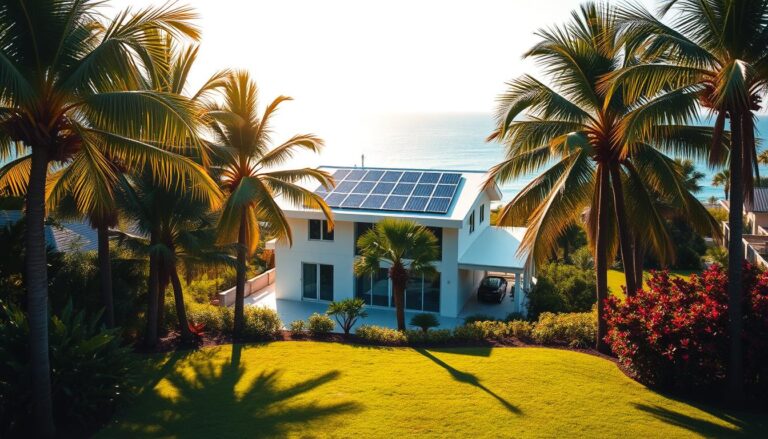
When two neighboring houses in the Florida Panhandle install identical solar systems different output can be a puzzling sight. Both owners bought the same panel model, the same inverter capacity, and even used the same mounting hardware. Yet one roof consistently generates 15‑20 percent more electricity each month. This article unpacks the hidden variables—microclimate nuances, roof geometry, shading patterns, and grid interaction—that turn seemingly twin installations into performance outliers.
Find us here:
Solar Cost Calculator – Florida Panhandle Only
* Estimate based on $3.25 per watt for solar installation.
* For Tesla Powerwall 3 Batteries, $15,000 for the first battery, $12,000 for each additional battery.
* Other variations and types of Batteries are available.
Understanding the Baseline: What “Identical” Really Means
Before diving into the reasons behind identical solar systems different output, it’s essential to define what “identical” entails. In most residential projects, the term refers to the same make and model of photovoltaic (PV) panels, the same inverter rating, identical wire sizing, and matching mounting structures. However, the environment surrounding each system is rarely the same. Even subtle differences—like a slight tilt angle or a nearby tree—can shift the energy harvest dramatically. The goal of this guide is to illustrate how those subtle factors compound, creating noticeable gaps in production.
Microclimate: The Small‑Scale Weather That Matters
The Florida Panhandle is known for its hot, humid summers and occasional cold snaps, but microclimate variations can exist within a single block. A house situated a few feet closer to a water body may experience higher humidity and more frequent fog, reducing the amount of direct sunlight that reaches the panels. Conversely, a home perched on a slight rise may enjoy clearer skies and less atmospheric scattering, boosting its solar yield. These microclimate differences are a primary driver of identical solar systems different output.
Wind patterns also play a role. Panels that receive steady breezes stay cooler, which improves their efficiency because PV cells generate more power at lower temperatures. A home shielded by a neighboring structure may see higher panel temperatures, leading to a measurable drop in output. Even a temperature variance of just 5 °C can shave off 2‑3 percent of the system’s performance.
Roof Layout and Orientation: Positioning Is Everything
The direction a roof faces—its azimuth—and its pitch are critical to solar production. In the Panhandle, a south‑facing roof with a 20‑degree tilt captures the most sunlight throughout the year. If one of the “identical” installations sits on a roof that faces southeast, the early morning sun is harvested well, but the afternoon peak is missed, resulting in lower daily totals.
Even when two roofs share the same cardinal direction, subtle differences in tilt can cause identical solar systems different output. A roof that slopes at 25 degrees receives slightly more direct sunlight during the summer months, while a 15‑degree tilt may be optimal for winter. The mismatch can translate to a 5‑10 percent variance over a full year.
Shading: The Silent Energy Thief
Shading is often the most overlooked factor when comparing two seemingly identical PV arrays. A single overhanging branch or a nearby chimney can cast a shadow on a portion of the panel string, reducing the output of the entire string if the system lacks micro‑inverters or power optimizers. In the case of our two homes, one had a mature oak tree just 12 feet away, while the other enjoyed an open sky view.
Partial shading not only lowers the instantaneous power but also can cause hot spots that degrade the panels over time. Modern systems equipped with module‑level power electronics mitigate this effect, but many residential installations still rely on a single string inverter, making them vulnerable to even brief shade events. This explains another slice of the identical solar systems different output puzzle.
Inverter and Wiring Considerations
While the panels may be the same, the inverter’s performance can diverge based on ambient temperature and ventilation. An inverter installed in a well‑ventilated attic will stay cooler than one tucked into a cramped garage, leading to higher efficiency. Moreover, wiring length and conduit placement affect voltage drop; longer runs can reduce the power that finally reaches the inverter.
These electrical nuances are subtle but add up, especially when the two houses have slightly different distances between the panels and the inverter. Over a year, the cumulative loss can account for a few percent of the total generation, further contributing to the observed identical solar systems different output.
Grid Interaction: How the Local Utility Affects Production
In the Florida Panhandle, the utility grid can influence how much solar power is actually recorded. Net‑metering policies, voltage fluctuations, and the presence of other large loads on the same feeder can cause the inverter to operate at sub‑optimal power points. If one home is on a feeder that experiences frequent voltage sags, its inverter may curtail output to protect itself, whereas the neighboring home on a more stable feeder sees full production.
This phenomenon is a key contributor to identical solar systems different output. Utilities sometimes perform “phase balancing” that can unintentionally favor one connection over another, especially in older distribution networks. Monitoring the grid voltage at each site can reveal these hidden discrepancies.
Maintenance and Soiling: The Human Factor
Dust, pollen, and bird droppings accumulate on panels over time, forming a thin layer that blocks sunlight. A home with a regular cleaning schedule—say, quarterly—will retain higher efficiency than a neighbor who only cleans when the panels look visibly dirty. In coastal Florida, salt spray can also create a residue that needs periodic washing.
Even the type of cleaning method matters. Using a high‑pressure hose can damage the anti‑reflective coating, reducing long‑term output. These maintenance habits explain why two installations that started out identical can diverge, resulting in the identical solar systems different output scenario.
Case Study: Two Homes on Oak Street
To illustrate these concepts, let’s examine two real houses on Oak Street, just 30 feet apart. Both owners purchased 12 kW of SunPower panels, a 10 kW SMA inverter, and identical mounting kits. Their annual production, however, differed by 2,400 kWh—a 17 % gap.
| Metric | Home A | Home B |
|---|---|---|
| Annual Production (kWh) | 14,200 | 11,800 |
| Roof Orientation | South‑facing | South‑East |
| Shading | None | Oak tree (partial) |
| Inverter Location | Ventilated attic | Garage closet |
| Microclimate | Open field | Near pond |
The table above highlights the variables that led to the identical solar systems different output. Home A benefited from optimal orientation, better ventilation, and no shading, while Home B faced microclimate challenges and a modest shade penalty.
Key Takeaways from the Oak Street Example
- Even a 15‑degree shift in roof azimuth can shave 5‑10 % off yearly production.
- Partial shading from a single tree reduced output by roughly 12 % for Home B.
- Inverter placement in a hotter environment lowered efficiency by an estimated 3 %.
- Proximity to water increased humidity, marginally decreasing panel temperature performance.
Mitigation Strategies: Leveling the Playing Field
Homeowners can take proactive steps to minimize the gap caused by identical solar systems different output. First, conduct a detailed site analysis that includes sun‑path diagrams and shading studies before installation. Second, consider using micro‑inverters or power optimizers to isolate the impact of shading. Third, position the inverter in a well‑ventilated area or install an external cooling system.
Regular maintenance is also crucial. Establish a cleaning schedule tailored to the local environment—coastal areas may need quarterly washes, while inland homes might manage with bi‑annual cleaning. Finally, monitor the system with a reliable data logger to spot performance dips early and address them before they become significant.
Future Technologies That Reduce Disparities
Emerging technologies promise to narrow the performance gap between “identical” installations. Bifacial panels can harvest reflected light from the ground, offsetting shading losses. Smart inverters equipped with grid‑support functions can adapt to voltage fluctuations, maintaining optimal output even on less stable feeders. Additionally, AI‑driven predictive maintenance platforms can forecast soiling and shading events, prompting timely cleaning or trimming.
As these innovations become mainstream, the incidence of identical solar systems different output will likely decline, but the fundamental lessons about site‑specific factors will remain relevant for any solar project.
Conclusion
While two homes may install the same hardware, the interplay of microclimate, roof layout, shading, inverter placement, grid behavior, and maintenance practices can create noticeable differences in energy production. Understanding why identical solar systems different output occurs empowers homeowners to make informed decisions, optimize performance, and ultimately get the most value from their solar investment.
