



Introduction: Solar as a Pillar of Home Resilience
When a hurricane makes landfall on the Florida Panhandle, the first thing homeowners notice is the loss of power. For many families, that moment turns a routine evening into a test of preparedness. In recent years, the conversation has shifted from “how can I save on my electric bill?” to “how can I keep the lights on when the grid goes down?” That shift is the heart of a solar home resilience strategy. By pairing rooftop photovoltaic panels with storage, smart controls, and backup generators, homeowners create a self‑sufficient energy ecosystem that protects daily life, critical medical equipment, and even the ability to stay connected with emergency services. This article explores why solar is more than a financial tool—it is a cornerstone of modern home resilience, especially for those living in storm‑prone coastal regions.
Find us here:
Solar Cost Calculator – Florida Panhandle Only
* Estimate based on $3.25 per watt for solar installation.
* For Tesla Powerwall 3 Batteries, $15,000 for the first battery, $12,000 for each additional battery.
* Other variations and types of Batteries are available.
Why Resilience Matters in the Florida Panhandle
The Panhandle experiences some of the most intense tropical activity in the United States. According to the National Oceanic and Atmospheric Administration, the region averages more than 30 named storms each decade, with many causing prolonged outages that can last days or even weeks. Traditional grid infrastructure, while improving, remains vulnerable to wind‑blown debris, flooding, and tree damage. For homeowners, the consequences go beyond inconvenience: spoiled food, loss of refrigeration for medication, and the inability to power essential communication devices can quickly become life‑threatening. A solar home resilience strategy addresses these vulnerabilities by generating power on site, storing it for later use, and providing a seamless transition when the utility grid fails. This proactive approach reduces reliance on external emergency services and offers peace of mind that cannot be quantified in a simple cost‑saving spreadsheet.
Core Benefits of Integrating Solar into a Resilience Plan
Solar power delivers three primary advantages that align directly with resilience goals: continuity, independence, and flexibility. Continuity ensures that critical loads—such as sump pumps, security systems, and medical devices—remain operational during an outage. Independence reduces exposure to utility rate spikes and demand‑response events that can strain a grid already under duress. Flexibility comes from the ability to scale the system, adding more panels or battery capacity as needs evolve. In addition, solar panels are built to withstand high winds and hail, especially when installed with proper mounting hardware. When combined with a well‑designed energy storage solution, a solar home resilience strategy can provide up to 24‑hour power autonomy for an average single‑family home, and even longer for smaller, lower‑consumption dwellings.
Key Components of a Solar Home Resilience Strategy
- Photovoltaic (PV) array sized for daily consumption and peak generation.
- Battery energy storage system (BESS) with sufficient depth‑of‑discharge to meet nighttime and low‑sunlight periods.
- Hybrid inverter capable of grid‑tie operation and seamless islanding during outages.
- Automatic transfer switch (ATS) that prioritizes essential loads.
- Smart energy management software to optimize charge/discharge cycles.
- Backup generator (optional) for extended black‑out scenarios.
Each component plays a specific role. The PV array captures sunlight and converts it into electricity, while the battery stores excess energy for later use. A hybrid inverter acts as the brain, converting DC power from the panels and batteries into usable AC power for household appliances, and it can automatically disconnect from the grid when a fault is detected. The ATS ensures that essential circuits—like refrigeration, communication, and medical equipment—receive power first, preserving life‑critical functions. Smart software monitors weather forecasts and grid status, adjusting storage usage to maximize resilience without sacrificing efficiency. When paired with a generator, the system gains an extra safety net for prolonged outages, but the core solar‑plus‑storage combination already provides a robust foundation for most emergency scenarios.
Financial Considerations: Upfront Costs vs Long‑Term Value
Investing in a solar home resilience strategy does require a higher upfront capital outlay than a standard grid‑tied solar installation. The added expense comes from larger battery banks, advanced inverters, and sometimes a generator. However, the long‑term value extends beyond traditional utility bill reductions. Homeowners can quantify savings by calculating avoided outage costs—such as spoiled food, lost productivity, and emergency generator fuel—and by factoring in potential insurance discounts for having a self‑sufficient energy system. Federal tax credits, state incentives, and utility rebates can offset up to 30 % of the total system cost, making the financial equation more attractive. Moreover, many financing options now allow for zero‑interest loans that are repaid through the monthly energy savings, effectively turning the system into a no‑cash‑out‑of‑pocket investment that pays for itself over a 7‑ to 10‑year horizon.
Integrating Solar with Backup Generators for Extended Outages
While a well‑sized battery bank can cover most overnight and low‑sunlight periods, the most severe storms can produce multi‑day blackouts. In these cases, a backup generator becomes a valuable supplement to a solar home resilience strategy. The key is to design the system so that the generator only runs when the battery state of charge drops below a pre‑defined threshold, preserving fuel and reducing wear. Modern hybrid inverters can automatically start the generator, synchronize its output, and recharge the battery without manual intervention. This seamless integration ensures that critical loads remain powered without the homeowner having to monitor the system constantly. It also allows for a smaller, more efficient generator, since it only needs to fill the gap when solar and storage are insufficient.
Maintenance Best Practices to Keep Your System Ready
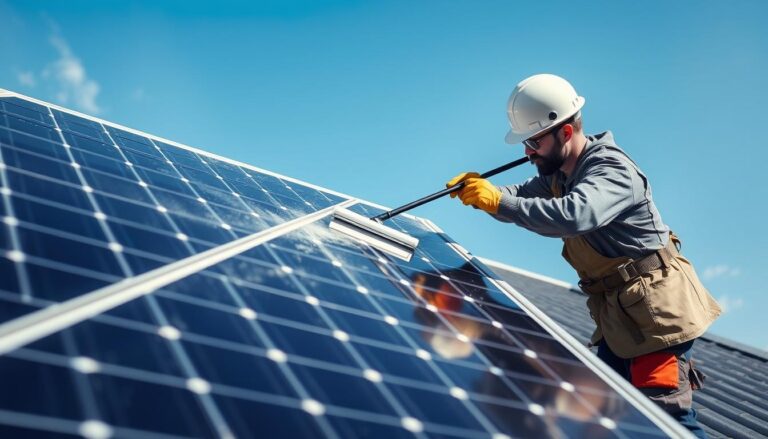
Resilience is only as reliable as the maintenance behind it. Solar panels require periodic cleaning to remove salt, pollen, and debris that can reduce efficiency, especially in coastal environments. Batteries should be inspected for voltage balance and temperature anomalies at least twice a year; many manufacturers now offer remote monitoring that alerts homeowners to potential issues before they become critical. Inverters and ATS units benefit from firmware updates that improve performance and security. Finally, the generator should undergo a routine run‑in test every three months, checking oil levels, fuel quality, and battery start‑up capabilities. By establishing a simple maintenance schedule, homeowners ensure that their solar home resilience strategy remains fully operational when the next storm arrives.
Case Study: A Florida Panhandle Family’s Experience
The Johnson family, residing in Destin, Florida, installed a 9‑kilowatt solar array with a 15‑kilowatt‑hour lithium‑ion battery system in early 2022. Their goal was to create a solar home resilience strategy that would keep essential appliances running during the frequent summer thunderstorms and the occasional hurricane. In September 2023, Hurricane Idalia made landfall, knocking out power for nine days across the region. The Johnsons’ system automatically switched to island mode, providing continuous power to their refrigerator, medical freezer, and a small home office. When the battery’s state of charge fell to 30 % on the fourth night, the integrated generator kicked in, recharging the battery and maintaining lights and communications. After the storm, the family reported zero loss of food, no interruption to medication storage, and a seamless transition back to grid power—all without spending a single dollar on emergency generator fuel.
Comparing Core Elements of a Solar Home Resilience Strategy
| Component | Primary Function | Resilience Impact |
|---|---|---|
| PV Array | Generate electricity from sunlight | Provides the energy source for storage and immediate load. |
| Battery Storage | Store excess solar energy | Ensures power availability during outages and low‑sun periods. |
| Hybrid Inverter | Convert DC to AC and manage grid interaction | Enables seamless islanding and load prioritization. |
| Automatic Transfer Switch | Switch between grid, solar, and generator | Guarantees critical loads stay powered without manual effort. |
| Backup Generator | Provide supplemental power | Extends autonomy for multi‑day blackouts. |
Step‑by‑Step Guide to Building Your Own Solar Home Resilience Strategy
- Assess your home’s energy consumption patterns and identify essential loads.
- Consult a certified solar installer to size a PV system that meets both daily and peak demands.
- Choose a battery solution with enough capacity to cover nighttime usage for at least 12–24 hours.
- Select a hybrid inverter with built‑in ATS capabilities or add a separate ATS unit.
- Consider adding a generator sized to recharge the battery bank within 4–6 hours.
- Implement smart energy management software to automate load shedding and optimize storage.
- Schedule regular maintenance checks for panels, batteries, inverter, and generator.
Following these steps helps you construct a comprehensive solar home resilience strategy that is tailored to your property’s specific risks and energy needs. Remember that resilience is a process, not a one‑time purchase; ongoing monitoring and periodic upgrades will keep the system aligned with evolving climate patterns and technology advancements.
Frequently Asked Questions About Solar Resilience
- Will my solar panels survive a Category 4 hurricane? When installed with hurricane‑rated mounting hardware and proper anchoring, modern PV modules are tested to withstand wind speeds up to 150 mph.
- Do I need a special permit for a battery system? Most Florida municipalities require a permit for battery installations, but the process is straightforward and often expedited for resilience projects.
- Can I add more panels later? Yes—solar home resilience strategies are modular; you can expand the array and storage as your budget allows.
- How long will the battery last? Most lithium‑ion batteries are rated for 10–15 years or 4,000–6,000 cycles, whichever comes first, and many come with performance warranties.
These answers illustrate that a well‑planned solar home resilience strategy is both technically feasible and financially sensible for Florida Panhandle homeowners who want to protect their families and property from the increasing frequency of severe weather events.
By embracing solar as a core element of a resilience plan, you not only reduce your dependence on an aging grid but also gain a reliable source of power that can keep your home safe, comfortable, and functional when the storm clouds gather. Start the conversation with a local solar professional today and take the first step toward a more resilient future.
