



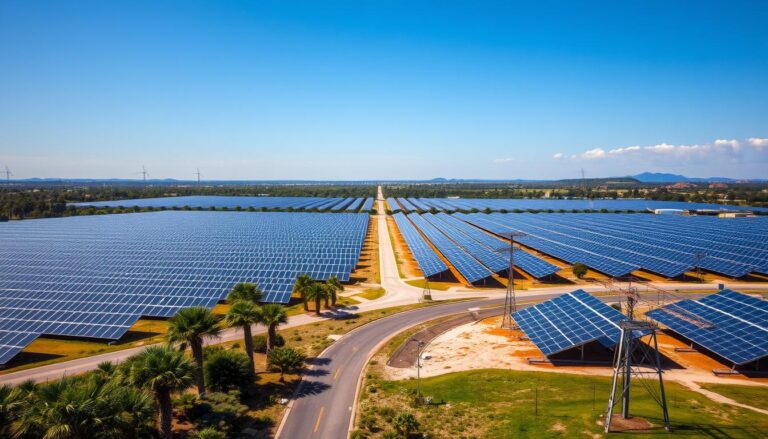
Understanding the Temptation to Add More Panels
Homeowners in the Florida Panhandle are often drawn to the idea of installing as many solar panels as their roof can physically accommodate. The sunny climate, generous net‑metering policies, and the promise of a larger electric bill reduction create a compelling narrative: “the more panels, the better.” This mindset can quickly lead to a situation where a property ends up with too many solar panels, a scenario that feels impressive on paper but may not translate into real‑world benefits. In this article we’ll explore why restraint matters, especially when the local utility environment and the homeowner’s actual energy usage don’t support an oversized system.
Find us here:
Solar Cost Calculator – Florida Panhandle Only
* Estimate based on $3.25 per watt for solar installation.
* For Tesla Powerwall 3 Batteries, $15,000 for the first battery, $12,000 for each additional battery.
* Other variations and types of Batteries are available.
How Solar System Sizing Works
Proper solar system sizing begins with a detailed analysis of a household’s historical electricity consumption. Utility bills from the past 12 months provide a clear picture of average kilowatt‑hour (kWh) usage, which is then adjusted for future changes such as the addition of electric vehicles or home‑automation devices. The next step involves translating that energy demand into a required array size, expressed in kilowatts (kW), based on the average daily solar irradiance for the region. In the Panhandle, the average sun‑hours per day hover around 5.5, meaning a 5 kW system can typically generate roughly 27 kWh per day, enough to cover a typical home’s needs. When a homeowner adds too many solar panels, the system’s output can exceed the actual demand, leading to excess production that may never be fully utilized.
Key Factors That Influence Size
Several variables shape the optimal panel count: roof orientation, shading, tilt angle, and the efficiency rating of the panels themselves. A south‑facing roof with minimal shading can capture more sunlight than an east‑west split, allowing fewer panels to produce the same amount of electricity. Likewise, high‑efficiency panels generate more power per square foot, reducing the need for a larger physical array. Ignoring these nuances often leads homeowners to assume that “more is always better,” which can quickly result in too many solar panels being installed.
The Role of Roof Space and Orientation
Roof space is a finite resource, and its layout determines how panels can be arranged without creating hot spots or electrical mismatches. In many Panhandle homes, the roof may have an irregular shape, multiple dormers, or sections that face different directions. Installing panels on less‑optimal sections simply to increase the count can actually lower the overall system efficiency. Moreover, a crowded roof makes future maintenance more difficult and can increase the risk of damage during severe weather, a genuine concern in coastal Florida.
Why Too Many Solar Panels Can Hurt Your Wallet
Financially, the notion of “more panels equals more savings” breaks down once the system produces more electricity than the household can consume or export. When production exceeds the net‑metering cap set by the local utility, the surplus is either wasted or credited at a lower rate, eroding the expected return on investment. This is a classic case of diminishing returns: each additional panel contributes less incremental value, while still adding to upfront costs, permitting fees, and potential structural reinforcements.
Diminishing Returns on Energy Production
After a certain point, each extra kilowatt of capacity generates less net benefit because the home’s consumption pattern cannot absorb the additional output. For example, a family that uses 800 kWh per month will see most of its needs met with a 6 kW system. Adding a 2 kW boost may only shave a few dollars off the electric bill each month, while the extra panels cost several thousand dollars. This mismatch is a hallmark of having too many solar panels, where the marginal cost outweighs the marginal savings.
Increased Maintenance and Degradation Risks
More panels mean more components that can fail or degrade over time. Wiring, inverters, and mounting hardware all require periodic inspection, especially in a humid, salty environment like the Florida Panhandle. Overcrowding can trap heat, accelerating the degradation rate of solar cells and reducing overall efficiency. Homeowners who install an oversized array may find themselves facing higher maintenance expenses, which further diminishes the economic advantage of a larger system.
Financial Implications of an Oversized System
The financial calculus of solar goes beyond the simple equation of cost versus energy saved. When a system is larger than necessary, the payback period—the time it takes for savings to equal the initial investment—extends considerably. Homeowners who overshoot risk locking themselves into a longer financing term, higher interest, and reduced cash flow. In many cases, the extra panels may never generate a positive net present value, turning what should be a green investment into a financial burden.
Net Metering Caps and Utility Policies
Florida utilities typically allow net‑metered customers to export excess electricity back to the grid at the retail rate, but there are caps on how much can be credited. When a homeowner installs too many solar panels, the system may frequently exceed these caps, resulting in “spillover” energy that is either lost or compensated at a reduced wholesale rate. Understanding the local utility’s interconnection agreement is essential; otherwise, the homeowner may inadvertently create a scenario where the system’s size works against them.
Financing and Payback Period
Most solar purchases are financed through loans, leases, or power purchase agreements (PPAs). Lenders evaluate the projected cash flow based on expected energy production, which assumes a realistic system size. Over‑sizing can cause cash‑flow projections to look optimistic on paper, but actual monthly savings will fall short, potentially triggering loan covenant breaches. By keeping the system appropriately sized, homeowners can secure better financing terms and achieve a faster, more reliable payback.
Practical Tips to Avoid Over‑Sizing
Before committing to a specific panel count, homeowners should follow a disciplined approach that balances ambition with practicality. Below are actionable steps to ensure the solar array matches the home’s true energy profile and local regulatory environment.
- Conduct a thorough energy audit using at least 12 months of utility data.
- Model the system with reputable solar design software that incorporates roof orientation, shading, and panel efficiency.
- Consult the utility’s net‑metering policy to understand export caps and credit rates.
- Factor in future load changes—add a modest buffer (10‑15 %) rather than a large overshoot.
- Choose high‑efficiency panels to maximize output per square foot, reducing the need for excess modules.
- Work with a certified installer who can perform a shade analysis and structural assessment.
Case Study: A Panhandle Homeowner’s Experience
Before Adjusting the System
John and Maria, a retired couple living in Pensacola, initially ordered a 10 kW system for their 2,200 sq ft home, believing that “more panels = more savings.” Their roof could technically hold 30 panels, and the installer quoted a price based on the maximum capacity. After installation, the system consistently produced 1,500 kWh per month, but the couple’s average consumption was only 900 kWh. The excess 600 kWh was frequently curtailed by the utility’s net‑metering cap, meaning they earned only a fraction of the expected credits.
After Scaling Back
Realizing the inefficiency, John and Maria consulted a second solar engineer who recommended downsizing to a 6.5 kW system using higher‑efficiency panels. The new design fit within the same roof area but required fewer modules. After the retrofit, the system’s monthly production aligned closely with the household’s 900 kWh demand, and the net‑metering credits matched the utility’s export limits. Their annual savings increased by 12 % because the system avoided unnecessary capital costs and reduced maintenance requirements. This real‑world example illustrates how having too many solar panels can actually diminish financial returns.
Simple Comparison Table
| System Size (kW) | Average Monthly Production (kWh) | Typical Household Use (kWh) | Net‑Metering Utilization |
|---|---|---|---|
| 4.5 | 600 | 900 | 70 % |
| 6.5 | 870 | 900 | 96 % |
| 10.0 | 1,350 | 900 | 65 % |
Conclusion
While the allure of a massive solar array can be strong, especially in the sun‑rich Florida Panhandle, installing too many solar panels often backfires financially and technically. By carefully assessing energy needs, respecting utility constraints, and selecting efficient equipment, homeowners can achieve optimal performance without the drawbacks of over‑sizing. In the end, a well‑matched system delivers the greatest savings, the longest equipment lifespan, and the most peace of mind.
