



Understanding Why Solar Output Can Vary Between Neighbouring Homes
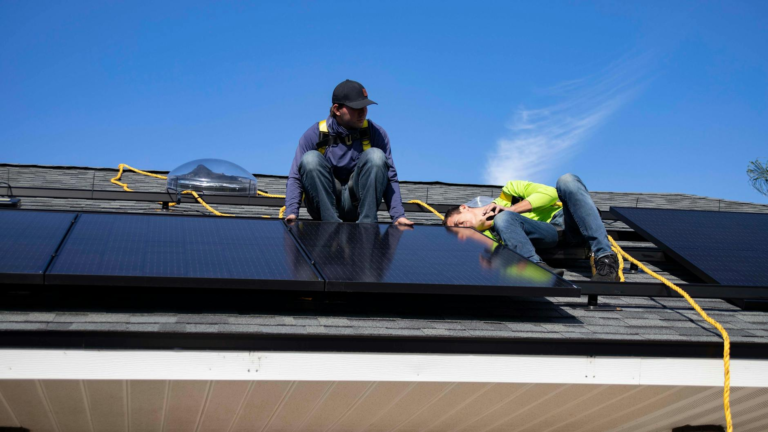
When two houses sit side‑by‑side on a quiet street in Navarre, Crestview, or Tallahassee, it might seem logical to assume that their rooftop solar systems would generate the same amount of electricity. In reality, solar output differences between homes are surprisingly common, and the reasons go far beyond simple geography. From the angle of the roof to the shade cast by a single tree, every detail of a home’s design and orientation can tip the balance between a thriving solar array and a modest one.
This article dives deep into the technical and practical factors that cause these variations. By the end, you’ll have a clear picture of why two neighboring properties can produce very different amounts of clean energy, and you’ll be equipped with the knowledge to assess, improve, or troubleshoot your own system.
Find us here:
Solar Cost Calculator – Florida Panhandle Only
* Estimate based on $3.25 per watt for solar installation.
* For Tesla Powerwall 3 Batteries, $15,000 for the first battery, $12,000 for each additional battery.
* Other variations and types of Batteries are available.
Key Elements That Influence Solar Production
Solar panels convert sunlight into electricity, but the amount of sunlight they receive is never constant. Several physical and environmental elements interact to determine how much solar radiation actually hits the panels. Below are the most influential variables that explain solar output differences between homes in any neighborhood.
- Roof orientation (azimuth): The compass direction the roof faces determines how directly it receives the sun’s path across the sky.
- Roof pitch (tilt angle): The steepness of the roof influences the angle at which sunlight strikes the panels, affecting efficiency.
- Shade from trees, structures, or neighboring roofs: Even brief periods of shade can reduce daily energy yield.
- Roof material and surface temperature: Hotter roofs can lower panel efficiency, while reflective materials can improve it.
- System size and panel layout: The number of panels, their spacing, and wiring configuration affect overall output.
- Inverter quality and placement: Converting DC to AC power efficiently is essential for maximizing production.
- Local micro‑climate conditions: Small variations in wind, humidity, and temperature between streets can have a measurable impact.
Why Orientation Matters More Than You Think
In the northern hemisphere, a roof that faces true south captures the most sunlight throughout the day, especially during the winter months when the sun sits lower in the sky. A south‑facing roof can receive up to 30 % more solar radiation than a roof that faces east or west, and up to 50 % more than a north‑facing roof. This disparity alone can explain significant solar output differences between homes that are only a few feet apart.
Even a slight deviation from true south—say, a roof that faces south‑southwest instead of due south—can reduce peak sun exposure during the hottest part of the day. Homeowners who install panels on a roof that faces southeast may see a noticeable dip in winter production, while those with southwest orientation may benefit from higher summer yields.
The Role of Roof Pitch
The optimal tilt angle for a solar array is roughly equal to the latitude of the installation site. In northern Florida, where latitudes range from 30° to 31°, a roof pitch of about 30° is ideal. However, most residential roofs are built for aesthetic or structural reasons, not solar performance. A low‑slope roof (e.g., 5°) can cause panels to capture less direct sunlight, especially during winter when the sun is lower. Conversely, a steep roof (e.g., 45°) may be perfect for winter but suboptimal for summer, leading to seasonal fluctuations in output.
When two houses share a driveway but one has a 10° pitch and the other a 30° pitch, the latter will likely produce more electricity year‑round. This is a classic example of how subtle architectural choices create noticeable solar output differences between homes.
Shade: The Silent Energy Thief
Shade is often the most unpredictable factor affecting solar generation. A single overhanging branch can block the sun for an hour or more each day, shaving off a significant portion of the system’s energy harvest. The effect multiplies when multiple panels are partially shaded; the performance of the entire string can be dragged down due to the way series‑connected panels operate.
In densely built neighborhoods, neighboring structures can cast long shadows during morning or evening hours. Even a house that is directly opposite another can experience shade on its eastern or western façade, leading to a measurable reduction in daily output. This is why two side‑by‑side homes—one with a clear sky view and the other with a tall oak tree overhead—can show stark solar output differences between homes despite being only a few meters apart.
Roof Material, Color, and Temperature Effects
Roofing materials differ in how much heat they retain and how reflective they are. Dark shingles absorb more heat, raising the temperature of the panels mounted on them. Since solar panel efficiency drops roughly 0.5 % for every degree Celsius increase in temperature, a hotter roof can reduce output noticeably.
Conversely, light‑colored or reflective roofing (such as metal with a cool‑roof coating) can keep panels cooler, preserving efficiency. If one neighbour’s house has a traditional dark shingle roof while the other uses a reflective metal roof, the cooler roof will likely contribute to higher energy production, illustrating another source of solar output differences between homes.
System Design Choices That Influence Yield
Beyond the physical characteristics of the house, the way a solar system is engineered can create output variations. The following design decisions are crucial:
- Panel type and efficiency: High‑efficiency monocrystalline panels produce more power per square foot than polycrystalline or thin‑film options.
- Number of panels and total kilowatt‑peak (kW‑p): Larger systems generate more electricity, assuming adequate sun exposure.
- String sizing and use of micro‑inverters or power optimizers: These technologies mitigate the impact of partial shading and panel mismatches.
- Wiring layout and voltage drop: Poorly sized conductors can lose power before it reaches the inverter.
- Inverter capacity and efficiency: An undersized inverter can clip production during peak sun, while an oversized one may run at lower efficiency.
Two homes may have identical roofs, but if one installer chooses higher‑efficiency panels with power optimizers and the other uses standard panels without them, the former will likely see superior performance. This is a direct contributor to the observed solar output differences between homes in many neighborhoods.
Micro‑Climatic Variations Within a Neighborhood
Even within a single block, micro‑climates can differ. Small changes in wind patterns, humidity, or local temperature can affect how much sunlight reaches a panel and how efficiently it converts that light into electricity. For example, a house situated near a water feature may experience slightly cooler ambient temperatures, which can improve panel efficiency. Conversely, a home tucked behind a concrete wall may retain more heat, reducing output.
These subtle environmental nuances add another layer to the puzzle of solar output differences between homes. While they may seem minor, over the course of a year they can amount to several hundred kilowatt‑hours of additional (or lost) energy.
Comparing Common Variables
| Variable | Impact on Output |
|---|---|
| Roof orientation (south vs. east) | Up to 30 % more production on south‑facing roofs |
| Roof pitch (10° vs. 30°) | Steeper pitch aligns better with sun angle, increasing winter output |
| Shade (tree vs. clear sky) | Partial shading can cut daily yield by 20‑50 % |
| Roof material (dark shingle vs. reflective metal) | Cool roofs can improve efficiency by 2‑5 % |
| Panel technology (standard vs. optimizer‑equipped) | Optimizers can recover up to 15 % lost energy from shading |
Real‑World Examples From Navarre, Crestview, and Tallahassee
Let’s look at three hypothetical scenarios that illustrate how the same street can host a wide range of solar performance.
Case Study 1: A South‑Facing Home With a Cool Roof
In Navarre, House A sits on a south‑facing roof with a 30° pitch and a light‑colored metal roof. The homeowner installed 20 kW of high‑efficiency monocrystalline panels, each equipped with power optimizers. The system experiences minimal shading and benefits from cool‑roof technology that keeps panel temperatures lower than average. Over a typical year, this house generates about 28,000 kWh, well above the regional average for a system of its size.
Case Study 2: An East‑Facing Home With Heavy Tree Shade
Just across the street, House B has an east‑facing roof with a shallow 10° pitch and traditional dark shingles. A mature oak tree shades the panels for three to four hours each morning. The homeowner chose standard polycrystalline panels without optimizers. As a result, the system produces roughly 19,000 kWh per year—a clear illustration of the solar output differences between homes caused by orientation, pitch, shading, and equipment choices.
Case Study 3: A West‑Facing Home With a Reflective Roof
In Crestview, House C faces west, has a 25° pitch, and uses a reflective tile roof. The installer placed 18 kW of panels but added micro‑inverters to each module, allowing the system to continue operating efficiently even when the late afternoon sun dips behind a neighboring house. Despite the less‑ideal orientation, the reflective roof and micro‑inverters boost output to about 22,500 kWh annually—still lower than House A but higher than House B.
How to Minimize Unwanted Variations
If you own a home in a region where solar output differences between homes are noticeable, there are practical steps you can take to level the playing field.
- Conduct a professional shade analysis: Use tools like solar pathfinders or drone imaging to identify and mitigate shading issues before installation.
- Consider roof modifications: Adding a tilt kit, installing a reflective coating, or even building a small ground‑mount array can improve orientation and temperature performance.
- Upgrade to panel-level power electronics: Micro‑inverters or power optimizers protect against partial shading and module mismatch.
- Trim or relocate trees: Maintaining a clear sky view for at least 4‑6 hours per day can dramatically boost yearly production.
- Choose high‑efficiency panels: Modern monocrystalline panels can deliver up to 22‑23 % efficiency, narrowing the gap caused by less‑ideal roofs.
Implementing these measures can bring a lagging system closer to the performance of its better‑situated neighbors, reducing the disparity that often fuels homeowner frustration.
