



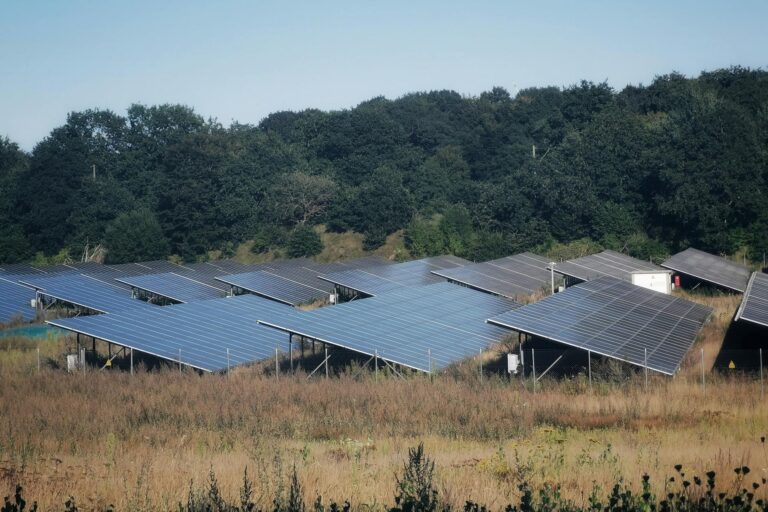
Florida’s reputation as the “Sunshine State” often leads homeowners and installers to assume that every solar decision follows the same formula used in cooler, higher‑latitude regions. While the angle at which panels face the sky is undeniably a factor in energy capture, the specific demands of flat, intense sunlight environments—especially places like Panama City and Destin—shift the balance. In this article we explore why the classic focus on exact tilt angles may be overemphasized for many Florida projects, and how a broader set of considerations can lead to better performance and lower costs.
Find us here:
Solar Cost Calculator – Florida Panhandle Only
* Estimate based on $3.25 per watt for solar installation.
* For Tesla Powerwall 3 Batteries, $15,000 for the first battery, $12,000 for each additional battery.
* Other variations and types of Batteries are available.
Understanding Solar Panel Tilt
The tilt of a solar array determines how directly sunlight strikes the photovoltaic cells throughout the day and across the seasons. In theory, aligning the panels perpendicular to the sun’s rays maximizes the amount of photons converted into electricity. Traditional design guides suggest setting the tilt equal to the site’s latitude for a good year‑round average, then adjusting slightly higher or lower depending on whether winter or summer output is the priority.
- Latitude‑based tilt provides a balanced annual energy yield.
- Higher tilt angles capture more low‑angle winter sun.
- Lower tilt angles favor the high‑angle summer sun.
- Fixed‑tilt systems are simpler and cheaper to install.
These rules work well in regions where the sun’s path varies dramatically between seasons, such as the northern United States or parts of Europe. However, the assumptions built into that model start to break down when the sun stays high in the sky for most of the year, as is typical across much of Florida.
Florida’s Unique Solar Landscape
Florida stretches from roughly 24° N to 31° N latitude, placing the entire state well within the tropical and subtropical sun belts. This means that even during the winter months the sun remains relatively high—often above 45° elevation at solar noon. The result is a flatter sun arc compared with locations farther north, where the winter sun can dip below 20°.
Coastal cities such as Panama City, Destin, and Pensacola experience long stretches of clear, direct sunlight with minimal cloud cover. In these flat‑sunlight regions, the incremental gain from fine‑tuning panel tilt is modest. A panel set at 10° off horizontal will still receive a high percentage of the available solar irradiance, especially when the system is oriented true south (or true north for the opposite hemisphere).
The Myth of a Fixed “Optimal” Tilt
Many installers still quote a single “optimal” tilt angle for Florida homes, often citing the latitude‑plus‑10° rule of thumb. While that figure can serve as a useful starting point, it does not account for the state’s specific solar geometry. Studies of real‑world performance in Tallahassee, Orlando, and Miami have shown that the difference in annual energy production between a 10° tilt and a 20° tilt can be less than 2% when the system is otherwise well‑designed.
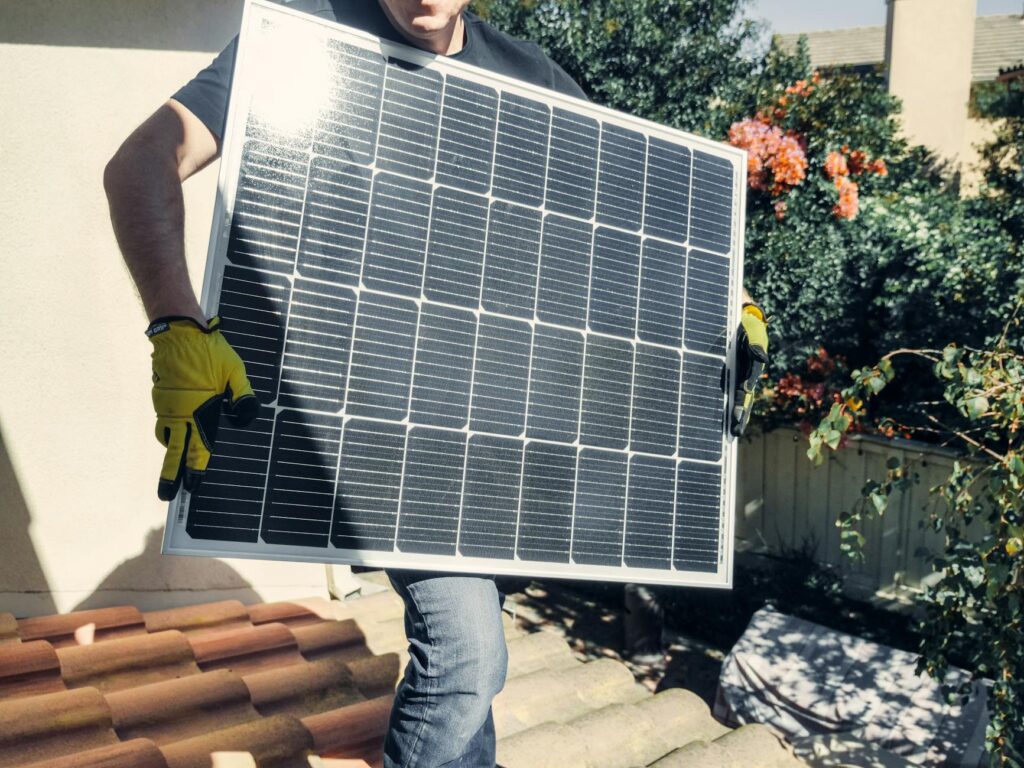
Moreover, the cost and labor associated with mounting hardware that forces a precise angle can outweigh the tiny efficiency boost. In many residential projects, the roof’s existing pitch already dictates a near‑optimal angle, and attempting to adjust it further may require additional framing, brackets, or even a custom racking system.
Practical Implications for Homeowners
For the average homeowner in Florida, the most important decisions revolve around roof orientation, shading, and system size rather than the exact degree of tilt. A south‑facing roof with a moderate slope—say 15° to 25°—will typically capture more sunlight than a perfectly level roof that receives partial shading from nearby trees or a neighboring structure.
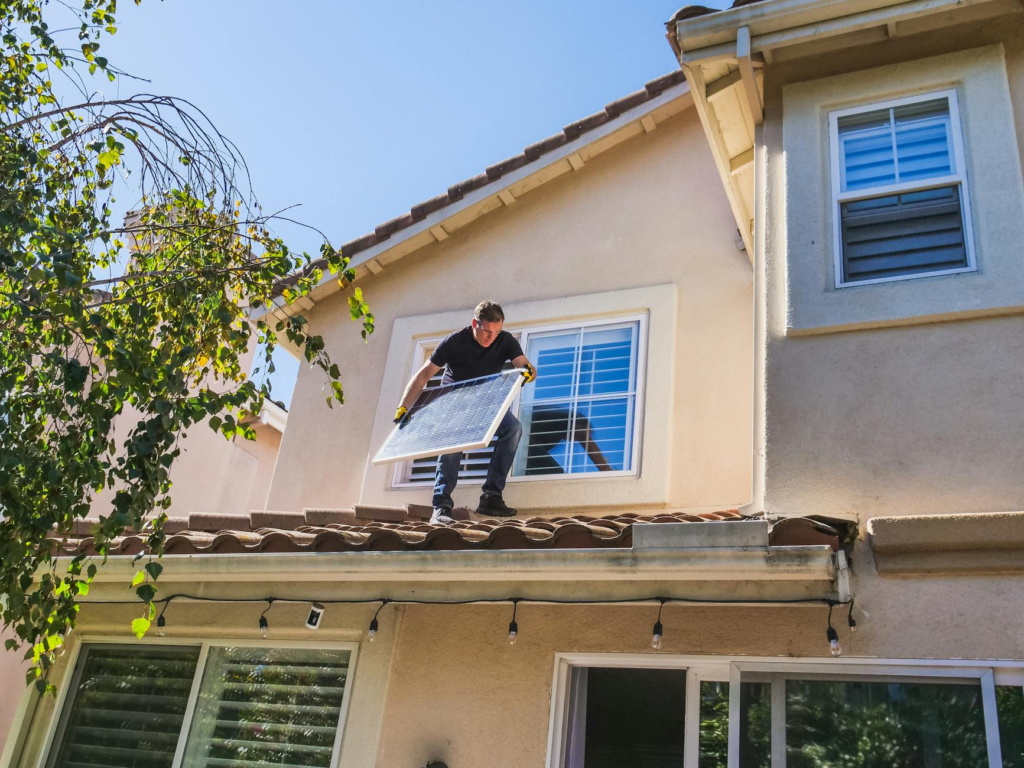
Seasonal adjustments, while technically possible on a manually hinged racking system, are rarely worth the effort. The labor cost of climbing onto a roof twice a year to change the angle, combined with the risk of damaging the mounting hardware, usually exceeds the marginal gain in winter production. In contrast, ensuring that the panels stay free of debris, keeping the inverter well‑ventilated, and monitoring system performance can provide far greater returns.
When Tilt Still Matters
There are specific scenarios where the tilt angle remains a critical factor, even in Florida. Large commercial installations that span multiple acres often use ground‑mounted, tracking systems that can adjust tilt throughout the day. In these cases, optimizing the tilt range can improve overall capacity factor and reduce the levelized cost of electricity.
Additionally, installations on steeply pitched roofs—common in historic homes or certain coastal properties—may benefit from adjusting the panel angle to avoid excessive glare or to comply with local building codes that limit the visual impact of solar arrays. In such situations, the phrase “solar panel tilt florida” becomes a focal point of design discussions, guiding engineers toward solutions that balance aesthetics, structural integrity, and performance.
Recommended Tilt Angles vs. Latitude in Florida
| City | Latitude (°N) | Suggested Tilt (°) |
|---|---|---|
| Panama City | 30.2 | 15–20 |
| Destin | 30.4 | 15–20 |
| Tallahassee | 30.4 | 15–20 |
| Orlando | 28.5 | 12–18 |
| Miami | 25.8 | 10–15 |
The table above illustrates a practical range rather than a single “optimal” figure. Homeowners can select any angle within the suggested band without fearing a dramatic drop in output. The key takeaway is that, for most residential roofs, the existing roof pitch already falls inside this window, making the tilt a secondary concern.
Tips for Optimizing Solar Production in Florida
- Prioritize a south‑facing orientation; east or west can work but will reduce peak output.
- Minimize shading from trees, chimneys, and neighboring structures throughout the day.
- Choose high‑efficiency modules that perform well under high temperature and intense light.
- Ensure proper ventilation beneath the panels to keep module temperatures lower.
- Use micro‑inverters or power optimizers to mitigate the impact of partial shading.
- Schedule regular cleaning to remove salt spray, pollen, and bird droppings that can lower efficiency.
- Monitor system performance with a reliable online portal and address issues promptly.
Frequently Asked Questions
Do I need a tracking system in Florida? For most residential installations, no. Fixed‑tilt systems are cost‑effective and perform well given the state’s high sun angles. Tracking is generally reserved for large‑scale projects where the added expense can be justified by the increased energy yield.
What if my roof is flat? Flat roofs can accommodate a slight tilt using adjustable mounting racks. However, setting the panels at a modest 10° to 15° is usually sufficient, and the simplicity of a near‑horizontal layout can reduce installation time and cost.
Can I adjust the tilt seasonally? While technically possible, the effort and risk involved rarely pay off in Florida. Seasonal variations in sun height are modest, so the gain from a few degrees of adjustment is minimal compared with the benefits of keeping the system clean and well‑maintained.
Is “solar panel tilt florida” a factor for insurance or code compliance? Some local jurisdictions have aesthetic guidelines that limit how far panels can protrude from a roof plane. In those cases, the tilt may be dictated more by visual standards than by performance calculations.
In summary, while tilt remains a technical consideration, its impact on overall energy production in Florida’s bright, flat‑sunlight environment is modest. By focusing on orientation, shading avoidance, and system upkeep, homeowners can achieve excellent results without obsessing over the exact degree of angle.
Understanding the local solar dynamics allows you to make informed decisions, keep costs under control, and enjoy the abundant sunshine that makes the Sunshine State truly shine.
