



Introduction: The Momentum Behind Residential Solar in the Panhandle
The Florida Panhandle is witnessing an unprecedented surge in residential solar installations, a trend that is reshaping the energy landscape of cities like Pensacola, Tallahassee, and Panama City. Homeowners are increasingly turning to photovoltaic (PV) systems not only to reduce monthly electricity bills but also to gain energy independence and contribute to a cleaner environment. This wave of enthusiasm is captured by the phrase solar adoption trends florida panhandle, which reflects a broader regional shift toward sustainable power sources. As utility rates climb and climate concerns intensify, the appeal of rooftop solar becomes harder to ignore, prompting a steady climb in adoption rates year after year.
Find us here:
Solar Cost Calculator – Florida Panhandle Only
* Estimate based on $3.25 per watt for solar installation.
* For Tesla Powerwall 3 Batteries, $15,000 for the first battery, $12,000 for each additional battery.
* Other variations and types of Batteries are available.
Key Drivers Accelerating Solar Adoption
Several interlocking factors are propelling the growth of residential solar across the Panhandle. First, the region enjoys abundant sunshine, averaging over 230 sunny days per year, which maximizes the energy yield of PV panels. Second, the cost of solar equipment has dropped dramatically—by more than 70% since 2010—making installations financially viable for a broader swath of households. Third, the cultural shift toward environmental stewardship, especially among younger homeowners, fuels demand for clean energy options. Together, these elements create a fertile environment for the ongoing solar adoption trends florida panhandle to flourish.
Economic Benefits for Homeowners
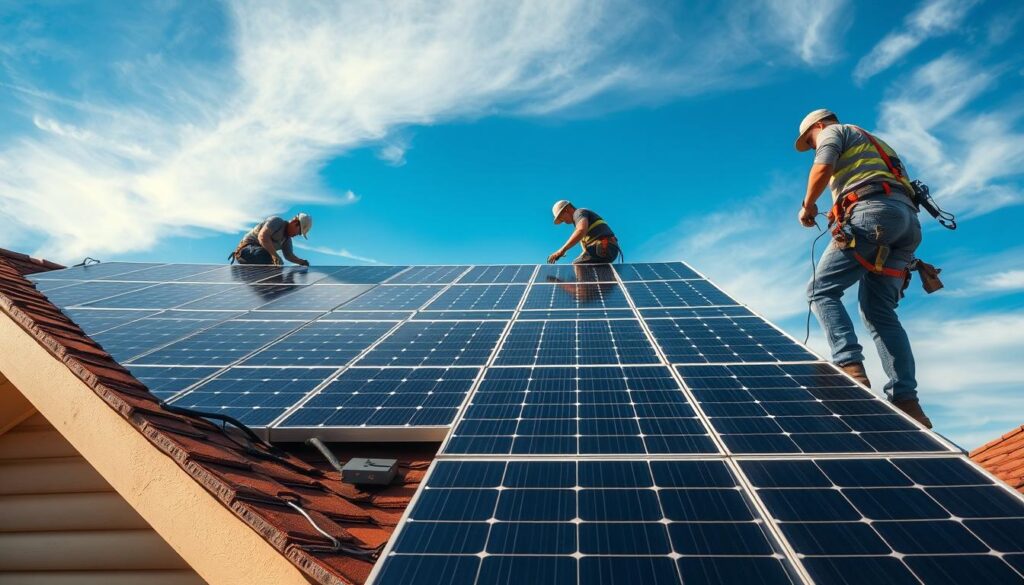
Beyond the environmental appeal, the economic upside is a primary catalyst. Net metering policies allow homeowners to sell excess electricity back to the grid, effectively turning their roofs into small power plants. In many cases, the payback period for a typical 6‑kilowatt system in the Panhandle now falls between five and seven years, after which the electricity generated is essentially free. This financial incentive aligns perfectly with the observed solar adoption trends florida panhandle, as families calculate long‑term savings against the upfront investment.
Financial Incentives and Support Programs
The federal Investment Tax Credit (ITC) currently offers a 30% credit on the cost of residential solar systems, a substantial reduction that directly impacts the bottom line for homeowners. On the state level, Florida’s Solar and Energy Loan Program provides low‑interest financing options, while local utility companies in Pensacola, Tallahassee, and Panama City have introduced rebates and performance‑based incentives. These layered incentives are instrumental in shaping the current solar adoption trends florida panhandle, as they lower barriers to entry and accelerate decision‑making for prospective adopters.
- Federal Investment Tax Credit (ITC) – 30% credit on system cost.
- State Solar and Energy Loan Program – low‑interest loans for residential projects.
- Utility rebates – cash incentives from local electric providers.
- Performance‑based incentives – payments for each kilowatt‑hour generated.
Policy Landscape: State and Local Regulations
Florida’s regulatory framework has evolved to accommodate the rapid increase in rooftop solar. The state’s net metering rules, while historically modest, have been updated to allow greater compensation for exported energy. Moreover, recent legislative proposals aim to streamline permitting processes, reducing the time from application to installation. Municipalities such as Tallahassee have adopted solar-friendly zoning ordinances that simplify roof‑access approvals. These policy enhancements directly influence the observed solar adoption trends florida panhandle, making it easier for homeowners to navigate the bureaucratic steps involved in going solar.
Local Success Stories Highlighting the Trend
Real‑world examples illustrate how the convergence of sunshine, incentives, and supportive policies translates into tangible results. In Pensacola, a neighborhood of 50 homes collectively installed over 300 kilowatts of solar capacity, cutting the community’s aggregate electricity bill by more than $150,000 annually. Tallahassee’s historic district saw a surge in retrofitted solar roofs, preserving architectural integrity while embracing modern energy solutions. Meanwhile, Panama City’s coastal residents have leveraged solar power to mitigate the impact of frequent power outages caused by severe weather. These case studies embody the broader solar adoption trends florida panhandle, showcasing how local initiatives feed the regional momentum.
Technological Advances Driving Efficiency
Advancements in PV technology have dramatically increased the efficiency of residential solar panels. Modern monocrystalline modules now achieve efficiencies above 22%, compared to the 15%–17% rates typical a decade ago. Additionally, the integration of smart inverters and battery storage systems allows homeowners to maximize self‑consumption and provide backup power during outages. These innovations make solar installations more attractive, reinforcing the ongoing solar adoption trends florida panhandle by offering higher returns on investment and greater reliability.
Environmental Impact and Community Benefits
Beyond individual savings, residential solar contributes significantly to regional emissions reductions. According to the Environmental Protection Agency, each kilowatt‑hour of solar electricity offsets approximately 0.85 pounds of CO₂. When aggregated across the Panhandle’s growing solar base, this translates to a reduction of hundreds of thousands of metric tons of greenhouse gases annually. The collective environmental benefit strengthens community resilience and aligns with broader sustainability goals, further fueling the solar adoption trends florida panhandle.
Future Outlook: What to Expect in the Coming Years
Looking ahead, experts predict that residential solar installations in the Florida Panhandle will continue to outpace national averages. Projections suggest a compound annual growth rate (CAGR) of roughly 12% through 2035, driven by continued cost declines, expanding financing options, and heightened climate awareness. Emerging technologies such as bifacial panels and perovskite cells promise even higher efficiencies, while community solar programs will broaden access for renters and multi‑unit dwellings. These developments indicate that the solar adoption trends florida panhandle are poised to maintain their upward trajectory, reshaping the energy mix for decades to come.
Key Statistics at a Glance
| Metric | 2022 | 2023 | Projected 2025 |
|---|---|---|---|
| Total Residential Solar Capacity (MW) | 85 | 102 | 150 |
| Average Payback Period (Years) | 7.2 | 6.5 | 5.8 |
| Net Metering Rate ($/kWh) | 0.12 | 0.13 | 0.14 |
The table above summarizes the most recent data points that illustrate the accelerating solar adoption trends florida panhandle. Notice the steady increase in total installed capacity and the decreasing payback period, both of which underscore the growing attractiveness of residential solar in the region.
Conclusion
Residential solar adoption in the Florida Panhandle is on a clear upward trajectory, fueled by abundant sunshine, decreasing system costs, supportive policies, and a strong community commitment to sustainability. As the data and local success stories demonstrate, the momentum behind solar adoption trends florida panhandle shows no signs of slowing, promising a brighter, cleaner energy future for homeowners across Pensacola, Tallahassee, and Panama City.
