




Understanding the Momentum Behind Solar Adoption
Across the United States, the conversation about energy is shifting from scarcity to sustainability. Homeowners, businesses, and utilities are all looking for solutions that can meet rising demand while reducing carbon footprints. In this evolving landscape, solar power stands out as a technology that aligns closely with solar future energy expectations. The combination of falling panel costs, improved efficiency, and supportive policies creates a compelling case for solar installations, especially in sun‑rich regions. As the climate agenda gains urgency, the alignment of solar with long‑term energy goals becomes not just desirable but essential for resilient power systems.
Solar Cost Calculator – Florida Panhandle Only
* Estimate based on $3.25 per watt for solar installation.
* For Tesla Powerwall 3 Batteries, $15,000 for the first battery, $12,000 for each additional battery.
* Other variations and types of Batteries are available.
Why Clean Power Is No Longer Optional
Consumers are demanding cleaner energy because they recognize the tangible benefits: lower utility bills, increased property value, and a reduced reliance on fossil fuels. Utilities are also feeling pressure to modernize grids, and many are incorporating renewable resources to meet state mandates. The expectation that the next decade will be dominated by renewable generation is driving investments in solar farms and residential rooftop systems alike. This trend reflects a broader shift where solar future energy expectations are becoming a central pillar of national energy strategies, influencing everything from financing models to grid planning.
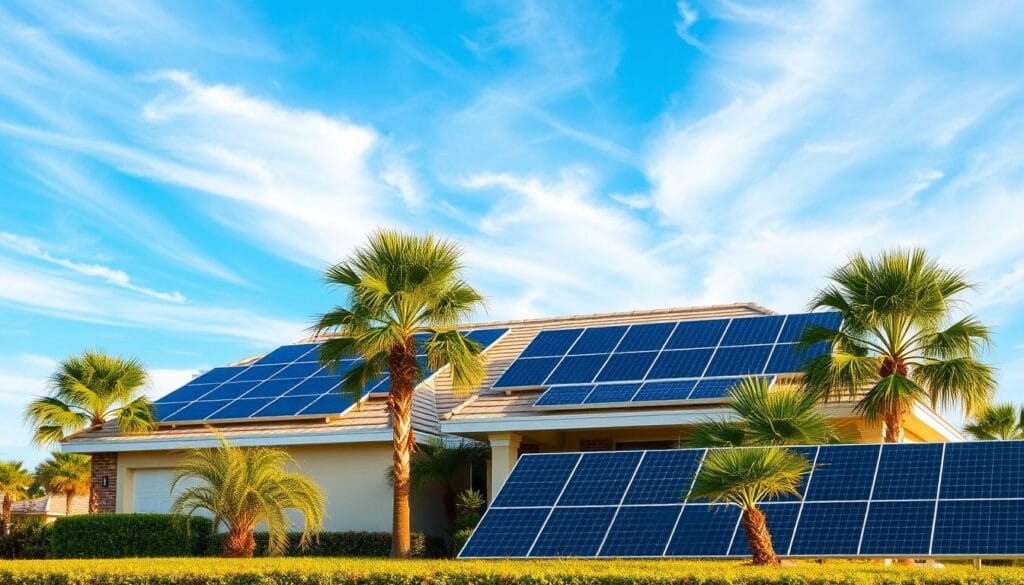
Advancements in Solar Technology Accelerating Adoption
Recent breakthroughs in photovoltaic (PV) materials, such as bifacial panels and perovskite cells, have dramatically increased conversion efficiencies while reducing the overall system footprint. Coupled with smarter inverters and integrated monitoring platforms, these innovations make solar installations more reliable and easier to manage. Energy storage solutions, particularly lithium‑ion batteries, are now cost‑effective enough to pair seamlessly with solar arrays, addressing intermittency concerns. These technological strides directly support solar future energy expectations by offering consumers a more predictable and resilient power source that can be tailored to individual usage patterns.
Florida Panhandle Homes: A Case Study in Regional Growth
The Florida Panhandle, with its abundant sunshine and growing population, provides a perfect illustration of how regional characteristics shape solar uptake. Homeowners here are seeing utility rates climb, prompting many to explore rooftop solar as a hedge against future price hikes. Local governments have introduced streamlined permitting processes and property‑tax incentives, further encouraging adoption. As a result, the number of residential solar systems in the Panhandle has risen by more than 40 % over the past three years. This surge mirrors the broader national narrative that solar future energy expectations are being realized first in communities that combine favorable policy, strong solar resources, and proactive consumer engagement.
Economic Incentives Making Solar More Accessible
Federal tax credits, state rebates, and utility‑scale net‑metering programs have collectively lowered the upfront cost of solar installations. In Florida, the state solar rebate program offers up to $2,000 per kilowatt for residential projects, while the federal Investment Tax Credit (ITC) remains at 30 % for systems installed before the end of 2024. These incentives shorten the payback period, often bringing it down to five to seven years, well within the typical lifespan of a solar array. By reducing financial barriers, these programs reinforce solar future energy expectations and encourage a broader segment of the population to consider solar as a viable long‑term investment.

Integrating Solar Into the Modern Grid
One of the biggest challenges for renewable energy has historically been its variability. However, advances in smart grid technology, demand‑response programs, and distributed energy resource management systems are making it easier to balance solar generation with consumption. Utilities are deploying advanced forecasting tools that predict solar output with greater accuracy, allowing for smoother integration into the grid. Coupled with battery storage, solar can now provide not just energy but also ancillary services such as frequency regulation and voltage support. These capabilities align directly with solar future energy expectations, ensuring that increased solar penetration does not compromise grid reliability.
Policy Landscape Shaping the Solar Horizon
Legislative action at both state and federal levels continues to shape the trajectory of solar deployment. Recent bills in Florida aim to protect net‑metering rates and expand community solar options, allowing renters and apartment dwellers to participate in solar benefits. On the national stage, the Inflation Reduction Act has locked in the ITC for another decade, providing long‑term certainty for investors. These policy moves are crucial because they translate the abstract concept of solar future energy expectations into concrete, actionable frameworks that guide financing, construction, and operation of solar projects.
Changing Consumer Expectations and Lifestyle Choices
Today’s homeowners are more environmentally conscious and technologically savvy than previous generations. They expect energy solutions that are not only cost‑effective but also align with their values. Smart home devices, electric vehicles, and home batteries are becoming standard, and solar fits naturally into this ecosystem. The desire for energy independence, combined with the ability to monitor production and consumption in real time, creates a compelling narrative that drives adoption. This cultural shift reinforces the notion that solar future energy expectations are being shaped by consumer demand as much as by policy and technology.
Key Benefits of Solar for Homeowners
- Reduced electricity bills and predictable energy costs.
- Increased property value and marketability.
- Lower carbon footprint and contribution to climate goals.
- Energy independence and resilience during outages.
- Eligibility for tax credits, rebates, and net‑metering credits.
Comparative Snapshot: 2020 vs. 2024 Solar Metrics
| Metric | 2020 | 2024 |
|---|---|---|
| Average System Cost (per Watt) | $3.20 | $2.40 |
| Average Efficiency (Cell) | 19 % | 22 % |
| Residential Adoption Rate (U.S.) | 10 % | 15 % |
The table above highlights how falling costs, higher efficiencies, and rising adoption rates are converging to meet the solar future energy expectations set by industry analysts. As panels become cheaper and more efficient, the economic case for solar strengthens, encouraging even more households to make the switch.
Beyond Electricity: Additional Value Streams
Solar installations can generate revenue beyond the traditional electricity savings. Homeowners with excess generation can participate in community solar programs, sell power back to the grid, or even provide demand‑response services to utilities. Moreover, solar can serve as a platform for emerging technologies such as electric vehicle (EV) charging stations and home microgrids. These ancillary benefits expand the financial upside and further align solar projects with the broader solar future energy expectations of a diversified, resilient energy ecosystem.
Challenges That Still Need Attention
Despite the positive trends, several obstacles remain. Interconnection delays, especially in densely populated areas, can slow project timelines. Additionally, the upfront capital required for larger storage solutions can be prohibitive for some households. Workforce shortages in skilled solar installers also pose a bottleneck as demand surges. Addressing these issues is essential to fully realize the solar future energy expectations that policymakers and industry leaders envision.
Looking Ahead: Solar in 2030 and Beyond
Projecting forward, analysts anticipate that solar will account for more than one‑third of total electricity generation in the United States by 2030. Continued innovation in materials science, combined with economies of scale, is expected to push panel efficiencies above 25 % while driving costs even lower. Energy storage will become more ubiquitous, enabling households to operate off‑grid for extended periods. In the Florida Panhandle, these trends could translate into near‑universal rooftop solar coverage for new residential construction. The alignment of technology, policy, and consumer demand suggests that the solar future energy expectations articulated today will be a reality sooner rather than later.
In conclusion, the convergence of falling costs, supportive policies, and evolving consumer expectations is rapidly turning solar power from a niche option into a mainstream energy solution. For homeowners across the Florida Panhandle and beyond, embracing solar today means positioning themselves at the forefront of a sustainable, resilient, and economically advantageous energy future.
