
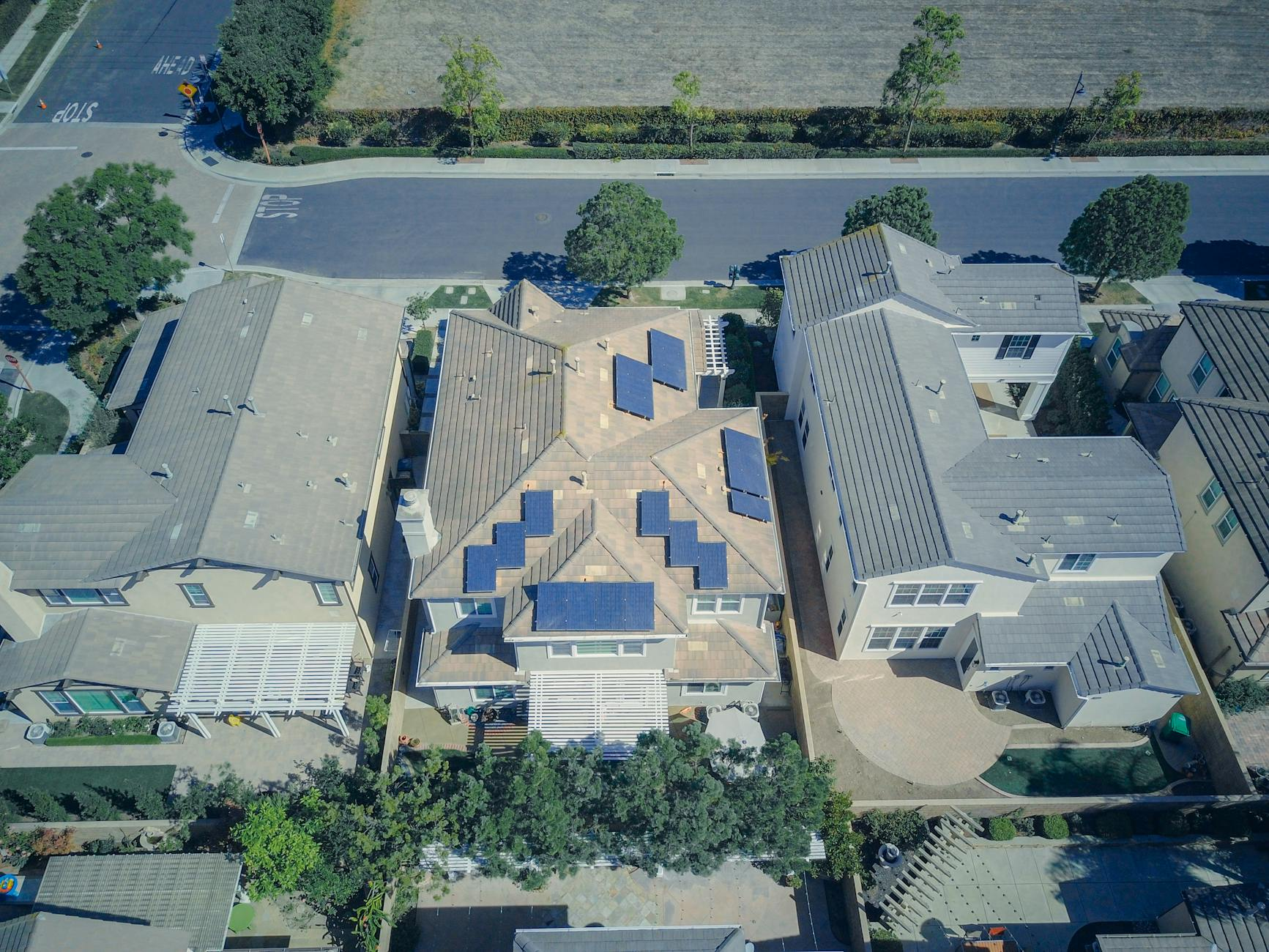
Understanding Solar Roof Orientation in Florida
When you start researching solar energy for your home, the first question that often pops up is, “Which direction should my roof face to get the most power?” In most solar guides, the answer is a straightforward “south‑facing roofs are best.” While that rule of thumb works in many parts of the United States, Florida’s unique latitude, climate, and the spread of its Panhandle communities add layers of nuance that many homeowners overlook. The state’s high solar irradiance, combined with relatively flat terrain and a consistent year‑round sun path, means that east‑ and west‑facing roofs can still capture ample sunlight, especially during the early morning and late afternoon peaks that align perfectly with residential electricity demand.
Find us here:
Solar Cost Calculator – Florida Panhandle Only
* Estimate based on $3.25 per watt for solar installation.
* For Tesla Powerwall 3 Batteries, $15,000 for the first battery, $12,000 for each additional battery.
* Other variations and types of Batteries are available.
In this article we’ll explore why a south‑facing roof isn’t always the optimal choice in the Sunshine State. We’ll dig into the science of solar angles, examine the impact of roof pitch and shading, and provide practical guidance for homeowners who want to maximize their solar investment. By the end, you’ll have a clear picture of when an east or west orientation might actually be the best roof direction solar florida homeowners can choose, and how to make an informed decision based on real‑world performance data.
The Solar Geometry Behind Roof Orientation
Solar panels generate electricity by converting photons from the sun into electrical current. The amount of energy captured depends on two primary geometric factors: the angle of incidence (how directly sunlight hits the panel) and the duration of exposure (how many hours per day the panel receives usable sunlight). In the northern hemisphere, a panel tilted toward the equator—generally a south‑facing orientation—receives the most direct sunlight over the course of a year.
However, Florida sits at a latitude of roughly 27° to 31°, meaning the sun’s path is relatively high in the sky throughout the year. This high solar altitude reduces the penalty for deviating from true south. In practical terms, a panel that faces east can capture a strong morning sun, while a west‑facing panel can harvest the powerful late‑afternoon rays. Both of these periods coincide with peak household electricity usage, which can improve net‑metering benefits and reduce overall utility bills.
Why South‑Facing Roofs Have Long Been the Default Recommendation
The conventional wisdom that “south is best” originated from early solar studies in higher latitudes, where the sun sits lower on the horizon during winter months. In those regions, a south‑oriented panel maximizes the winter angle of incidence, ensuring that the system produces enough energy when demand is highest and solar output is lowest. This principle was carried over into early solar marketing materials and persisted as a blanket rule for decades.
In many parts of the United States, especially in the Midwest and Northeast, homeowners still see the strongest performance from south‑facing arrays. The same logic was often applied to Florida without accounting for the state’s distinctive solar profile. As a result, many installers still default to recommending south‑facing roofs even when the property layout, shading, or roof pitch makes other orientations more practical.
Limitations of a South‑Facing Roof in the Florida Panhandle
While a south‑facing roof can still deliver excellent performance in the Panhandle, there are several scenarios where it may not be the best roof direction solar florida solution:
- Roof pitch that is too shallow or too steep for optimal tilt, causing the panel to operate far from its ideal angle.
- Obstructions such as mature trees, nearby structures, or HVAC equipment that cast shadows during key production hours.
- Architectural constraints that limit the usable area on the south side, forcing smaller arrays or higher system costs.
- Utility interconnection rules that prioritize certain roof orientations for easier installation and inspection.
When any of these factors are present, forcing a south‑facing array can lead to reduced energy yield, higher installation expenses, and a lower return on investment. In contrast, an east‑ or west‑facing roof may avoid these obstacles while still delivering a robust output profile.
Advantages of East‑Facing Roofs for Residential Solar
East‑facing roofs receive sunlight during the early morning hours, typically from sunrise until around solar noon. This period aligns well with the time when many households start using appliances, lights, and heating or cooling systems. Capturing energy during these hours can offset the “morning peak” on the grid and reduce the amount of electricity drawn from the utility.
In the Florida Panhandle, the sun rises at a relatively steep angle, providing high‑intensity light that can be efficiently converted by photovoltaic (PV) panels. Moreover, east‑facing installations often benefit from reduced heat buildup compared to south‑facing arrays, because the panels receive less direct, high‑temperature exposure during the hottest part of the day. Lower operating temperatures can improve panel efficiency and extend system lifespan.
Benefits of West‑Facing Roofs for Solar Production
West‑facing roofs capture sunlight from solar noon until sunset, covering the late‑afternoon and early‑evening periods when many families return home and increase their electricity consumption. This “evening peak” is especially important in Florida, where air‑conditioning loads often surge as temperatures dip slightly but humidity remains high.
Because the sun is lower in the sky during the late afternoon, west‑facing panels can achieve a favorable angle of incidence that rivals a south‑facing system’s performance during the same timeframe. Additionally, the energy harvested in the late afternoon can be stored in batteries for use during nighttime, further enhancing the value of a west‑oriented array.
How Roof Pitch and Shading Influence the Optimal Direction
Roof pitch—the angle at which a roof slopes—directly affects how well a solar panel can be tilted to match the sun’s path. In Florida, a common recommendation is to tilt panels at an angle equal to the latitude (around 28°) for a balanced year‑round performance. However, most residential roofs are built with pitches ranging from 4:12 (about 18°) to 12:12 (about 45°). When the existing roof pitch deviates significantly from the ideal tilt, installers often use mounting racks to adjust the angle, which adds cost.
Shading is another critical factor. Even a small shadow that covers 10% of a panel can reduce its output by up to 30% due to the way PV cells are wired in series. East and west roofs sometimes avoid shading from tall trees that grow on the south side of a property, or from neighboring houses that cast long shadows during the middle of the day. Conducting a thorough shade analysis with tools like a Solar Pathfinder or a drone‑based LiDAR scan can reveal that an east‑ or west‑facing roof is actually the best roof direction solar florida option for a given site.
Practical Tips for Homeowners Evaluating Roof Direction
- Map Sun Path Hours: Use free online tools (e.g., PVWatts, Solar‑GIS) to visualize how many sun hours each orientation receives throughout the year.
- Assess Shading Early: Conduct a shade study in the winter when the sun is lowest; this will capture the worst‑case scenario for shadows.
- Consider Roof Pitch: If your roof pitch aligns closely with the optimal tilt for your latitude, you may avoid additional mounting costs.
- Think About Energy Use Patterns: Match the orientation to when you use the most electricity (morning vs. evening).
- Plan for Future Expansion: Choose an orientation that leaves space for additional panels or battery storage later on.
By taking these steps, you can determine whether a south‑facing roof truly offers the highest return or if an east or west orientation provides a better balance of cost, performance, and aesthetic integration.
Performance Comparison: South vs. East vs. West in the Panhandle
| Orientation | Average Annual Production (kWh/kW) | Peak Production Time | Typical Shade Issues |
|---|---|---|---|
| South | 1,720 | Solar Noon (11 am‑1 pm) | Often shaded by trees on the south side, higher heat loss |
| East | 1,610 | Morning (7 am‑10 am) | Less shade in the morning, cooler operating temps |
| West | 1,630 | Afternoon (2 pm‑5 pm) | Potential shading from nearby structures in late afternoon |
The numbers above illustrate that east‑ and west‑facing roofs in Florida’s Panhandle can achieve production levels within 5‑6% of a south‑facing system. When you factor in reduced shading, lower panel temperatures, and alignment with household demand peaks, the real‑world value of an east or west orientation often rivals or surpasses that of a south‑facing roof.
Choosing the Best Roof Direction Solar Florida for Your Home
After reviewing the technical considerations, the decision comes down to a blend of site‑specific factors and personal priorities. Here’s a quick decision matrix to guide you:
- Goal: Maximize Total Energy Production – If your roof pitch is close to the optimal tilt and there are no shading concerns, a south‑facing array still delivers the highest cumulative kWh.
- Goal: Match Energy Use to Production – Choose east if you consume more electricity in the morning (e.g., work‑from‑home, early‑morning appliances). Choose west if your evening air‑conditioning load is higher.
- Goal: Minimize Installation Costs – Opt for the orientation that requires the least amount of mounting hardware and avoids costly shade mitigation.
- Goal: Future‑Proof with Batteries – West‑facing panels pair well with battery storage because they generate power later in the day, which can be stored for nighttime use.
In many Florida Panhandle neighborhoods, the most practical solution is a hybrid approach: install a larger portion of the array on the east side to capture the cool morning sun, and add a smaller west‑facing segment to cover the evening peak. This configuration can provide a smoother production curve, reduce the need for oversized inverters, and improve overall system resilience.
Frequently Asked Questions
Q: Does a south‑facing roof guarantee the highest solar rebate in Florida?
A: No. Most Florida incentive programs base eligibility on system size and performance, not roof orientation. However, a well‑designed east or west system can qualify for the same rebates as a south‑facing system.
Q: Will an east‑ or west‑facing roof affect my net‑metering credits?
A: Net‑metering credits are calculated on the total kilowatt‑hours exported to the grid, regardless of orientation. As long as the system is sized correctly, you’ll receive comparable credits.
Q: How does roof material (shingles vs. metal) impact orientation choices?
A: Metal roofs often have a lower thermal mass, which can keep panel temperatures cooler, especially on east‑facing installations. Shingle roofs can retain more heat, potentially reducing efficiency.