




The Florida Panhandle is experiencing a solar boom that’s doing more than just cutting electric bills—it’s fundamentally reshaping the home grid relationship solar creates between residential properties and the utility network. As more homeowners install photovoltaic (PV) systems, the traditional one‑way flow of electricity—where power moves only from the grid to the house—is evolving into a two‑way, dynamic exchange. This shift brings new opportunities for cost savings, grid resilience, and environmental stewardship, while also prompting utilities to rethink how they manage supply and demand. In this long‑form guide, we’ll explore the technical, economic, and policy‑driven forces behind this transformation, and offer practical steps for homeowners who want to be part of the change.
Find us here:
Solar Cost Calculator – Florida Panhandle Only
* Estimate based on $3.25 per watt for solar installation.
* For Tesla Powerwall 3 Batteries, $15,000 for the first battery, $12,000 for each additional battery.
* Other variations and types of Batteries are available.
Why Solar Is Gaining Momentum in the Florida Panhandle
The Panhandle’s abundant sunshine, combined with state‑wide incentives and declining solar panel prices, makes it a prime market for residential solar adoption. Net‑metering policies allow homeowners to receive credit for excess electricity they feed back into the grid, turning rooftops into miniature power plants. Additionally, local utilities are increasingly offering time‑of‑use rates that reward customers for shifting consumption to off‑peak periods, a scenario that aligns perfectly with solar generation patterns. As a result, more families are seeing a clear financial upside, prompting a rapid increase in installations that directly influences the home grid relationship solar establishes across the region.
Understanding the Traditional Home‑Grid Relationship
Historically, the home‑grid relationship was straightforward: utilities generated electricity at large power plants, transmitted it over high‑voltage lines, and delivered it to households. Homeowners paid a fixed monthly rate based on consumption, and any power outage meant a total loss of service until the grid was restored. This one‑directional flow left little room for homeowners to influence the grid’s performance or to benefit from any surplus generation they might have, because most homes did not produce electricity of their own.
How Solar Shifts the Dynamic
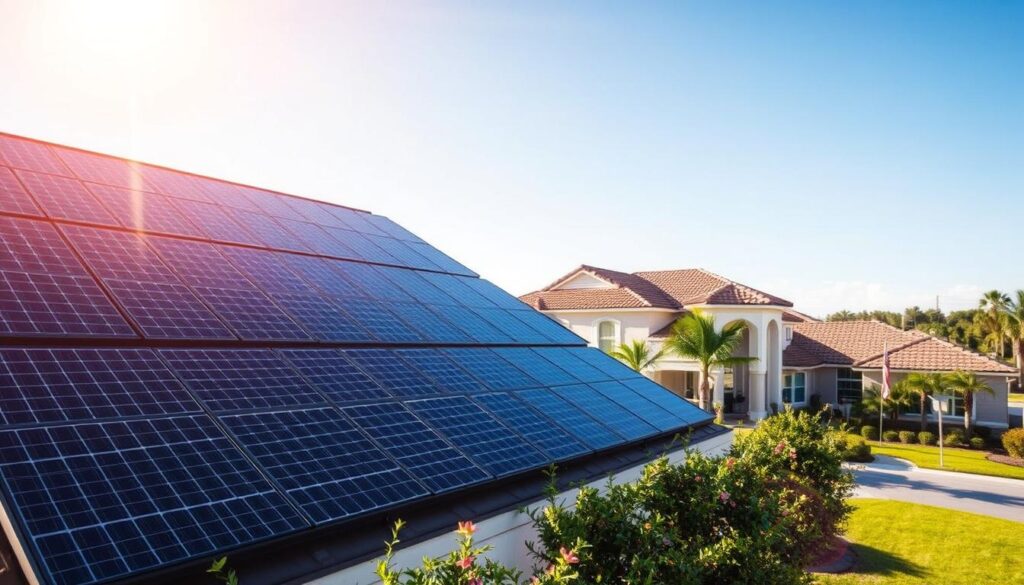
When a solar array is installed, the home becomes both a consumer and a producer of electricity. During daylight hours, especially in the summer months, a typical Panhandle residence can generate more power than it uses, sending the surplus back to the utility. This bidirectional flow redefines the home‑grid relationship solar creates, turning the house into an active participant in grid management. Utilities can now draw on distributed solar resources to meet peak demand, while homeowners can offset their own consumption and even earn credits, reducing overall electricity costs.
Net Metering and Export Credits
Net metering is the cornerstone of the modern home‑grid relationship solar fosters. Under this arrangement, the utility’s meter runs backward when a homeowner’s system produces more electricity than the house consumes, effectively crediting the owner at the retail rate. In Florida, these credits can be applied to future bills, creating a financial buffer that smooths out seasonal variations in solar production. Over time, many households see their net electricity expense drop to near zero, illustrating how solar can transform a passive consumer into an active energy partner.
Battery Storage’s Role in the Evolving Relationship
Battery storage adds another layer of flexibility to the home‑grid relationship solar supports. By storing excess daytime generation, homeowners can draw on that stored energy during evenings or cloudy periods, reducing reliance on the grid when rates are highest. Moreover, during grid emergencies, a well‑sized battery can keep essential loads running, providing a degree of resilience that traditional solar‑only systems cannot. As battery costs continue to fall, more Panhandle residents are pairing PV with storage, further decentralizing power and strengthening the two‑way interaction with the utility.
Economic Benefits for Homeowners
The financial incentives tied to solar are compelling. Federal Investment Tax Credits (ITC) currently cover 30% of system costs, while state and local programs in Florida offer additional rebates and property‑tax exemptions. When these incentives are combined with net‑metering credits, the payback period for a typical 6‑kilowatt system can be as short as five to seven years. After that, the electricity generated is essentially free, dramatically improving the home‑grid relationship solar enables by turning the roof into a long‑term revenue stream.
Impact on Grid Stability and Utility Operations
From the utility’s perspective, distributed solar can both challenge and support grid stability. On one hand, the variability of solar output requires more sophisticated forecasting and real‑time balancing. On the other hand, the aggregate effect of thousands of rooftop systems can reduce peak load pressures, especially during hot summer afternoons when air‑conditioning demand spikes. Utilities are increasingly investing in smart‑grid technologies—such as advanced metering infrastructure (AMI) and demand‑response platforms—to better integrate these distributed resources, thereby reshaping the overall home‑grid relationship solar creates.
Policy and Incentives Driving Adoption in the Panhandle
State legislation and local utility programs play a pivotal role in accelerating the home‑grid relationship solar is fostering. The Florida Public Service Commission’s support for net metering, combined with county‑level solar rebates, lowers the upfront cost barrier for homeowners. Additionally, recent legislative proposals aim to streamline interconnection processes, making it faster and cheaper for new systems to hook into the grid. These policy frameworks not only encourage individual adoption but also signal to utilities that a more distributed energy future is on the horizon.

Real‑World Examples from the Panhandle
Several communities in the Panhandle illustrate how solar is redefining the home‑grid relationship solar creates. In a coastal town near Pensacola, a neighborhood of 50 homes installed 5‑kilowatt panels each, collectively generating enough electricity to offset the local substation’s peak demand by 12%. In another inland community, a homeowner paired a 10‑kilowatt system with a 13.5‑kilowatt‑hour battery, achieving near‑zero grid reliance during a summer heatwave. These case studies demonstrate both the individual and collective benefits of solar integration, highlighting the tangible shift from passive consumption to active participation.
| Scenario | Average Monthly Cost (USD) |
|---|---|
| Typical grid‑only home | $150 |
| Home with solar (net metering) | $45 |
| Home with solar + battery | $30 |
Future Trends Shaping the Home‑Grid Relationship
Looking ahead, several trends will deepen the transformation of the home‑grid relationship solar initiates. First, the rise of peer‑to‑peer energy trading platforms could allow homeowners to sell excess power directly to neighbors, bypassing traditional utility channels. Second, advances in AI‑driven energy management systems will enable homes to automatically optimize when to store, consume, or export electricity based on real‑time price signals. Finally, continued policy support for community solar projects will extend the benefits of solar to renters and multi‑unit dwellings, further broadening the impact across the residential sector.
Practical Steps for Homeowners Ready to Join the Shift
If you’re a Panhandle resident interested in reshaping your home‑grid relationship solar can offer, start by conducting a site assessment to determine the optimal system size for your roof orientation and shading conditions. Next, compare quotes from multiple certified installers and verify that they have experience navigating local interconnection requirements. Apply for all applicable incentives—federal, state, and local—to reduce upfront costs. Finally, consider adding a battery storage solution if you want greater resilience and the ability to maximize self‑consumption during peak rate periods.
- Assess roof space and solar potential.
- Gather multiple installer quotes.
- Apply for federal ITC and state rebates.
- Check net‑metering policies with your utility.
- Evaluate battery storage options.
- Schedule professional installation and inspection.
Common Misconceptions About Solar and the Grid
Many homeowners still hold outdated beliefs that deter them from embracing solar. One myth is that solar panels require excessive maintenance; in reality, modern systems are largely self‑cleaning and require only occasional inspections. Another misconception is that solar will “break” the grid; instead, distributed solar can enhance grid flexibility when paired with smart technologies. Finally, some think that solar is only viable in sunny climates, but even in overcast conditions, PV modules generate sufficient electricity to make a noticeable impact on the home‑grid relationship solar fosters.

Environmental Impact of a Solar‑Powered Home‑Grid Relationship
Beyond economic advantages, solar contributes significantly to emissions reductions. A typical 6‑kilowatt residential system can offset roughly 8,000 pounds of CO₂ annually, equivalent to planting over 100 trees each year. When thousands of homes in the Panhandle adopt solar, the cumulative effect reduces reliance on fossil‑fuel‑based generation, improving air quality and supporting state climate goals. This environmental benefit reinforces the broader value of transforming the home‑grid relationship solar enables, aligning personal savings with planetary health.
In conclusion, the rise of residential solar in Florida’s Panhandle is redefining the home‑grid relationship solar creates, turning households into active contributors to a more resilient, cost‑effective, and cleaner energy system. By understanding the technical shifts, economic incentives, and policy landscape, homeowners can make informed decisions that not only lower their bills but also strengthen the overall grid. Whether you’re just curious or ready to install, the path toward a more integrated energy future is clearer than ever.
