



Why Home Orientation Matters for Solar Energy
When you’re planning a solar installation, the first factor you should evaluate is how your house sits on the site. The direction a home faces—its orientation—directly influences the amount of sunlight that reaches the roof throughout the year. This concept, often referred to as home orientation solar potential, determines whether a solar array can capture enough energy to meet household needs, reduce utility bills, and achieve a quick return on investment.
In sunny coastal markets like Panama City, Florida, and the Gulf‑shore town of Destin, subtle differences in orientation can create noticeable gaps in performance. A house that looks directly south in Panama City may generate up to 30 % more electricity than an identical home that faces east, while the same orientation shift in Destin can affect seasonal output because of its slightly higher latitude and prevailing wind patterns.
Find us here:
Solar Cost Calculator – Florida Panhandle Only
* Estimate based on $3.25 per watt for solar installation.
* For Tesla Powerwall 3 Batteries, $15,000 for the first battery, $12,000 for each additional battery.
* Other variations and types of Batteries are available.
Understanding the Basics of Home Orientation
Home orientation is measured using the cardinal points—north, south, east, and west—relative to true north. In the northern hemisphere, a south‑facing roof receives the most direct sunlight during the middle of the day, especially in the winter months when the sun sits lower on the horizon. Conversely, a north‑facing roof is often shaded for the majority of daylight hours, reducing its home orientation solar potential considerably.
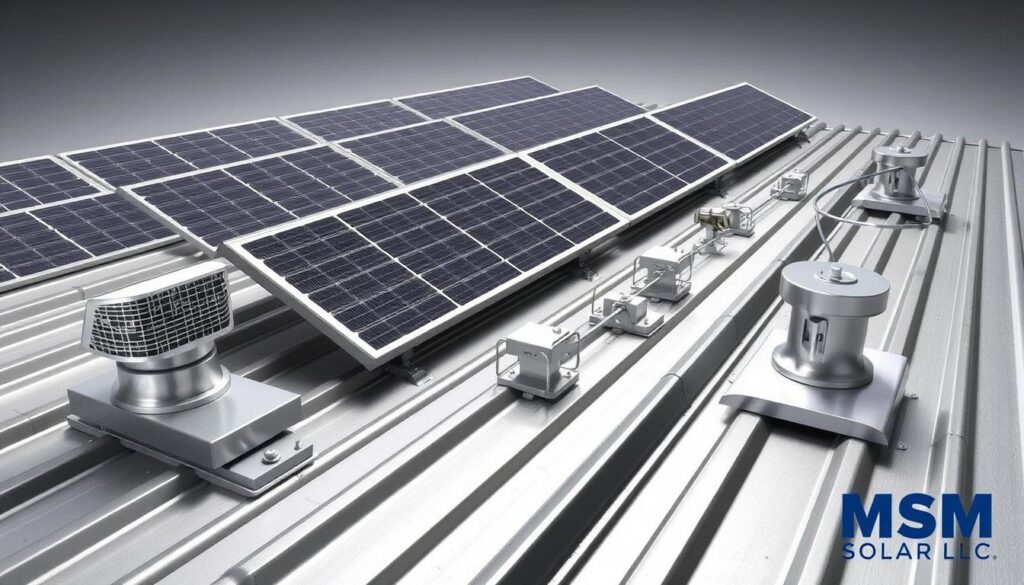
Two additional concepts are essential when assessing orientation:
- Solar altitude angle: The height of the sun above the horizon at a given time.
- Solar azimuth angle: The compass direction from which sunlight arrives.
Both angles change throughout the year, creating a dynamic solar path that interacts with a roof’s tilt and direction. Understanding these movements helps homeowners predict how much sunlight their roof will capture, which is the core of evaluating home orientation solar potential.
Solar Path Basics and Their Interaction with Roofs
Imagine the sun tracing a wide arc across the sky each day. In Panama City, the arc is broader in summer, delivering high‑angle sunlight that strikes roofs from a steep angle. In Destin, the arc is slightly narrower, and the city’s proximity to the Gulf of Mexico introduces occasional cloud cover that can soften the intensity of direct sunlight.
When a roof is angled toward the sun’s path, it maximizes the angle of incidence—the angle at which sunlight hits the panel surface. The closer this angle is to perpendicular, the higher the energy conversion efficiency. This is why a south‑facing roof with a 20‑30° pitch often boasts the highest home orientation solar potential in both Panama City and Destin.
Regional Differences: Panama City vs. Destin
Although both cities share a Gulf Coast climate, they differ in latitude, average cloud cover, and seasonal wind patterns. These variations influence how orientation translates into real‑world solar output.
In Panama City (30.2° N), the sun’s winter altitude can drop to around 30°, making south‑facing roofs especially valuable for winter electricity production. Destin (30.4° N) experiences a similar sun path, but its higher incidence of afternoon sea breezes can create micro‑shading on western exposures, slightly reducing the home orientation solar potential of west‑facing roofs during peak summer months.
| Orientation | Panama City Avg. Annual Production | Destin Avg. Annual Production |
|---|---|---|
| South (15‑30° tilt) | ≈ 1,200 kWh / kW‑p | ≈ 1,150 kWh / kW‑p |
| East (15‑30° tilt) | ≈ 950 kWh / kW‑p | ≈ 920 kWh / kW‑p |
| West (15‑30° tilt) | ≈ 970 kWh / kW‑p | ≈ 880 kWh / kW‑p |
| North (15‑30° tilt) | ≈ 600 kWh / kW‑p | ≈ 580 kWh / kW‑p |
The table illustrates the average annual energy yield per kilowatt‑peak (kW‑p) for each cardinal orientation in both locations. Notice how south‑facing roofs consistently outperform the others, confirming the critical role of orientation in determining solar potential.
How Orientation Directly Affects Home Orientation Solar Potential
Beyond raw numbers, orientation shapes three practical outcomes for homeowners:
- Energy Production Consistency: South‑facing arrays deliver steadier output across seasons, reducing reliance on battery storage.
- System Size Requirements: A house with optimal orientation can achieve the same energy goals with fewer panels, lowering upfront costs.
- Return on Investment (ROI): Higher daily generation shortens the payback period, making solar more financially attractive.
When a property’s home orientation solar potential is limited—such as a north‑oriented roof—installers may need to incorporate tracking systems, increase the array size, or use higher‑efficiency panels to compensate. Each of these solutions adds complexity and expense.
Practical Steps to Optimize Your Home’s Solar Potential
Even if your house isn’t perfectly aligned, you can still boost its solar performance. Follow these actionable tips:
- Conduct a Sun‑Path Analysis: Use free online tools (e.g., PVWatts, SunCalc) to map the sun’s trajectory over your roof throughout the year.
- Trim Obstructions: Remove or prune trees, chimneys, or skylights that cast shadows on the solar array during peak hours.
- Adjust Roof Pitch: If you’re renovating, consider re‑tilting the roof to a 20‑30° angle, which aligns well with the sun’s average altitude in both Panama City and Destin.
- Utilize East/West Arrays: When south exposure isn’t possible, split the system into east‑ and west‑facing sub‑arrays to capture morning and evening sun, balancing daily production.
- Integrate Bifacial Panels: These panels can harvest reflected light from the roof surface, slightly improving output on less‑ideal orientations.
Implementing these measures can elevate the home orientation solar potential of any property, ensuring you extract the maximum benefit from the local sun.
Selecting the Right Solar System for Your Orientation
Choosing a solar solution that matches your home’s orientation involves evaluating three key components:
- Panel Type: Monocrystalline panels offer the highest efficiency for limited roof space, while polycrystalline panels can be a cost‑effective choice for larger, south‑facing roofs.
- Inverter Size: An inverter should be sized to handle the peak output of your array; oversizing can improve performance on east/west orientations.
- Mounting System: Fixed‑tilt mounts work well for optimal orientations, whereas adjustable or tracking mounts help compensate for sub‑optimal angles.
When you work with a reputable installer in Panama City or Destin, they will run a shading analysis, model the expected production, and recommend a system that aligns with your home orientation solar potential. This tailored approach ensures you don’t overpay for unnecessary capacity.
Frequently Asked Questions About Orientation and Solar
Can a north‑facing roof ever be viable for solar?
Yes, but it typically requires a larger array, higher‑efficiency panels, or a tracking system to achieve comparable output to a south‑facing roof. In Panama City and Destin, the modest increase in cloud cover during summer can further reduce the home orientation solar potential of north‑facing installations.
Does roof material affect orientation performance?
Material matters mainly for mounting compatibility and heat retention. Metal roofs reflect more heat, keeping panels cooler and slightly improving efficiency, while asphalt shingles may retain heat, reducing output marginally. However, orientation remains the dominant factor.
How much does orientation impact my ROI?
Studies show that a south‑facing system can improve annual energy yield by 20‑30 % compared to a north‑facing one. This boost shortens the payback period by roughly 2‑3 years, directly enhancing the financial return on your solar investment.
Conclusion
Understanding and leveraging home orientation solar potential is essential for anyone in Panama City or Destin who wants to maximize solar efficiency, lower costs, and enjoy a faster ROI. By assessing your roof’s direction, making strategic adjustments, and selecting the right equipment, you can turn even a less‑ideal orientation into a productive, clean‑energy asset.
