



Understanding Solar Production Patterns on the Gulf Coast
Homeowners along Scenic Hwy 30A, from Seaside to Rosemary Beach, have embraced solar energy as a reliable way to offset rising electricity costs while preserving the region’s natural beauty. Yet many notice that their panels generate more power at certain times of day and less at others. This variation isn’t random; it stems from the fundamental differences in the sun’s angle, intensity, and ambient temperature between the early morning and the late afternoon. Grasping the nuances of morning vs afternoon solar efficiency helps residents fine‑tune system design, maximize output, and protect their investment for decades to come.
Find us here:
Solar Cost Calculator – Florida Panhandle Only
* Estimate based on $3.25 per watt for solar installation.
* For Tesla Powerwall 3 Batteries, $15,000 for the first battery, $12,000 for each additional battery.
* Other variations and types of Batteries are available.
Why Time of Day Matters for Solar Panels
Solar photovoltaic (PV) cells convert photons into electricity, but the rate of conversion depends heavily on the quality of sunlight that reaches the panel surface. In the morning, the sun rises at a lower angle, casting longer shadows and passing through more atmosphere, which can dilute the light spectrum. By the afternoon, the sun moves higher, but surface temperatures also climb, potentially reducing the panels’ voltage output. These opposing forces create a delicate balance that directly influences morning vs afternoon solar efficiency across the Gulf Coast’s flat, sun‑rich landscape.
Sun Angle and Atmospheric Path Length
When the sun is low on the horizon, its rays travel through a greater thickness of the Earth’s atmosphere. Molecules and particles scatter shorter‑wavelength light, leaving a higher proportion of diffuse, softer illumination. This diffuse light can actually benefit panels that are slightly shaded, but the overall photon density is lower, which tends to reduce early‑day output.
Temperature Effects on Panel Voltage
PV cells operate most efficiently at cooler temperatures. As the day warms, the semiconductor material in the panel experiences increased resistance, causing a drop in voltage. By late afternoon, especially during the hot summer months typical of 30A communities, panel temperatures can climb 30 °F (≈ 15 °C) above ambient, curbing the potential power gain from the stronger sunlight.
Morning Sun Characteristics
The first hours after sunrise bring a gentle, steady increase in irradiance. On clear mornings, solar irradiance may rise from 200 W/m² to 600 W/m² within an hour, providing a predictable ramp‑up in generation. Because panel temperatures are still low, the voltage remains near its optimal value, allowing many systems to achieve a respectable portion of their rated capacity even before noon.
- Lower panel temperatures → higher voltage output.
- Longer shadows can reduce direct irradiance on east‑facing arrays.
- Higher proportion of diffuse light can improve performance for partially shaded installations.
Afternoon Sun Characteristics
After the sun passes its zenith, irradiance peaks, often exceeding 1 000 W/m² on clear days. However, this surge coincides with the hottest part of the day. Panels mounted on rooftops absorb heat from the roof material, and the surrounding air can be sweltering, especially in July and August. The result is a classic case of “more light, less efficiency.”
- Maximum direct irradiance delivers the highest theoretical power.
- Elevated temperatures reduce voltage, lowering overall efficiency.
- Western exposure can capture late‑day sunlight but may suffer from shading by nearby trees or structures.
Impact of Panel Temperature on Morning vs Afternoon Solar Efficiency
Temperature coefficients published by manufacturers quantify how much power output drops for each degree Celsius rise above 25 °C. Typical values range from –0.3 % to –0.5 % per °C. If a panel operates at 45 °C in the afternoon, that 20 °C increase could shave off 6 %–10 % of its rated power, even though the sun is delivering more photons than in the morning.
Conversely, early‑morning panels might sit at 20 °C, providing a small boost over the rated output because they are cooler than the standard test condition. This temperature advantage often narrows the gap between morning and afternoon generation, especially for high‑efficiency monocrystalline modules that have lower temperature coefficients.
Shading, Landscape, and Architectural Influences
The Gulf Coast’s iconic beachfront homes often feature large overhangs, pergolas, and mature live oaks. In the morning, east‑facing roofs are more likely to receive unobstructed sunlight, while western roofs can be partially shaded by the same structures later in the day. Understanding how these architectural elements interact with the sun’s path is essential for evaluating morning vs afternoon solar efficiency on a specific property.
- Tree canopies provide natural shading in the afternoon, reducing peak irradiance but also cooling panel temperature.
- Roof material (metal vs shingle) influences heat absorption, affecting afternoon panel temperatures.
- Orientation (azimuth) determines which side of the house benefits most from morning or afternoon sun.
Seasonal Shifts on Scenic Hwy 30A
While the focus of this article is the daily contrast, it’s worth noting that seasonal changes amplify the differences between morning and afternoon production. In winter, the sun stays lower throughout the day, extending the “morning‑type” conditions into the early afternoon. During summer, the sun climbs high, shortening the window of optimal morning performance but intensifying the heat‑related losses in the afternoon.
Key Differences Between Morning and Afternoon Sun
| Factor | Morning | Afternoon |
|---|---|---|
| Sun Angle | Low to moderate, longer shadows | High, shorter shadows |
| Irradiance (W/m²) | 200–800 (rising) | 800–1,200 (peaking) |
| Panel Temperature | 15‑25 °C (cool) | 35‑45 °C (hot) |
| Voltage Impact | Near‑optimal | Reduced by 5‑10 % |
| Typical Efficiency | 80‑90 % of rated | 70‑85 % of rated |
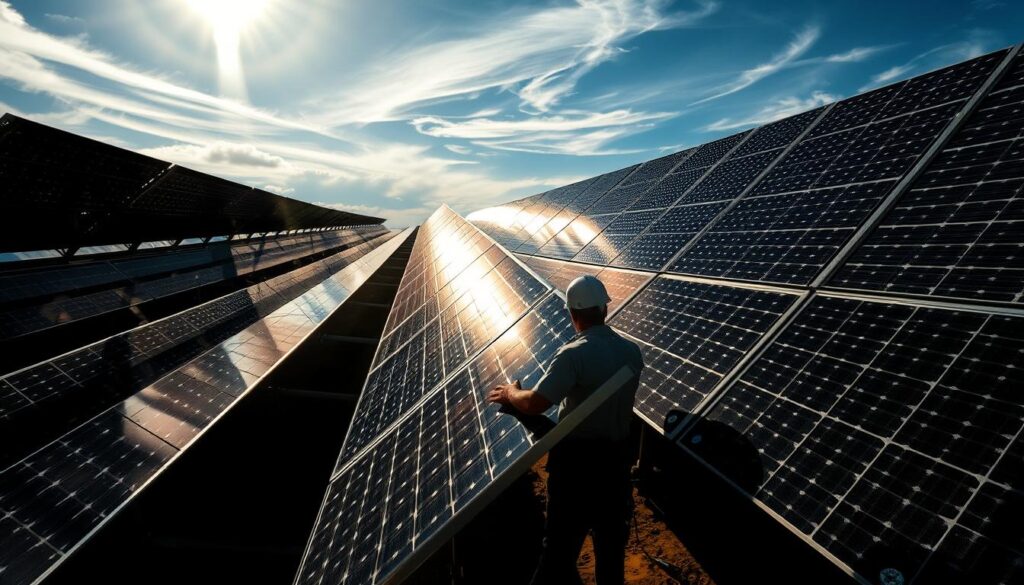
This concise comparison illustrates why morning vs afternoon solar efficiency is not simply a matter of sun strength; temperature and shading play equally vital roles.
Optimizing System Design for Both Times of Day
To capture the best of both worlds, installers on 30A often recommend a mixed‑orientation array. By placing a portion of the modules on an east‑facing roof and the remainder on a west‑facing roof, the system can harvest strong morning irradiance while still collecting valuable afternoon energy, even if efficiency dips slightly. Adding a small amount of micro‑inverters or power optimizers also helps mitigate the voltage loss caused by heat, preserving output during the hottest hours.
- Use high‑temperature‑tolerant modules (low temperature coefficient).
- Consider mounting panels on a ventilated rack to promote airflow.
- Employ shade‑analysis tools during the design phase to anticipate afternoon shading.
Monitoring and Adjusting Performance
Modern solar monitoring platforms provide real‑time data broken down by hour, allowing homeowners to see the exact impact of morning vs afternoon solar efficiency on their system. By comparing actual production against expected values, users can detect issues such as unexpected shading, inverter clipping, or overheating. Adjustments—like trimming overgrown trees or adding a reflective coating to a roof—can be made quickly, ensuring the system stays close to its optimal performance curve.
Financial Implications of Daily Efficiency Shifts
Utility rate structures on the Florida Gulf Coast often include time‑of‑use (TOU) tariffs, where electricity costs more during peak demand hours (typically late afternoon). If a solar system’s afternoon output is reduced by temperature‑related losses, homeowners may miss out on the most valuable kilowatt‑hours. Designing for balanced morning vs afternoon solar efficiency can therefore translate directly into higher net savings.
Additionally, net‑metering agreements credit excess generation at the same rate regardless of time, but some programs now offer “enhanced” credits for generation during peak periods. Understanding these nuances helps residents decide whether to prioritize morning production (for steady, lower‑rate offsets) or to push for maximum afternoon generation despite efficiency penalties.
Practical Tips for Homeowners on Scenic Hwy 30A
- Schedule regular cleaning of panels, especially after beach sand or sea‑spray deposits, to maintain high morning irradiance.
- Trim trees before they cast afternoon shadows on west‑facing arrays.
- Install a temperature sensor on the inverter to receive alerts when panel temperature exceeds optimal levels.
- Consider a small battery system to store excess morning energy for use during the hotter afternoon.
- Review your utility’s TOU schedule and align any load‑shifting (e.g., pool pumps) to periods when solar output is strongest.
By taking these steps, residents can smooth out the natural fluctuations between early‑day and late‑day generation, ensuring that their investment delivers consistent, reliable power throughout the year.
Understanding the interplay of sun angle, temperature, and shading provides the foundation for making informed decisions about panel placement, equipment selection, and ongoing maintenance. For the beautiful coastal communities along Scenic Hwy 30A, mastering the nuances of morning vs afternoon solar efficiency means turning every sunrise and sunset into a source of clean, affordable energy.
Conclusion: While morning sunlight offers cooler, more voltage‑stable conditions, afternoon sun delivers higher irradiance but suffers from heat‑induced losses. By designing systems that respect both regimes, leveraging monitoring tools, and staying proactive with maintenance, Gulf Coast homeowners can capture the best of each, maximizing overall solar efficiency and financial return.
