



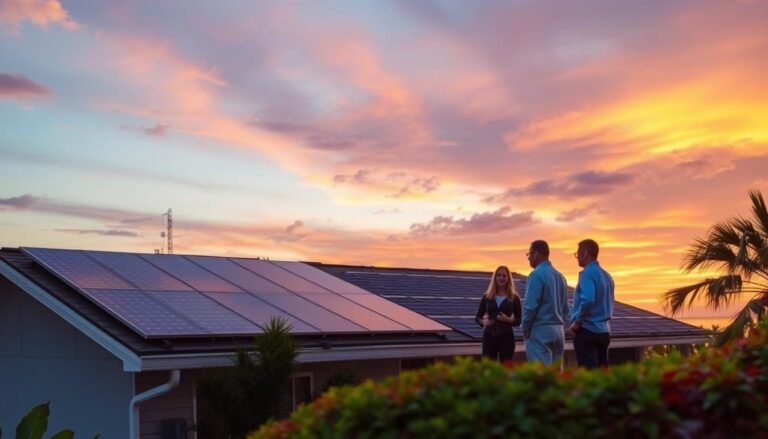
Energy costs are rising everywhere, and for churches, schools, and nonprofits in Tallahassee, that means less money for mission work, outreach, and community programs.
But 2025 brings new opportunities. Thanks to federal funding updates and Florida’s strong solar climate, nonprofits can now install solar power systems and get reimbursed directly, even though they don’t pay taxes.
Also Read: Solar Panel Cleaning Frequency in Panama City Beach: How Often Should You Do It?
In this guide, we’ll break down everything nonprofits and churches in Tallahassee, FL need to know about going solar, including grants, rebates, “Direct Pay” tax credits, and programs designed specifically for faith-based and charitable organizations.
Solar Cost Calculator – Florida Panhandle Only
* Estimate based on $3.25 per watt for solar installation.
* For Tesla Powerwall 3 Batteries, $15,000 for the first battery, $12,000 for each additional battery.
* Other variations and types of Batteries are available.
Why Solar Makes Sense for Nonprofits in Tallahassee
For most nonprofits, electricity is a top recurring expense, often second only to staffing. In a city where electric rates hover around 13–15¢ per kWh, energy bills can eat into funds meant for ministry or services.
Solar offers a long-term fix:
- Immediate monthly savings on power bills.
- Sustainable operations that align with community values.
- Access to grants and new funding tools that make solar affordable.
Florida’s abundant sunshine, over 220 days a year, makes solar a reliable, low-maintenance solution for mission-based organizations.
The 2025 Game-Changer: Direct Pay (Elective Pay) for Nonprofits
Until recently, only taxable entities could claim the 30% Federal Investment Tax Credit (ITC). That excluded churches, 501(c)(3) charities, and most nonprofits.
But in 2025, the Inflation Reduction Act (IRA) now allows nonprofits to receive the same benefit through a process called Direct Pay (also known as Elective Pay).
How Direct Pay Works:
- Your nonprofit installs a qualifying solar energy system.
- You file IRS Form 990-T after project completion.
- The federal government sends a cash reimbursement equal to 30% of total project cost, just like a tax credit refund.
For example:
If your solar project costs $80,000, your nonprofit receives $24,000 back directly from the IRS.
This change has opened the door for churches, community centers, food banks, and private schools to finally go solar without donor strain.
Solar Grant & Funding Options for Tallahassee Nonprofits
Beyond federal Direct Pay, several grants and financing tools can help fund your solar project:
1. USDA REAP Grant (For Rural Nonprofits & Ag Operations)
While targeted at rural areas, some Tallahassee-area nonprofits, especially those outside city limits in Leon, Jefferson, or Gadsden Counties, may qualify under the USDA Rural Energy for America Program (REAP).
- Covers up to 40% of total project cost.
- Available for agricultural producers and rural small businesses.
- Must demonstrate community or economic benefit.
Churches with attached schools or rural outreach programs may be eligible when incorporated under qualifying entities.
2. Florida Clean Energy Programs
The Florida Department of Agriculture and Consumer Services (FDACS) administers state-level programs and databases for solar and energy efficiency.
While Florida currently offers no direct cash grant, it provides:
- 100% sales tax exemption for solar equipment.
- 100% property tax exemption for system value.
- Local rebates occasionally offered by city utilities (check with City of Tallahassee Utilities for 2025 updates).
Faith-Based Solar & Sustainability Grants
Many foundations and interfaith networks now fund solar installations for churches and community nonprofits.
Some options to explore include:
- Interfaith Power & Light (IPL): Offers mini-grants and educational support for congregations adopting solar.
- Catholic Climate Covenant: Assists Catholic parishes and schools with green infrastructure funding.
- The Episcopal Church Creation Care Fund: Supports solar and efficiency upgrades for parishes nationwide.
- United Methodist Global Ministries: Funding opportunities for renewable projects under EarthKeepers and Global Mission programs.
Even small grants ($5,000–$20,000) can help reduce your upfront cost before applying Direct Pay.
4. Nonprofit Solar Loans & PPAs
Some lenders now offer special nonprofit solar loans or Power Purchase Agreements (PPAs) designed to bypass tax limitations.
| Financing Type | Description | Benefits |
|---|---|---|
| Solar Loan (501(c)(3) Eligible) | Low-interest financing through green banks or credit unions. | Ownership, Direct Pay eligible. |
| Power Purchase Agreement (PPA) | Third-party owns the system; nonprofit pays for power at reduced rate. | No upfront cost; 10–20% immediate savings. |
| Lease-to-Own Models | Gradual ownership transfer over 5–10 years. | Combines short-term savings with long-term equity. |
Local lenders like Tallahassee Leon Federal Credit Union and Self-Help Credit Union have begun supporting energy projects for nonprofit facilities.
5. Community Solar Participation
If your organization lacks roof space or historic restrictions, consider joining a community solar project.
Tallahassee Utilities offers programs that allow you to:
- Subscribe to a portion of a larger solar farm.
- Receive monthly bill credits for your share of production.
- Avoid installation or maintenance costs.
This is an ideal route for churches in older buildings or nonprofits leasing their facilities.
What Does Solar Cost for a Nonprofit?
Pricing for nonprofit and commercial-grade systems in 2025 varies by roof size and power use.
| Facility Type | Typical System Size | Gross Cost | After 30% Direct Pay | Est. Annual Savings |
|---|---|---|---|---|
| Small Church (3,000–4,000 sq ft) | 15–20 kW | $45,000–$60,000 | $31,500–$42,000 | $4,000–$6,000 |
| Mid-Sized Church / Nonprofit Center (6,000–8,000 sq ft) | 30–40 kW | $80,000–$100,000 | $56,000–$70,000 | $7,000–$9,000 |
| Large Campus / Private School | 80–100 kW | $180,000–$250,000 | $126,000–$175,000 | $15,000–$20,000 |
Combined with utility savings and lower operating costs, most nonprofits achieve a payback period of 6–8 years, with decades of free energy afterward.
Example: Tallahassee Church Solar Project
Organization: Midtown Community Church
System Size: 35 kW rooftop solar
Cost Before Incentives: $90,000
Direct Pay Refund: -$27,000
Faith-Based Grant: -$10,000
Net Cost: $53,000
Annual Savings: ~$8,000
Payback: 6.5 years
CO₂ Reduction: 40 tons per year
The church now runs its sanctuary, offices, and fellowship hall on clean energy, while redirecting savings into youth programs and outreach.
Permitting & Installation in Tallahassee
Solar installations for nonprofits follow the same building and electrical standards as residential systems, with a few additional steps:
- Engineering & Structural Assessment – PE-stamped plans required for commercial roofs.
- Permitting – Through City of Tallahassee Growth Management (online portal available).
- Interconnection – Solar contractor submits agreement to City Utilities for grid connection.
- Inspection & Activation – Final review before system goes live and crediting begins.
Certified contractors in Leon County are familiar with nonprofit and institutional buildings, including those with flat roofs, metal structures, or historic facades.
Insurance & Maintenance
Most solar equipment includes:
- 25-year panel warranty (performance and product).
- 10–25-year inverter warranty.
- 5–15-year workmanship guarantee from installer.
Adding solar rarely increases insurance premiums significantly, but nonprofits should confirm coverage for:
- Wind/hail damage.
- Electrical fires.
- Liability during maintenance visits.
Maintenance is minimal, a professional inspection every 1–2 years plus occasional cleaning to remove pollen or debris.
Solar + Batteries: Backup for Community Services
For organizations that serve the public, like churches, shelters, or food pantries, solar with battery storage can ensure continuity during outages.
Battery Benefits:
- Backup power for refrigeration, lighting, or communications.
- Qualifies for 30% federal refund under Direct Pay.
- Adds resilience during hurricane season.
Some nonprofits use solar + storage systems as community cooling or charging stations during grid emergencies, a vital resource for neighbors.
Sustainability & Public Relations Benefits
In addition to lowering bills, going solar boosts visibility and credibility.
Public Benefits
- Demonstrates environmental stewardship.
- Inspires other community institutions to adopt clean energy.
- Opens eligibility for green certification programs and ESG-aligned donors.
Donor Engagement
Share your solar story through newsletters, signage, and social media. Many nonprofits find that clean energy projects spark new donor excitement and press coverage.
Steps to Go Solar as a Nonprofit in Tallahassee
- Assess Your Energy Use – Review 12 months of power bills.
- Contact a Qualified Solar Installer – Preferably one experienced with nonprofits or institutions.
- Get a Free Site Analysis – Includes shading study, roof condition, and optimal system sizing.
- Explore Funding – Combine Direct Pay with grants or loans.
- Apply for Permits & Install – Your installer will handle all documentation.
- Claim Reimbursement – File IRS Form 990-T to receive your Direct Pay refund.
Resources & Contacts
- City of Tallahassee Utilities: talgov.com/you/energy
- Florida Department of Agriculture (Energy Division): fdacs.gov/energy
- Interfaith Power & Light Florida Chapter: flipl.org
- Self-Help Credit Union: Green financing for churches & nonprofits.
- USDA REAP Program: rd.usda.gov/reap
Key Takeaways
- Nonprofits and churches in Tallahassee can now receive 30% federal refunds via Direct Pay.
- Combine Direct Pay with faith-based grants or low-interest loans for minimal upfront cost.
- Expect 6–8 year payback and decades of free energy.
- Solar reduces overhead, strengthens community trust, and aligns with environmental missions.
- Programs like Interfaith Power & Light and USDA REAP can supplement your funding.
Final Word
For Tallahassee’s churches and nonprofits, 2025 is the year solar becomes practical. With new Direct Pay options, supportive grant networks, and proven ROI, clean energy is no longer just a dream, it’s a strategic, mission-driven investment.
By going solar, your organization can lower bills, free up resources for ministry and outreach, and model sustainability for the entire community.
