



Introduction to Roof Moisture Considerations in Solar Installations
When homeowners and commercial property managers decide to go solar, the conversation often jumps straight to panel efficiency, tax incentives, and payback periods. Yet, one of the most critical—and sometimes overlooked—factors is roof moisture. In humid regions like the Florida Panhandle, the amount of water that a roof absorbs or sheds can dramatically affect the longevity of a solar array, the type of mounting hardware required, and the overall safety of the installation. This article dives deep into how professional solar installers evaluate moisture exposure, why it matters for roof moisture solar planning, and what steps you can take to ensure a resilient, high‑performing system.
Find us here:
Solar Cost Calculator – Florida Panhandle Only
* Estimate based on $3.25 per watt for solar installation.
* For Tesla Powerwall 3 Batteries, $15,000 for the first battery, $12,000 for each additional battery.
* Other variations and types of Batteries are available.
Understanding Roof Moisture and Its Sources
Roof moisture originates from several sources: precipitation, condensation, ambient humidity, and even leaks from surrounding structures. In coastal climates, salt‑laden sea breezes can accelerate moisture absorption, while heavy summer thunderstorms contribute to prolonged wet periods. Over time, repeated wet‑dry cycles can lead to wood rot, delamination of roofing membranes, and corrosion of metal components. Solar installers begin any roof moisture solar planning project by identifying the material composition of the roof—whether it’s asphalt shingles, metal, tile, or composite—because each substrate reacts differently to water exposure.
Why Moisture Matters for Solar Mounting Decisions
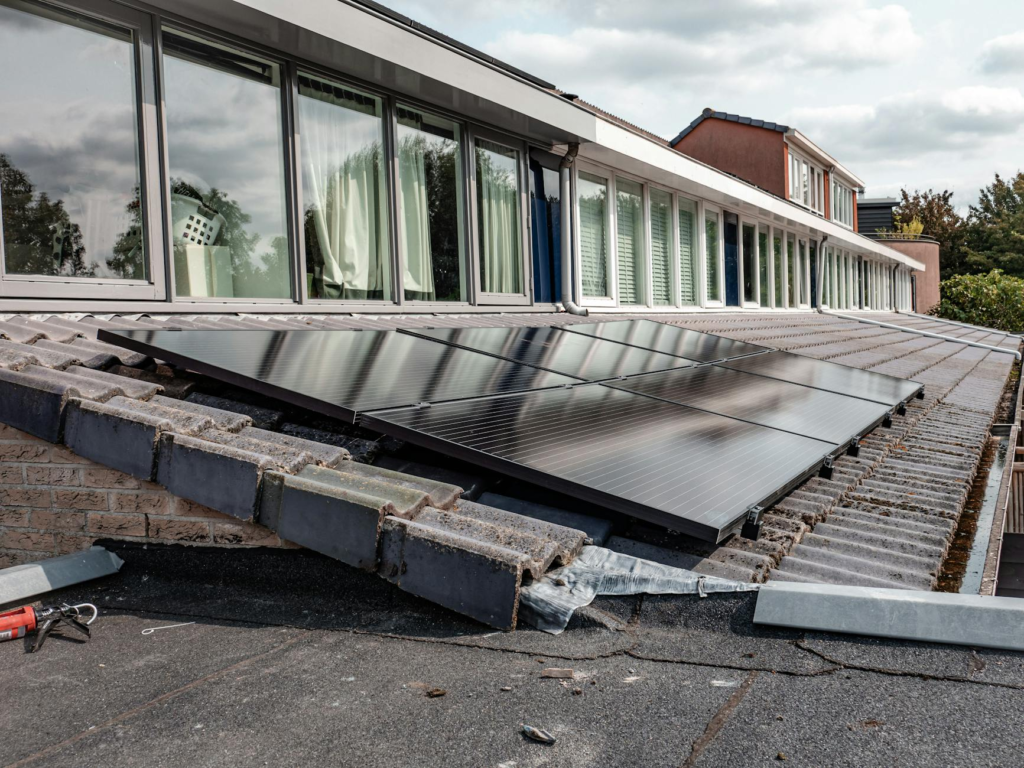
Mounting hardware must securely attach panels to a roof that may be expanding, contracting, or degrading due to moisture. If a roof is prone to water infiltration, installers may opt for ballasted systems that avoid penetrations, or they might reinforce flashing around each attachment point. Moisture can also affect the torque specifications for screws and bolts; overtightening can crush a wet shingle, while undertightening can lead to loosening as the roof swells. Therefore, accurate assessment of moisture levels is a cornerstone of any roof moisture solar planning strategy.
Climate Specifics: The Florida Panhandle Challenge
The Florida Panhandle experiences a subtropical climate with high humidity, frequent rain, and occasional tropical storms. Summer months bring average relative humidity levels above 80 %, while winter storms can introduce prolonged periods of dampness. These conditions create a unique challenge for solar installers who must anticipate not only the amount of water a roof will encounter but also the speed at which it dries. In this environment, roof moisture solar planning often involves a more rigorous inspection schedule and the use of corrosion‑resistant mounting components.
Site Survey Techniques for Moisture Evaluation
Before any hardware is ordered, installers conduct a comprehensive site survey. The goal is to gather quantitative data that informs roof moisture solar planning decisions. Below are the most common techniques used during the survey:
- Visual inspection for stains, mold, or water‑damage signs.
- Infrared thermography to detect hidden moisture pockets behind roofing layers.
- Moisture meter readings on shingle or decking surfaces.
- Review of building permits and past roof repair records.
- On‑site weather data analysis for recent precipitation patterns.
Each method provides a different layer of insight. Infrared scans, for example, can reveal moisture that isn’t visible to the naked eye, while a handheld moisture meter offers precise percentages of water content in the roofing material. Combining these tools gives installers a reliable picture of current conditions and helps predict future exposure.
Interpreting Moisture Data for Solar Design
Once the data is collected, the installer translates the numbers into actionable design choices. A moisture reading below 10 % typically indicates a dry roof suitable for direct‑penetration mounting with standard stainless‑steel screws. Readings between 10 % and 20 % suggest moderate moisture; in these cases, installers may recommend additional sealing around fasteners and the use of galvanized or zinc‑coated hardware to combat corrosion. Anything above 20 % flags a high‑risk situation, prompting the installer to consider non‑penetrating ballasted racks, a full roof replacement, or the addition of a moisture barrier membrane before panel installation.
Selecting the Right Mounting System Based on Moisture Levels
The mounting system is the physical bridge between the solar array and the roof, and its design must align with the moisture profile uncovered during the survey. For low‑moisture roofs, a flush‑mount or rail‑mount system with direct penetrations provides a clean, low‑profile look and maximizes energy capture. In moderate‑moisture scenarios, a hybrid approach—using a few strategic penetrations combined with ballasted anchors—balances structural integrity with water‑resistance. High‑moisture roofs often require fully ballasted systems that sit atop the roof surface without any screws, thereby preserving the existing waterproofing layers.
Protective Measures: Flashing, Sealants, and Corrosion‑Resistant Materials
Even with the appropriate mounting choice, installers must still address the potential for water infiltration at every attachment point. Proper flashing—metal or synthetic—redirects water away from fasteners. High‑quality silicone or polyurethane sealants are applied over screw heads and flashing seams to create a watertight seal. Additionally, selecting mounting hardware made from marine‑grade stainless steel or hot‑dip galvanized steel reduces the risk of rust in the humid Florida Panhandle environment. These protective measures are essential components of any roof moisture solar planning workflow.
Impact on Warranty, Insurance, and Long‑Term Performance
Manufacturers and insurers often require proof that moisture risks were mitigated before honoring warranties or issuing policies. Failure to address roof moisture can void panel warranties, lead to premature equipment failure, and increase the likelihood of insurance claims after a storm. By documenting moisture assessments, sealing methods, and the use of corrosion‑resistant hardware, installers provide a clear audit trail that satisfies both warranty terms and insurance underwriting guidelines.
Cost Implications of Moisture‑Driven Design Choices
Investing in thorough moisture evaluation and appropriate mounting solutions may raise upfront costs, but it protects against far greater expenses down the line. Direct‑penetration systems are generally less expensive than ballasted racks, yet the latter can save money if a roof requires extensive waterproofing repairs. Moreover, using premium corrosion‑resistant hardware can increase material costs by 10–15 %, but it reduces the need for future replacements and maintenance trips, especially in a humid climate where rust can spread quickly.
Case Study Snapshot: Moisture‑Aware Solar Installation in Pensacola
Below is a simplified comparison of two residential projects in the Pensacola area—one that incorporated detailed roof moisture solar planning and another that did not. The data highlights the long‑term benefits of moisture‑focused design.
| Project | Moisture Level (Measured) | Mounting System | Warranty Status After 3 Years | Estimated Maintenance Cost |
|---|---|---|---|---|
| A (Moisture‑Aware) | 12 % | Hybrid (partial penetrations + ballast) | Full warranty intact | $150 |
| B (Standard Install) | 22 % | Direct‑penetration only | Warranty voided (corrosion) | $1,200 |
Project A invested in a hybrid mounting system and applied marine‑grade flashing, resulting in a fully intact warranty and minimal maintenance. Project B skipped moisture evaluation, chose a simple penetrative system, and faced corrosion issues that voided the warranty and required costly repairs. This side‑by‑side comparison underscores why roof moisture solar planning is a critical step in any successful solar deployment.
Best Practices Checklist for Roof Moisture Evaluation
- Conduct a visual inspection for any signs of water damage.
- Use infrared thermography to locate hidden moisture.
- Take moisture meter readings on multiple roof areas.
- Document recent weather events and precipitation levels.
- Select mounting hardware that matches the moisture profile.
- Apply proper flashing and sealants at every penetration.
- Choose corrosion‑resistant materials for humid climates.
- Verify warranty and insurance requirements before finalizing design.
Frequently Asked Questions About Roof Moisture and Solar Installations
- Can I install solar panels on a roof that already has moisture problems? Yes, but you’ll need to address the underlying issues first—typically by repairing leaks, applying a moisture barrier, or opting for a non‑penetrating mounting system.
- How often should I have my roof moisture re‑tested after installation? It’s advisable to perform a follow‑up inspection after the first major storm season, then every 3–5 years depending on roof age and local climate.
- Do ballasted systems work on all roof types? Ballasted racks are ideal for flat or low‑slope roofs, but they may not be suitable for steep‑slope roofs without additional anchoring methods.
By integrating thorough moisture assessments into the early stages of roof moisture solar planning, installers can tailor mounting solutions that safeguard both the roof and the solar array. This proactive approach not only extends the life of the system but also ensures compliance with warranty and insurance requirements, ultimately delivering a better return on investment for homeowners.
