



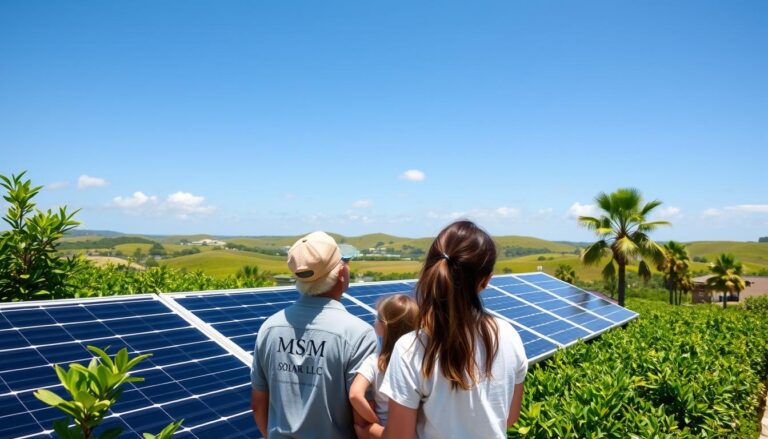
Why Roof Obstructions Matter More Than Panel Count
When homeowners in the Florida Panhandle begin planning a solar installation, the first instinct is often to count how many panels can fit on the roof. While panel count is an important metric, it is the roof obstructions solar design that truly dictate the shape, efficiency, and cost of a system. Obstructions such as vent stacks, chimneys, skylights, and required setbacks create shadows, reduce usable area, and force designers to compromise on orientation. In a region where sunlight is abundant but the weather can be fickle, even a small shadow can shave off a noticeable portion of daily energy production.
Understanding how these physical barriers interact with the sun’s path is essential for creating a layout that maximizes output, meets local code, and stays within budget. In this article we’ll explore the types of roof obstructions, their impact on system performance, and practical design strategies that put safety and efficiency before raw panel numbers.
Find us here:
Solar Cost Calculator – Florida Panhandle Only
* Estimate based on $3.25 per watt for solar installation.
* For Tesla Powerwall 3 Batteries, $15,000 for the first battery, $12,000 for each additional battery.
* Other variations and types of Batteries are available.
Common Types of Roof Obstructions
Every residential roof tells a story of ventilation, aesthetics, and structural necessities. In the Florida Panhandle, the most frequent culprits that affect a solar layout include:
- Roof vents and exhaust fans – essential for attic airflow but often placed near the roof’s highest point.
- Chimneys and flues – protrude above the roof plane and create unavoidable shadows.
- Skylights and sun tunnels – add natural light but interrupt a continuous panel field.
- Architectural details – such as dormers, gables, and decorative trim that break up flat surfaces.
- Utility equipment – satellite dishes, antenna masts, and HVAC condensers that occupy prime real‑estate.
Each of these elements can cast a shadow that moves across the roof throughout the day. The longer the shadow, the more the photovoltaic (PV) cells operate at reduced voltage, decreasing overall system efficiency. In roof obstructions solar design, the goal is to map these shadows precisely and adjust the panel layout accordingly, rather than simply packing as many modules as possible onto the available space.
| Obstruction Type | Typical Impact on Solar Layout |
|---|---|
| Vent Stack | Creates a linear shadow that may require panel offset or reduced row count. |
| Chimney | Requires a clearance zone; often forces a split‑field design. |
| Skylight | Interrupts panel continuity; may need micro‑inverters for isolated sections. |
This single table highlights the most common obstructions and the design adjustments they typically demand. By cataloguing these factors early in the planning stage, installers can avoid costly redesigns later on.
How Obstructions Influence System Layout
The presence of roof obstructions forces the solar engineer to think beyond a simple grid. Instead of aligning panels in perfect rows and columns, the layout must be “contoured” around each obstacle. This often means using a combination of standard‑size modules and smaller “cut‑out” panels to fill irregular spaces. In practice, the design process involves a solar‑specific software that overlays a sun path diagram on a 3‑D model of the home. The software flags any area where the sun’s rays will be blocked for more than a few minutes per day, prompting the designer to either relocate the panel or accept a minor loss in production.
In many cases, the most efficient solution is to stagger the rows rather than keep them parallel to the eaves. Staggering can reduce the cumulative shading effect of a vent stack, allowing more panels to receive direct sunlight during peak hours. However, staggered rows may require additional mounting hardware and a more complex wiring scheme, which can increase installation labor and material costs. The trade‑off, though, is usually worthwhile because a well‑executed roof obstructions solar design can boost the system’s annual energy yield by 5‑10 % compared to a naïve panel‑count‑first approach.
Design Strategies to Work Around Obstructions
1. Offset Mounting and Tilt Adjustments
One of the simplest ways to mitigate shading from a vent or chimney is to offset the mounting rails. By moving the entire array a few feet away from the obstruction, the shadow can be pushed onto a less critical part of the roof, or even onto an area where the panels are already shaded during low‑sun angles. Adjusting the tilt angle of the panels can also help; a steeper tilt may lift the panel’s surface above a shadow during the hottest part of the day, though it may increase wind load considerations.
2. Use of Bifacial Panels and Low‑Profile Racking
Bifacial modules capture light from both the front and rear sides, making them more tolerant of partial shading. When paired with low‑profile racking that sits closer to the roof plane, these panels can exploit reflected light from nearby surfaces, partially compensating for the loss caused by an obstruction. This approach is especially beneficial in the Panhandle where reflective sand‑colored roofs are common.
3. Split‑Field and Dual‑Orientation Layouts
When a chimney or large vent creates a central “no‑build” zone, designers often split the array into two separate fields—one on each side of the obstacle. Each field can be oriented independently to capture the most sunlight possible given its location. In some cases, a dual‑orientation layout (one field facing east‑west, the other south‑north) can increase the overall production by ensuring that at least one set of panels receives optimal sun throughout the day.
4. Micro‑Inverters and Power Optimizers
Shading doesn’t affect every panel equally, and when one module is partially shaded, it can drag down the performance of the entire string in a traditional string‑inverter setup. Micro‑inverters or power optimizers attached to each panel mitigate this issue by allowing each module to operate at its maximum power point independently. This technology is a key component of a resilient roof obstructions solar design, ensuring that the loss from a single shadowed panel does not cascade across the system.
Impact on Energy Production and Savings
The financial rationale behind prioritizing roof obstructions over raw panel count becomes clear when you translate shading losses into dollars. In the Florida Panhandle, the average residential solar system produces roughly 1,500 kWh per kilowatt‑peak per year. A 5 % reduction due to shading equates to about 75 kWh per kilowatt‑peak lost annually. At a typical utility rate of $0.13 per kWh, that’s a $9.75 annual shortfall per kilowatt‑peak—a figure that adds up quickly across a 7‑kW system.
Conversely, a well‑engineered roof obstructions solar design that minimizes shading can preserve or even enhance the expected production. By strategically placing panels to avoid the most impactful shadows, homeowners can achieve closer to the system’s rated output, shortening the payback period and increasing the return on investment (ROI). Moreover, a design that respects local setbacks and clearance requirements reduces the risk of permitting delays, which can add months—and extra costs—to the project timeline.
Regulatory and Permit Considerations
Local building codes in the Panhandle often dictate minimum distances between solar modules and roof penetrations such as vents and chimneys. These setbacks are not arbitrary; they protect against fire hazards, ensure proper airflow, and maintain the structural integrity of the roof. Failing to account for these regulations during the design phase can result in permit rejections, requiring costly redesigns after the fact.
In addition to municipal codes, the Florida Public Service Commission (FPSC) has specific interconnection standards that may limit the size of a system based on the available unobstructed roof area. By conducting a thorough roof obstructions solar design assessment early, installers can present a compliant plan that satisfies both the local building department and the utility’s interconnection requirements, smoothing the path to approval.
Choosing the Right Installer for Obstruction‑Focused Design
Not all solar contractors have the same level of expertise when it comes to handling complex roof geometries. Homeowners should look for installers who demonstrate a clear process for mapping roof obstructions, using tools such as drone‑based photogrammetry, LiDAR scans, or specialized solar design software. Ask potential installers to provide a visual layout that shows how each obstruction is addressed and what trade‑offs were considered.
A reputable installer will also discuss the long‑term maintenance implications of the chosen layout. Panels placed near vents or chimneys may accumulate more debris or be subject to higher temperature fluctuations, potentially affecting degradation rates. Understanding these nuances helps homeowners make an informed decision that balances immediate energy goals with future performance.
Key Takeaways for Homeowners
- Identify all roof obstructions early—vent stacks, chimneys, skylights, and utility equipment are the biggest culprits.
- Use shading analysis tools to quantify how each obstruction affects sun exposure throughout the year.
- Prioritize design solutions (offset mounting, split‑field layouts, micro‑inverters) that preserve energy production rather than simply maximizing panel count.
- Ensure the design complies with local setback and fire‑safety regulations to avoid permit delays.
- Select an installer with proven experience in roof obstructions solar design and a transparent layout review process.
By focusing on the nuances of roof geometry and obstruction management, homeowners in the Florida Panhandle can achieve a solar system that not only looks clean but also delivers the highest possible energy yield. Remember, the goal is not just to fill the roof with panels, but to create a smart, efficient, and code‑compliant array that stands the test of time.
Conclusion: Roof obstructions dictate the true potential of a solar installation far more than the sheer number of panels you can cram onto a roof. A thoughtful roof obstructions solar design that respects vents, chimneys, and required setbacks will result in higher energy production, smoother permitting, and a faster return on investment. Take the time to map every obstacle, work with an experienced installer, and let the design adapt to the roof—not the other way around.
