



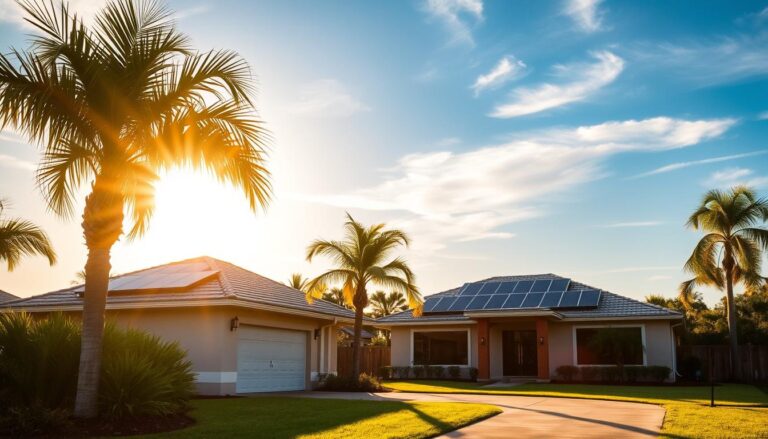
Solar is a smart investment for Northwest Florida homeowners, but what happens when it’s time to sell?
In the Florida Panhandle, homes with solar often fetch higher resale values and attract eco-conscious buyers. Still, the process comes with extra paperwork and questions from lenders, appraisers, and buyers.
Find us here:
Here’s what you need to know about selling a home with solar in Florida, especially in counties like Escambia, Okaloosa, Walton, Bay, and Santa Rosa.
Also Read: Short-Term Rentals on 30A & PCB: How Solar Lowers Turnover Costs & Boosts ADR
Solar and Home Appraisals
Solar panels add value to your property, but only if the appraiser knows how to capture it.
Appraisal Addendum Tips
- Use the PV Value Tool: Many appraisers rely on the Department of Energy–backed calculator for solar valuation.
- Provide documentation: Include system size, production history, and warranty details.
- Green Energy Addendum (Form 820.04): Fill this out to guide appraisers on solar system specifics.
A well-prepared file can add $10,000–$20,000+ in appraised value, depending on system size and age.
Solar Cost Calculator – Florida Panhandle Only
* Estimate based on $3.25 per watt for solar installation.
* For Tesla Powerwall 3 Batteries, $15,000 for the first battery, $12,000 for each additional battery.
* Other variations and types of Batteries are available.
Owned vs. Financed Solar
- Owned systems: Simplest transfer. Value is added directly to the home.
- Financed systems: If paid through a loan, buyers may need to assume payments or sellers must settle the balance.
- Leased systems / PPAs: Rare in Florida but trickier, buyers must qualify to take over the agreement.
Clarify early with your agent which type you have to avoid closing delays.
Warranty Transfer
Most solar panels and inverters carry 20–25 year product warranties. But buyers want assurance those warranties will transfer.
- Contact your installer or manufacturer to confirm transfer procedures.
- Some require a transfer form within 30–60 days of sale.
- Highlight warranties in the MLS listing, this can help sway undecided buyers.
UCC Filings: The Hidden Hurdle
If you financed your solar system, your lender may have filed a UCC-1 (Uniform Commercial Code) lien. This filing shows up during a title search.
- What it means: The lender technically has a security interest in your panels until the loan is paid.
- Impact: Title companies won’t clear closing until the UCC is released.
- Solution: Request a lien release letter from your solar lender as soon as you list your home.
Many sales in Bay and Walton Counties have been delayed because sellers didn’t handle this step early.
What Buyers Ask About Solar
Expect these common questions during showings:
- “What’s the average monthly power bill?”
- “How old is the system, and how much life is left?”
- “Is there monitoring software we can use?”
- “Who installed it, and is the company still in business?”
- “What happens if the roof needs replacing?”
Having answers prepared builds buyer confidence and supports your asking price.
Key Takeaways
- Selling a home with solar in Florida requires extra prep, especially around appraisals, warranties, and UCC filings.
- Always provide documentation to appraisers and agents to maximise value.
- Handle lien releases and warranty transfers early to avoid closing delays.
- Position solar as both a cost saver and a resilience upgrade, buyers in the Panhandle will pay for both.
Final Word
Homes in the Florida Panhandle with solar are in demand, but sellers who prepare stand out. By handling appraisal addendums, warranty transfers, and lien releases up front, you’ll smooth the path to closing, and walk away with a stronger sale price.
