


As homeowners across Navarre, Destin, and Tallahassee look ahead, the conversation about energy is shifting from short‑term costs to long‑term resilience. Solar technology has moved beyond a niche hobby and is now a mainstream solution that empowers families to meet the solar future energy needs of their households. By converting abundant sunlight into usable electricity, solar panels reduce reliance on aging utility grids, lower monthly bills, and create a buffer against unpredictable price spikes. This article explores how solar installations help homes adapt to evolving demand, integrate with modern smart‑home systems, and stay financially viable for decades to come.
Find us here:
Solar Cost Calculator – Florida Panhandle Only
* Estimate based on $3.25 per watt for solar installation.
* For Tesla Powerwall 3 Batteries, $15,000 for the first battery, $12,000 for each additional battery.
* Other variations and types of Batteries are available.
Why Energy Demands Are Changing
Several factors are driving a rapid increase in residential electricity consumption. First, the proliferation of high‑efficiency appliances, electric vehicles, and home‑office equipment means more devices are drawing power around the clock. Second, climate change is intensifying temperature extremes, prompting greater use of air‑conditioning in summer and heating in winter. Third, utility companies are modernizing grids with advanced metering and demand‑response programs that reward consumers for flexible usage. Together, these trends create a landscape where traditional fossil‑fuel‑based generation struggles to keep pace, and homes need a reliable, clean source of power to meet the solar future energy needs that will arise.

Benefits of Solar for Homeowners
Installing solar panels offers a suite of tangible advantages. Financially, homeowners can lock in low‑cost electricity for 25‑30 years, dramatically cutting utility bills. Environmentally, solar generation offsets carbon emissions, supporting community goals for cleaner air and water. Technologically, modern inverters and battery storage enable seamless integration with home energy management systems, allowing residents to monitor production in real time. Moreover, many states provide tax credits, rebates, and net‑metering policies that further improve the return on investment. By embracing solar, families position their properties to satisfy the solar future energy needs that will become increasingly critical as the grid evolves.
How Solar Panels Store and Manage Power
Today’s solar installations are rarely just rooftop arrays; they are part of an integrated ecosystem that includes battery storage, smart inverters, and energy management software. When sunlight hits the photovoltaic cells, it is converted into direct current (DC) electricity, which the inverter transforms into alternating current (AC) for household use. Excess energy can be stored in lithium‑ion batteries for later consumption, especially during nighttime or cloudy periods. Advanced inverters can prioritize critical loads, ensuring that essential appliances stay powered even if the grid goes down. This capability directly addresses the solar future energy needs of a home, providing resilience and autonomy in a world where outages may become more frequent.
Future‑Proofing Your Home
Future‑proofing means designing a home that can adapt to unknown challenges without costly retrofits. Solar panels are a cornerstone of this strategy because they are modular, scalable, and compatible with emerging technologies. As electric vehicle adoption grows, homeowners can add additional solar capacity or expand battery storage to charge vehicles directly from clean energy. Smart thermostats, lighting, and appliances can be programmed to operate when solar production peaks, maximizing self‑consumption. By installing a system sized for current needs but with room for expansion, residents ensure their properties remain relevant and efficient, meeting the solar future energy needs that will arise as technology and lifestyle evolve.
Financial Incentives and Savings
Governments at the federal, state, and local levels offer a variety of incentives that make solar adoption financially attractive. The federal Investment Tax Credit (ITC) currently allows homeowners to deduct a significant percentage of their system cost from taxes. In Florida, additional rebates and property tax exemptions lower upfront expenses. Net‑metering policies enable owners to sell surplus electricity back to the grid, generating credits that offset future bills. When these incentives are combined with the natural reduction in utility costs, the payback period for a typical residential system often falls within 5‑8 years, after which the homeowner enjoys near‑free electricity. This economic model aligns perfectly with the solar future energy needs of families seeking long‑term stability.
Integrating Solar with Smart Home Technology
Smart home platforms such as Amazon Alexa, Google Home, and Apple HomeKit now offer direct integration with solar inverters and battery systems. Through these interfaces, homeowners can receive real‑time alerts about production levels, battery state of charge, and forecasted weather impacts. Automation rules can be set so that high‑energy appliances like dishwashers or pool pumps run only when solar output is high, reducing reliance on grid power. Some systems even allow remote control of energy‑intensive devices during peak pricing periods, optimizing cost savings. By leveraging these capabilities, residents can precisely align consumption with the solar future energy needs of their household, ensuring maximum efficiency and comfort.
Choosing the Right System for Your Region
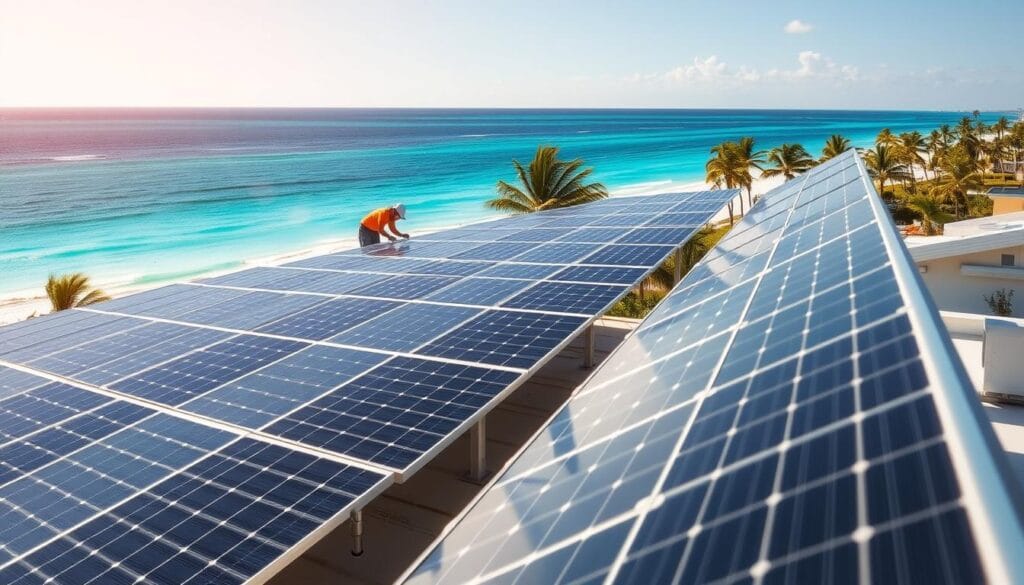
Navarre, Destin, and Tallahassee each enjoy abundant sunshine, but subtle differences in climate, roof orientation, and local regulations affect system design. In coastal Destin, corrosion‑resistant mounting hardware is essential due to salty air, while Tallahassee’s hotter summer temperatures may benefit from panels with higher temperature coefficients. Homeowners should work with certified installers who conduct a site‑specific analysis, including shading studies and structural assessments. Selecting the appropriate panel type, inverter size, and battery capacity ensures the system can meet the solar future energy needs unique to each location, delivering reliable performance for decades.
| Feature | Traditional Grid | Solar + Storage |
|---|---|---|
| Monthly Cost | Variable, often rising | Fixed, low after payback |
| Reliability | Subject to outages | Resilient, backup power |
| Environmental Impact | High carbon footprint | Zero emissions on site |
Steps to Get Started
- Assess your home’s solar potential with a professional shading analysis.
- Calculate your average monthly electricity usage to size the system appropriately.
- Research local incentives and financing options to reduce upfront costs.
- Choose a reputable installer with experience in the Navarre‑Destin‑Tallahassee area.
- Design a system that includes enough panel capacity and battery storage to meet anticipated solar future energy needs.
- Obtain necessary permits and schedule the installation.
- Monitor performance through a smart energy dashboard and adjust usage patterns as needed.
Maintenance and Longevity
Solar panels are built to withstand the elements, with most manufacturers offering 25‑year performance warranties. Routine maintenance involves keeping the panels clean of dust, pollen, and bird droppings, which can reduce efficiency. Inverters typically require replacement after 10‑15 years, so budgeting for this future expense is wise. Battery systems have a finite number of charge cycles; however, modern lithium‑ion units can last 10‑15 years with proper temperature management. Regular inspections by a certified technician ensure that wiring, mounting hardware, and monitoring equipment remain in optimal condition, preserving the system’s ability to address the solar future energy needs of the household.
Common Myths Debunked
Myth # 1: Solar only works in sunny climates. In reality, panels generate electricity on cloudy days, and battery storage captures excess energy for later use.
Myth #2: Solar is too expensive for average homeowners. With incentives and financing, the upfront cost is often comparable to other home improvements, and long‑term savings offset the investment.
Myth #3: Installing solar harms home resale value. Studies show that homes with solar systems sell faster and at higher prices. By understanding the facts, families can confidently adopt solar to meet their solar future energy needs without hesitation.
Embracing solar power today equips your home to thrive amid the shifting energy landscape of tomorrow. By reducing costs, enhancing resilience, and supporting environmental stewardship, solar panels provide a versatile foundation that aligns perfectly with the solar future energy needs of households throughout Navarre, Destin, and Tallahassee. Start exploring your options now and secure a brighter, more sustainable future for your family.
