



Understanding Solar Panel Layout Efficiency
When homeowners in the Florida Panhandle consider solar power, they often focus on panel size, inverter capacity, and overall system cost. While those factors are undeniably important, the arrangement of the panels—known as the layout—has a profound impact on how much energy the system actually produces. This concept, referred to as solar panel layout efficiency, encompasses the strategic positioning, spacing, and orientation of each module to capture the maximum amount of sunlight throughout the day and across seasons. By optimizing layout, a system can generate more kilowatt‑hours without additional hardware, translating into lower payback periods and higher return on investment.
Find us here:
Solar Cost Calculator – Florida Panhandle Only
* Estimate based on $3.25 per watt for solar installation.
* For Tesla Powerwall 3 Batteries, $15,000 for the first battery, $12,000 for each additional battery.
* Other variations and types of Batteries are available.
Why Layout Matters More Than You Think
The sun’s path over the horizon changes not only with time of day but also with the time of year. In the Panhandle, the latitude means the sun tracks relatively high in the sky during summer and lower during winter. A well‑designed layout accounts for these variations, ensuring that panels are angled and spaced to reduce shading from neighboring modules, roof structures, or nearby trees. Even a small amount of shading can cause a disproportionate drop in output because photovoltaic cells are connected in series; a single shaded cell can limit the current of the entire string. Therefore, achieving optimal solar panel layout efficiency is essential for maintaining consistent performance year‑round.
Key Factors Influencing Layout Efficiency
- Roof pitch and orientation: Determines the ideal tilt angle for maximum sun exposure.
- Inter‑module spacing: Prevents shading between rows, especially during low‑sun angles.
- Azimuth alignment: Aligning panels toward true south (or north in the Southern Hemisphere) maximizes daily irradiance.
- Obstructions: Chimneys, vents, and nearby trees can cast shadows that reduce output.
- Electrical configuration: String length and inverter sizing affect how layout choices translate into usable power.
Each of these factors interacts with the others. For instance, a steep roof may naturally provide a good tilt, but if the panels are placed too close together, the lower rows could be shaded during winter mornings. Conversely, a flat roof offers flexibility in orientation but may require mounting structures to achieve the proper angle. Understanding these dynamics helps installers craft a layout that balances structural constraints with the goal of superior solar panel layout efficiency.
Design Strategies for Maximizing Efficiency
Professional installers employ several proven strategies to boost layout performance. One common approach is the “portrait” versus “landscape” orientation decision. Portrait orientation (taller than wide) can allow for tighter row spacing on roofs with limited area, while landscape orientation may reduce shading on flat roofs. Another tactic is the use of “offset” rows, where each subsequent row is staggered to minimize direct shadow overlap. Additionally, micro‑inverters or power optimizers can mitigate the impact of partial shading, but they do not replace the need for an efficient layout; they merely reduce the penalty when shading does occur.
Orientation and Tilt Optimization
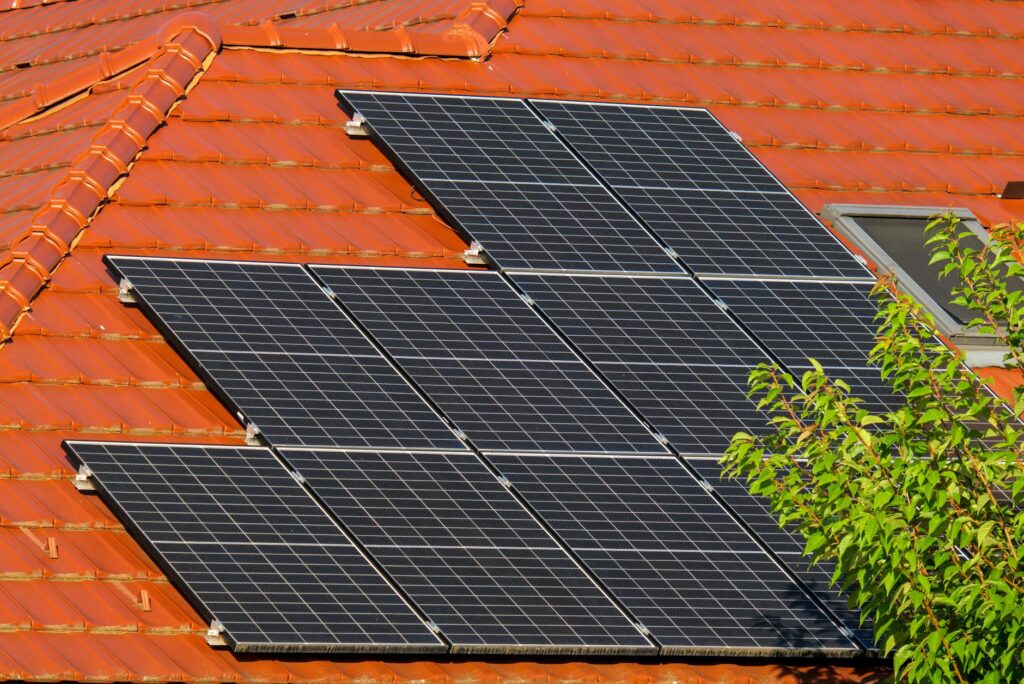
For the Florida Panhandle, the optimal tilt angle typically ranges between 20° and 30°, aligning closely with the region’s latitude. However, slight adjustments—tilting panels a few degrees more toward the south in winter or a few degrees less in summer—can capture incremental gains in solar irradiance. Modern mounting systems allow for adjustable tilt, enabling seasonal optimization without the need for a complete redesign.
Spacing Calculations
Proper spacing is calculated based on the sun’s lowest altitude angle during the winter months. A common rule of thumb is to maintain a distance equal to the panel height multiplied by the tangent of the lowest solar altitude. This ensures that the shadow of one row will not fall on the row behind it when the sun is at its lowest, preserving solar panel layout efficiency throughout the year.
Real‑World Example: Comparing Two Layouts
Consider a 6 kW residential system installed on a typical gable‑roof home in Pensacola. Layout A follows a basic “grid” pattern with panels placed close together in a portrait orientation, while Layout B employs staggered rows, optimal tilt, and increased spacing based on winter sun angles. Both systems use identical panels and inverters, but their annual energy production differs markedly.
| Layout | Annual Production (kWh) | Estimated Efficiency Gain |
|---|---|---|
| Layout A (dense grid) | 8,200 | Baseline |
| Layout B (optimized stagger) | 9,400 | +14.6% |
The optimized configuration (Layout B) demonstrates a clear improvement in solar panel layout efficiency, delivering roughly 15 % more energy without any additional hardware costs. Over a 25‑year lifespan, that extra output translates into thousands of dollars saved, underscoring why thoughtful design is a critical component of any solar investment.
Impact of Local Climate and Weather Patterns
The Florida Panhandle experiences a mix of sunny days, occasional heavy cloud cover, and frequent thunderstorms. While overall solar irradiance is high, short‑term shading from passing clouds can affect output. A layout that maximizes exposure during peak sun hours—typically between 10 a.m. and 4 p.m.—helps capture the most valuable energy. Moreover, wind loads must be considered; panels positioned with adequate spacing can reduce wind uplift forces, enhancing system durability and maintaining layout efficiency over time.
Tools and Software for Planning Layouts
Today’s solar designers rely on sophisticated software such as PVsyst, Helioscope, and Aurora Solar to model shading, calculate optimal tilt, and simulate energy production for various configurations. These tools incorporate satellite imagery, 3D modeling, and weather data to predict how different layouts will perform. By feeding the site’s exact dimensions and orientation into the program, installers can generate a design that achieves the highest possible solar panel layout efficiency before any physical work begins.
Common Mistakes That Reduce Layout Efficiency
- Placing panels too close together, causing shading during low‑sun angles.
- Ignoring roof obstructions like vents, skylights, or HVAC units.
- Choosing a one‑size‑fits‑all tilt without accounting for seasonal sun path.
- Failing to consider future growth of trees or nearby construction.
- Overlooking the benefits of micro‑inverters or optimizers as a backup to layout design.
Each of these oversights can shave a noticeable percentage off the system’s output. For homeowners who are already investing in renewable energy, avoiding such pitfalls ensures that the solar panel layout efficiency remains as high as possible, delivering the promised savings and environmental benefits.
Maintenance Considerations for Sustaining Efficiency
Even the best‑designed layout can suffer over time if maintenance is neglected. Accumulated dust, bird droppings, and pollen can create a thin film over the panel surface, reducing light transmission. Regular cleaning, especially after the rainy season, helps preserve the solar panel layout efficiency that was achieved during design. Additionally, periodic inspections for loose mounting hardware or shifted panels can catch issues before they lead to shading or reduced performance.
Cost‑Benefit Analysis of Investing in Layout Optimization
While a more intricate layout may require additional engineering time and possibly a slightly higher upfront cost for mounting hardware, the long‑term energy gains often outweigh these expenses. Using the earlier example, the 15 % increase in annual production can recoup the extra design cost within a few years, after which the homeowner enjoys higher net savings for the remainder of the system’s life. In the competitive solar market of the Panhandle, installers who prioritize solar panel layout efficiency can differentiate themselves by offering higher‑performing systems at comparable total project costs.
Future Trends: Adaptive and Smart Layouts
Emerging technologies such as bifacial panels, tracking mounts, and AI‑driven layout optimization promise to push solar panel layout efficiency even further. Bifacial modules capture reflected light from the ground, making spacing even more critical to avoid shading. Tracking systems adjust panel angles throughout the day, reducing the need for perfect fixed‑tilt design but still relying on proper spacing to prevent inter‑row interference. As these innovations become more affordable, the principles of effective layout design will remain foundational, ensuring that new hardware operates at its fullest potential.
Conclusion
In the sunny yet variable climate of the Florida Panhandle, the way solar panels are arranged on a roof can make a decisive difference in how much clean energy a home produces. By understanding and applying the principles of solar panel layout efficiency—optimal tilt, proper spacing, thoughtful orientation, and regular maintenance—homeowners can maximize their system’s performance, reduce payback time, and enjoy long‑term savings. Investing in a well‑designed layout is not just a technical detail; it’s a strategic move that pays dividends for years to come.
