



Introduction: The Rise of Multi‑Generational Living
Across the Florida Panhandle, families are increasingly choosing to live under one roof, creating larger households that span three, four, or even five generations. Economic pressures, cultural traditions, and the desire for shared caregiving are driving this shift, and the result is a new set of challenges for home designers, architects, and energy planners. One of the most powerful tools for meeting those challenges is solar energy. When thoughtfully integrated, solar can lower utility bills, provide reliable power for home‑based health equipment, and increase the overall resilience of a property. In this article we explore how solar fits into multi‑generational home planning, with a focus on long‑term benefits for larger households in cities such as Pensacola, Panama City, and Fort Walton Beach.
Find us here:
Solar Cost Calculator – Florida Panhandle Only
* Estimate based on $3.25 per watt for solar installation.
* For Tesla Powerwall 3 Batteries, $15,000 for the first battery, $12,000 for each additional battery.
* Other variations and types of Batteries are available.
Why Multi‑Generational Homes Need a Different Energy Strategy
Traditional single‑family homes are often designed around the consumption patterns of two adults and perhaps a few children. Multi‑generational homes, however, must accommodate a broader range of electrical loads: multiple kitchens, several bathroom fans, home‑based medical devices, work‑from‑home stations, and entertainment hubs for grandchildren. In the Florida Panhandle’s warm climate, air‑conditioning alone can consume more than 2,000 kilowatt‑hours (kWh) per year for each bedroom suite. Add in the needs of an aging parent who may rely on a medical refrigerator or a mobility‑assist device, and the total demand can quickly eclipse the capacity of an average residential solar array. Planning for solar multi generational homes therefore requires a careful analysis of peak loads, seasonal variations, and the potential for future expansion.
Financial Incentives That Make Solar Viable in the Panhandle
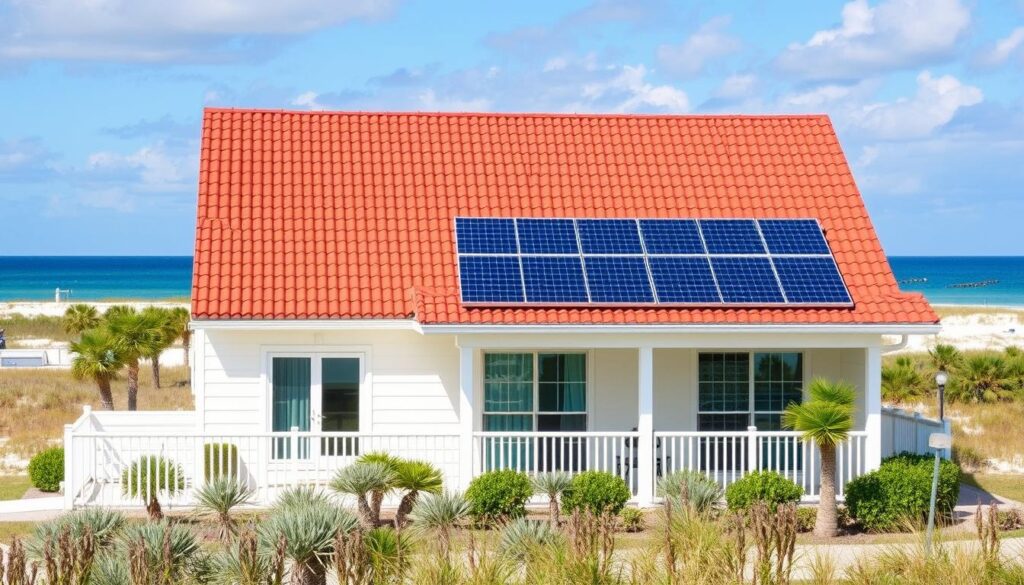
Florida offers a suite of financial tools that can dramatically improve the economics of solar installations. The state’s Property Tax Exemption prevents the added value of a solar system from increasing property taxes, while the Federal Investment Tax Credit (ITC) currently provides a 30 % credit on qualified expenses. Local utilities in the Panhandle also support net‑metering programs that credit homeowners for excess electricity sent back to the grid. When these incentives are combined with the higher electricity rates typical of larger households, the payback period for a well‑sized system can shrink to as few as five to seven years, after which the home enjoys essentially free power. For families planning to stay in a home for multiple decades, the long‑term savings become a compelling part of the overall financial picture.
Design Considerations Specific to Solar Multi Generational Homes
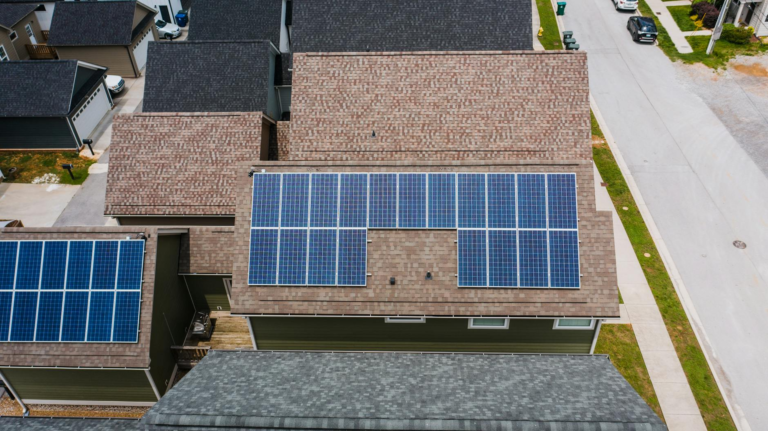
Architects and homeowners must think beyond the roof when integrating solar into a multi‑generational layout. Orientation, shading from mature trees, and the presence of multiple rooflines all influence the optimal placement of panels. In many Panhandle neighborhoods, historic districts limit the visual impact of solar arrays, prompting the use of low‑profile, building‑integrated photovoltaics (BIPV) that blend with existing shingle patterns. Additionally, larger homes often feature separate accessory dwelling units (ADUs) or in‑law suites, each with its own electrical sub‑panel. Designing a single inverter system that can serve multiple sub‑panels simplifies wiring and reduces costs, while still allowing each unit to benefit from the shared solar resource. Properly sized battery storage can further enhance resilience, ensuring that critical medical equipment continues to operate during a grid outage.

System Sizing: Matching Production to Household Demand
Accurately sizing a solar array for a multi‑generational household begins with a detailed energy audit. Homeowners should gather twelve months of utility bills to capture seasonal spikes, then add estimated loads for any future devices or expansions. For a typical 3,500‑square‑foot home with three full bathrooms, two kitchens, and a home office, a system ranging from 12 to 15 kilowatts (kW) often provides a balanced mix of self‑consumption and export potential. This size is large enough to offset the bulk of daytime air‑conditioning and nighttime lighting while leaving room for growth. When the term “solar multi generational homes” is used in planning documents, it signals that the system is deliberately overscaled to accommodate the unique, variable load profile of larger families.
Energy Storage Options for Continuous Power
Battery storage is no longer a luxury reserved for high‑end properties; it is becoming a practical component of any solar strategy for larger households. Lithium‑ion batteries such as the Tesla Powerwall or LG Chem RESU can store enough energy to keep essential circuits running for 8–12 hours during a blackout. When paired with a solar array sized for a multi‑generational home, storage can also smooth out the “duck‑curve” effect, reducing the need to import expensive peak‑hour electricity. For families with elderly members who depend on life‑support equipment, the combination of solar and storage provides peace of mind that power will remain uninterrupted, regardless of weather or grid conditions.
Net Metering and Grid Interaction
In the Florida Panhandle, net‑metering policies allow homeowners to receive credit at the retail rate for excess electricity they feed back into the grid. This arrangement is especially advantageous for solar multi generational homes because the variability of daily consumption—high during summer afternoons and lower at night—creates natural opportunities for export. Over the course of a year, a well‑designed system can earn enough credits to offset a significant portion of the household’s winter electric usage, when air‑conditioning is off but lighting and heating may increase. Understanding the utility’s interconnection agreement and any caps on net‑metering credits is essential to maximizing financial returns.
Case Study: A Four‑Generation Home in Panama City
The Martinez family purchased a historic 4,200‑square‑foot home in Panama City and renovated it to accommodate four generations under one roof. Their energy audit revealed an average annual consumption of 28,000 kWh, with peaks reaching 5,500 kWh during August. After consulting with a local solar installer, they installed a 14 kW rooftop system combined with a 13.5 kWh battery bank. The project qualified for the Federal ITC, the Florida Property Tax Exemption, and a utility‑specific net‑metering program. Within three years, the family reduced their electricity bill by 68 % and reported that the battery kept the home’s medical refrigerator and essential lighting operational during two severe storms that caused grid outages. This example illustrates how solar can be a cornerstone of resilient, affordable living for multi‑generational households.
Step‑by‑Step Planning Checklist
- Conduct a comprehensive energy audit covering at least 12 months of utility data.
- Identify current and future electrical loads, including medical devices and home‑office equipment.
- Map roof geometry, shading patterns, and any historic‑district restrictions.
- Determine the optimal system size, aiming for 12–15 kW for typical large homes in the Panhandle.
- Choose a battery storage solution that can sustain critical loads for 8–12 hours.
- Apply for federal, state, and local incentives, ensuring documentation is complete.
- Review net‑metering policies and confirm interconnection requirements with the local utility.
- Engage a certified installer experienced with multi‑unit wiring and BIPV options.
- Schedule regular performance monitoring and maintenance checks.
Cost Comparison: Traditional Grid Power vs. Solar for Large Households
| Scenario | Average Annual Cost (USD) | Payback Period (Years) |
|---|---|---|
| Grid‑Only (no solar) | $3,800 | — |
| Solar 12 kW + Battery (with incentives) | $1,200 | 5.5 |
| Solar 15 kW + Battery (with incentives) | $950 | 4.8 |
Future Trends: What’s Next for Solar Multi Generational Homes?
Technology is moving quickly, and several emerging trends promise to make solar even more attractive for larger households. Smart home energy management platforms now integrate solar production data, battery state‑of‑charge, and real‑time utility rates to automatically shift loads and maximize savings. Community solar projects are also gaining traction, allowing families who cannot install rooftop panels—perhaps due to historic preservation rules—to subscribe to a shared array and still reap financial benefits. Additionally, advances in perovskite solar cells could soon deliver higher efficiencies on existing roof space, meaning that the same square footage could generate more power—an important consideration for homes where roof area is at a premium.
In summary, incorporating solar into the planning process of multi‑generational homes in the Florida Panhandle is not just an environmental choice; it is a strategic financial decision that enhances resilience, lowers operating costs, and future‑proofs the property for decades to come. By following a systematic approach—starting with a thorough energy audit, leveraging available incentives, and selecting the right system size and storage—families can create homes that comfortably support the needs of every generation while enjoying the long‑term benefits of clean, reliable energy.
