



Understanding Solar Panel Degradation
When homeowners and business owners invest in photovoltaic (PV) systems, they often hear the term “solar panel degradation.” This isn’t just industry jargon; it’s a measurable decline in a panel’s ability to convert sunlight into electricity over its operational life. The solar panel degradation rate is expressed as a percentage loss of power output per year, typically ranging from 0.3 % to 0.8 % for most modern crystalline‑silicon modules. While the numbers may look small, the cumulative effect over a 25‑year warranty period can translate into a noticeable reduction in energy production, affecting return on investment calculations and long‑term sustainability goals. Understanding how this degradation actually works—and why it varies from one environment to another—is essential for anyone planning a solar installation, especially in harsh coastal climates like Destin, Florida, and Panama City Beach.
Find us here:
Solar Cost Calculator – Florida Panhandle Only
* Estimate based on $3.25 per watt for solar installation.
* For Tesla Powerwall 3 Batteries, $15,000 for the first battery, $12,000 for each additional battery.
* Other variations and types of Batteries are available.
What Causes Solar Panels to Degrade?
The degradation of solar panels is the result of a complex interplay of physical, chemical, and environmental forces. At the core, sunlight itself can cause photodegradation, where high‑energy photons break down the semiconductor material. Heat accelerates this process, leading to thermal cycling stress that can create micro‑cracks in the silicon cells. Moisture intrusion, especially in humid or salty air, can corrode metal contacts and the protective backsheet, reducing electrical conductivity. Over time, these mechanisms combine to lower the module’s overall efficiency, which is captured by the solar panel degradation rate. While manufacturers design panels to withstand typical outdoor conditions, the exact rate varies based on material quality, installation practices, and the specific climate where the system operates.
Key Factors Influencing the Degradation Rate
Climate Exposure and Temperature Swings
Temperature fluctuations are one of the most significant contributors to the solar panel degradation rate. In regions where daytime highs exceed 95 °F (35 °C) and nighttime lows dip below 50 °F (10 °C), panels experience repeated expansion and contraction. This thermal cycling can weaken solder joints and cause delamination of the encapsulant layers. Coastal areas, such as Destin, often see rapid temperature changes due to sea breezes, which can intensify this effect. Moreover, high ambient temperatures reduce a panel’s voltage output, a phenomenon known as temperature coefficient loss, further influencing the measured degradation over time.
Salt Spray, Humidity, and Corrosion
Salt‑laden air is a unique challenge for PV systems installed near the ocean. Sodium chloride particles settle on panel surfaces, creating a conductive film that can accelerate corrosion of aluminum frames, copper wiring, and silver paste on the cell front. When moisture combines with salt, it forms an electrolyte that speeds up electrochemical reactions, degrading the backsheet and junction box seals. This corrosive environment can increase the solar panel degradation rate beyond the typical inland averages, sometimes reaching 0.9 % per year for poorly protected installations.
How Degradation Is Measured and Reported
Manufacturers typically conduct accelerated aging tests in laboratory settings to estimate the solar panel degradation rate. These tests simulate years of exposure to UV radiation, temperature cycling, and humidity in a compressed timeframe. The resulting data are expressed as a guaranteed performance level after 25 years, often stated as “no less than 80 % of initial output.” In the field, real‑world degradation is monitored using performance ratio (PR) calculations, which compare actual energy production to the expected output under standard test conditions (STC). By tracking PR trends over multiple years, installers can verify whether a system is degrading at the expected rate or if external factors are accelerating the loss.
Typical Degradation Rates for Different Technologies
Not all solar panels are created equal. Monocrystalline silicon modules generally exhibit the lowest solar panel degradation rate, often around 0.3 % to 0.5 % per year, thanks to their high-purity silicon and robust encapsulants. Polycrystalline panels tend to degrade slightly faster, typically 0.5 % to 0.7 % annually, due to lower crystal quality and more pronounced grain boundaries. Thin‑film technologies, such as CdTe or CIGS, can see rates ranging from 0.5 % up to 1 % per year, especially if they lack adequate protective layers against moisture. Understanding these baseline rates helps stakeholders set realistic expectations for long‑term energy yields, particularly when planning installations in aggressive environments like coastal Florida.
| Panel Type | Average Degradation Rate (Annual %) | Typical Warranty (Years) |
|---|---|---|
| Monocrystalline Silicon | 0.30 – 0.45 | 25–30 |
| Polycrystalline Silicon | 0.45 – 0.65 | 20–25 |
| Thin‑Film (CdTe, CIGS) | 0.55 – 1.00 | 15–20 |
Coastal vs. Inland Performance: What the Numbers Reveal
Comparative studies of solar farms located inland versus those sited within a few miles of the Gulf Coast show a clear divergence in the solar panel degradation rate. Inland installations, shielded from salt spray and extreme humidity, often adhere closely to the manufacturer’s stated degradation figures. In contrast, coastal systems can experience an additional 0.1 % to 0.3 % annual loss due to corrosion and accelerated moisture ingress. Over a 20‑year period, this seemingly modest difference can translate into a 2 % to 6 % reduction in total energy output, which may affect the payback period and overall profitability of the project.
Case Study: Destin, Florida
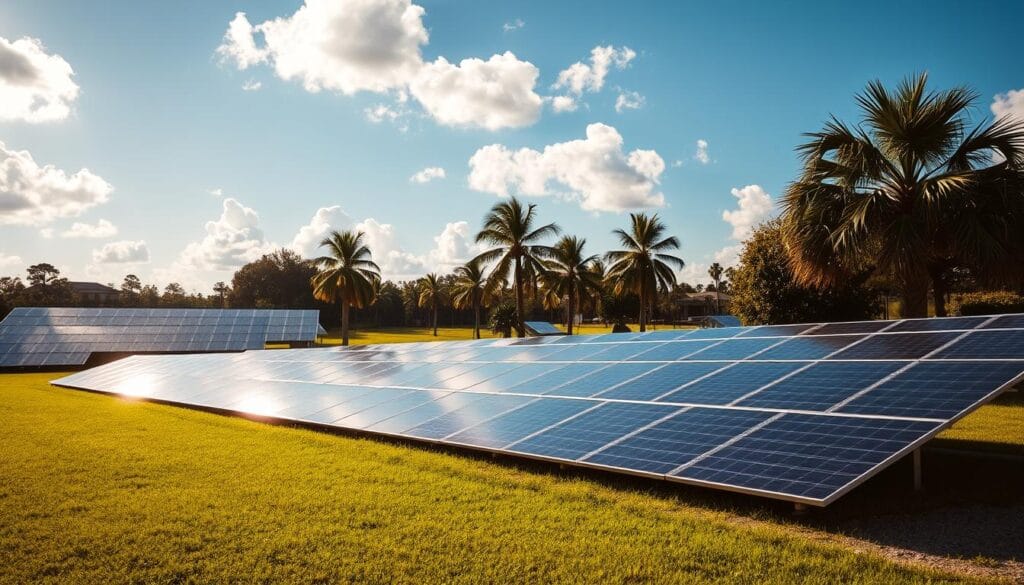
Destin’s shoreline is characterized by warm, humid summers and frequent sea breezes that carry fine salt particles inland. A residential PV system installed in 2015 with a 0.35 % annual degradation rate (as per the manufacturer) was monitored by a local utility. By 2024, the system’s performance data indicated a real‑world degradation rate of approximately 0.55 % per year. The additional 0.20 % was attributed primarily to salt‑induced corrosion of the frame and junction box, as well as occasional moisture intrusion into the backsheet. The homeowner mitigated further loss by applying a marine‑grade anti‑corrosion coating to the mounting hardware and scheduling quarterly cleaning to remove salt deposits.
Case Study: Panama City Beach, Florida
Panama City Beach experiences higher wind speeds and occasional tropical storms, which introduce both mechanical stress and heavy salt spray. A commercial solar array installed in 2017 on a warehouse roof was originally rated for a 0.40 % annual degradation rate. After five years, performance monitoring revealed a rate of 0.68 % per year. Detailed inspections uncovered micro‑cracks in the glass caused by wind‑borne debris and accelerated delamination of the EVA encapsulant due to prolonged exposure to high humidity. The facility’s management responded by reinforcing the mounting system, installing protective wind screens, and upgrading to panels with a more robust fluoropolymer backsheet, which reduced the subsequent degradation to about 0.45 % per year.
Mitigation Strategies to Lower the Degradation Rate
- Choose panels with marine‑grade frames and corrosion‑resistant junction boxes.
- Apply anti‑salt coatings to metal components and fasteners.
- Install a high‑quality, UV‑stable backsheet (e.g., fluoropolymer) to prevent moisture ingress.
- Use angled mounting to promote self‑cleaning and reduce salt accumulation.
- Schedule regular cleaning, especially after storms, to remove salt deposits.
- Implement real‑time monitoring to detect performance drops early.
By integrating these practices during the design and construction phases, the effective solar panel degradation rate can be brought closer to the manufacturer’s baseline, even in aggressive coastal environments. The upfront cost of premium materials and periodic maintenance is often offset by the longer‑term energy yield and extended warranty compliance.
Maintenance Best Practices for Coastal Installations
Routine maintenance is a cornerstone of preserving panel performance. For coastal sites, a quarterly visual inspection is recommended to check for signs of corrosion, loose connections, or debris buildup. Cleaning should be performed with fresh water and a soft brush; avoid high‑pressure washers that could damage the encapsulant. Additionally, thermal imaging can identify hot spots caused by cell degradation or connection failures before they become critical. Documenting maintenance activities and performance data helps create a degradation trend line, enabling owners to anticipate when a panel may need replacement or when warranty claims should be filed.
Emerging Technologies Reducing Degradation
Researchers are developing next‑generation PV materials designed to withstand harsher environments. Bifacial modules with anti‑reflective, self‑cleaning coatings reduce the impact of dust and salt. Advanced encapsulants based on silicone or polyolefin chemistry offer superior resistance to UV‑induced yellowing and moisture permeation. Moreover, metal‑frame designs that replace aluminum with stainless steel or anodized alloys provide enhanced corrosion protection. As these innovations become commercially available, the industry expects the average solar panel degradation rate to drop below 0.2 % per year for installations in even the most challenging coastal locales.
Understanding how solar panel degradation actually works over time empowers homeowners, installers, and investors to make informed choices that maximize energy production and protect their financial investment. By selecting the right technology, applying targeted protective measures, and committing to diligent maintenance, the impact of coastal climate exposure on the degradation rate can be significantly mitigated.
Conclusion: While the solar panel degradation rate inevitably rises in salty, humid environments like Destin and Panama City Beach, proactive design, high‑quality components, and consistent upkeep can keep that rate close to the industry standard. This ensures that solar installations continue to deliver reliable, clean energy for decades, even under the toughest coastal conditions.
