



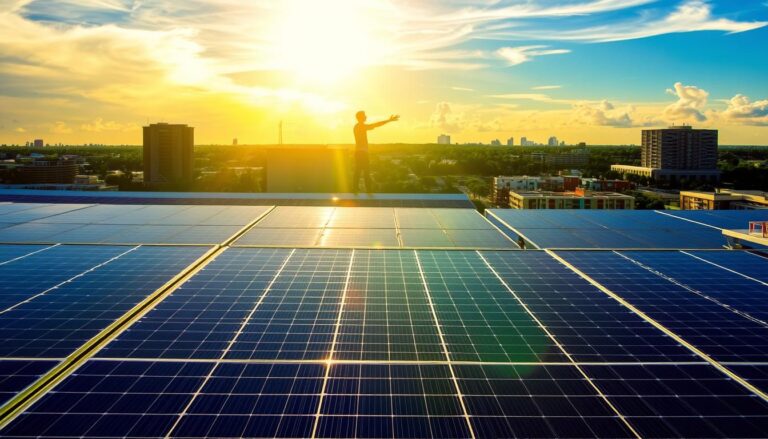
When you invest in a solar array on a home along Scenic Highway 30A, you quickly discover that the angle at which your panels face the sun can make a dramatic difference in the amount of electricity you generate each day. This isn’t just a matter of aesthetic preference; the direction, tilt, and even the local micro‑climate combine to shape what we call solar panel orientation production. Understanding how orientation influences daily energy patterns helps homeowners fine‑tune their systems, maximize return on investment, and contribute more clean power to the grid.
Find us here:
Solar Cost Calculator – Florida Panhandle Only
* Estimate based on $3.25 per watt for solar installation.
* For Tesla Powerwall 3 Batteries, $15,000 for the first battery, $12,000 for each additional battery.
* Other variations and types of Batteries are available.
Why Orientation Matters for Daily Energy Production
The sun’s path across the sky is a predictable dance that changes with the seasons, latitude, and even local topography. When a solar panel is positioned to capture the most direct sunlight during peak hours, its cells convert photons into electricity more efficiently. Conversely, a panel that spends a large portion of the day in shade or receives low‑angle sunlight will see reduced output. This relationship between direction and output is the core of solar panel orientation production, and it is especially noticeable in coastal towns where houses often have varied rooflines and surrounding vegetation.
The Physics Behind Orientation
Solar panels generate electricity based on two geometric factors: azimuth (the compass direction the panel faces) and tilt (the angle relative to horizontal). The azimuth determines how long the panel is illuminated during sunrise and sunset, while the tilt influences how directly sunlight strikes the panel at solar noon. In the Northern Hemisphere, a true south‑facing orientation typically yields the highest annual energy yield because it aligns the panel with the sun’s highest point each day. However, daily production patterns can shift dramatically if the panel faces east, west, or even north, especially during winter months when the sun travels a lower arc.
Another key factor is the “angle of incidence,” which describes the angle at which sunlight hits the panel surface. When this angle is close to zero (meaning the sun’s rays strike the panel perpendicularly), the panel operates near its peak efficiency. As the angle deviates, more light is reflected away, and the panel’s output drops. This principle explains why a modest change of 10‑15 degrees in azimuth can translate into a noticeable swing in daily kilowatt‑hour (kWh) production.
Seasonal Sun Paths and Their Effect on Production
During summer, the sun rises in the northeast, arches high, and sets in the northwest. Panels that face east or west still capture a generous portion of the daylight, but a south‑oriented array will enjoy the longest period of direct exposure. In winter, the sun’s trajectory shifts toward the southeast at sunrise and the southwest at sunset, staying low in the sky. This shift makes a south‑facing orientation even more valuable, while east‑ or west‑facing panels may lose several hours of effective sunlight each day.
Because the length of daylight varies by season, the daily production curve for a given orientation also changes. A south‑oriented system typically shows a broad, relatively flat production profile from late morning to early afternoon, while an east‑facing system peaks in the mid‑morning and tapers off quickly. West‑facing panels, on the other hand, generate most of their energy in the late afternoon and early evening. Homeowners who monitor their inverters will often see these patterns reflected in the daily kWh graphs provided by most monitoring apps.
Common Orientations in Scenic Hwy 30A Towns
Coastal properties along Highway 30A exhibit a range of roof orientations due to historic building styles, lot shapes, and the desire to capture ocean views. While many newer homes are designed with a south‑facing roof to optimize solar output, older cottages may have east‑ or west‑facing gables, and some custom builds even feature north‑facing roofs to preserve sightlines. Understanding how each of these orientations influences solar panel orientation production helps homeowners decide whether to adjust mounting systems, add micro‑inverters, or accept a slightly lower daily output in exchange for aesthetic preferences.
East vs. West vs. South: A Quick Comparison
- East‑facing panels: Strong early‑morning production, ideal for homes that use more electricity before 12 pm (e.g., coffee makers, home offices).
- West‑facing panels: Peak production in the late afternoon, which can align well with evening loads such as pool pumps, electric vehicle charging, and HVAC systems.
- South‑facing panels: Balanced production throughout the middle of the day, providing the highest overall daily energy yield in most cases.
In practice, the difference between a perfectly south‑oriented system and an east‑oriented system can range from 5 % to 15 % in daily energy generation, depending on the season. For homeowners who are particularly sensitive to their electricity bills, that variance may be worth the extra effort of adjusting mounting hardware or installing a dual‑axis tracker (though trackers are less common in residential settings).
Roof pitch also interacts with orientation. A steeply pitched roof can increase the effective tilt, which may be advantageous in winter but can cause excess shading in summer if nearby trees or structures block the low‑angle sun. Conversely, a shallow roof may require supplemental mounting brackets to achieve the optimal tilt angle for the local latitude (approximately 30° – 35° for the 30A region).
| Orientation | Average Daily Production (kWh) | Typical Peak Time |
|---|---|---|
| South | 28 – 32 | 11 am – 2 pm |
| East | 24 – 27 | 8 am – 11 am |
| West | 25 – 28 | 1 pm – 5 pm |
| North | 12 – 16 | Minimal |
The table above summarizes typical daily output for a 5 kW residential system in the 30A area, assuming standard tilt and minimal shading. While actual numbers will vary based on specific roof angle, inverter efficiency, and weather, the pattern illustrates how orientation directly shapes daily production. Homeowners who cannot achieve a south orientation often compensate by increasing panel count, using higher‑efficiency modules, or adding a small battery to store excess morning or evening generation.
Optimizing Tilt and Azimuth for Maximum Yield
Even if your roof’s azimuth is fixed, you still have control over tilt. The optimal tilt angle for the 30A corridor hovers around the site’s latitude—roughly 31°—plus a seasonal adjustment of 10° to 15° toward the vertical in winter and away from vertical in summer. Many homeowners use adjustable mounting rails that allow a tilt of 15° – 45°, giving enough flexibility to capture more winter sun without sacrificing summer performance.
Online tools such as the National Renewable Energy Laboratory’s PVWatts Calculator or local solar installers’ design software can model how different tilt and azimuth combinations affect solar panel orientation production. By inputting your exact address, roof pitch, and shading obstacles, you receive a projected monthly and annual energy profile that highlights the most productive orientation for your specific site.
- Use a solar pathfinder or smartphone app to visualize sun angles throughout the year.
- Adjust tilt to match the seasonal sun height if your mounting system permits.
- Consider adding a small “east‑west split” system—two smaller arrays facing opposite directions—to smooth out daily production.
When shading is unavoidable—say, from a mature oak tree or a neighboring home’s chimney—micro‑inverters or power optimizers become valuable. They allow each panel to operate at its own maximum power point, mitigating the loss caused by partial shading and preserving overall system efficiency.
Practical Tips for Homeowners on Scenic Hwy 30A
- Inspect your roof’s orientation early in the design phase; a simple compass can confirm true south, east, or west.
- If your roof faces east or west, prioritize high‑efficiency monocrystalline modules to offset the lower daily yield.
- Install a monitoring system that displays real‑time production; this helps you see the impact of orientation on a day‑to‑day basis.
- Trim or prune trees that cast shadows during peak production hours, especially in winter.
- Explore community solar options if your home’s orientation severely limits on‑site generation.
In many 30A neighborhoods, homeowners have successfully added a secondary “back‑up” array on a different roof plane to capture additional sunlight when the primary array is shaded. This approach not only boosts total annual production but also smooths out the daily curve, reducing reliance on the grid during early morning or late‑afternoon peaks.
Case Study: A 30A Home with Mixed‑Orientation Roof
Emily and Jake purchased a historic beach cottage on Highway 30A that featured a south‑facing main roof and an east‑facing wing. Their initial design called for a single 6 kW array on the south roof, but a site audit revealed that the east wing would be heavily shaded by a neighboring palm during summer afternoons. To balance the system, they installed a 3 kW east‑facing array on the wing and a 3 kW south‑facing array on the main roof, using micro‑inverters on both sections.
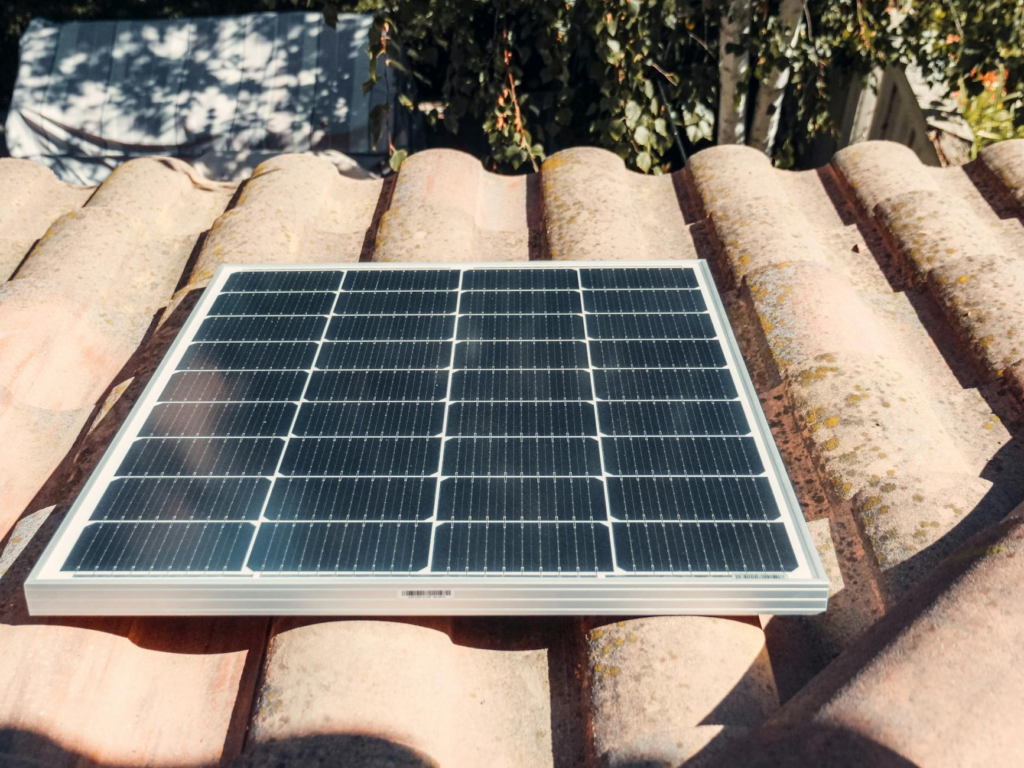
Over the first year, the combined system produced an average of 29 kWh per day, matching the projected output for a full south‑oriented 6 kW system. The east array contributed roughly 35 % of the total during spring mornings, while the south array dominated the summer peak. By analyzing their inverter data, Emily and Jake saw the daily production curve flatten, meaning they relied less on battery storage during evening hours. This real‑world example underscores how thoughtful placement and awareness of solar panel orientation production can deliver optimal results even on homes with less‑than‑ideal roof geometry.
For homeowners who cannot reorient panels due to structural constraints, the lesson is clear: leverage technology (micro‑inverters, optimizers), adjust tilt where possible, and consider adding a secondary array on a different plane. The combined effect can emulate the performance of a perfectly south‑facing system without compromising the historic character of the property.
In summary, the direction your panels face is a primary driver of daily energy generation. By understanding the interplay of azimuth, tilt, seasonal sun paths, and local shading, residents of Scenic Hwy 30A can make informed decisions that boost solar panel orientation production, reduce electricity bills, and contribute more clean energy to the community.
By applying these strategies—choosing the right orientation, fine‑tuning tilt, using micro‑inverters, and monitoring output—homeowners can turn the challenges of varied roof angles into an opportunity for smarter, more resilient solar installations.
