



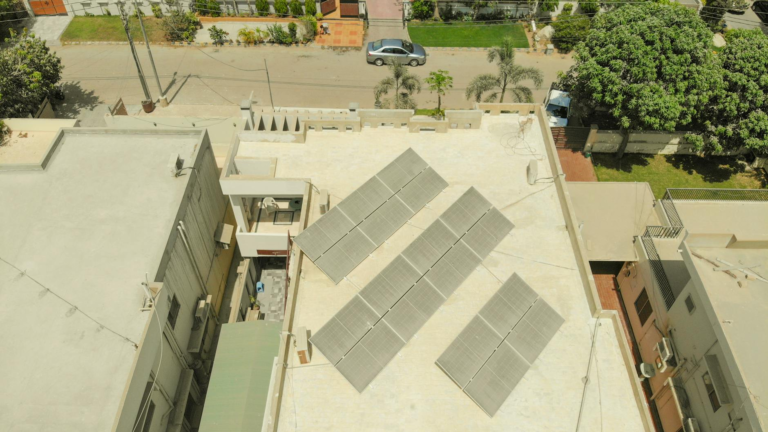
Why Solar Panel Spacing Is a Critical Factor for Homeowners
When you invest in a solar array, you’re not just buying panels; you’re buying a system that must work harmoniously with the climate, the roof structure, and the overall energy demands of your home. One often‑overlooked variable that can dramatically affect solar panel spacing efficiency is the distance you leave between each module. Proper spacing creates a channel for air to flow, reduces heat buildup, and ultimately boosts the amount of electricity each panel can generate. In sunny locales like Panama City Beach and Navarre, where temperatures frequently climb above 90 °F, the difference between a tightly packed array and a well‑ventilated one can be measured in both kilowatt‑hours saved and cooling costs avoided.
Find us here:
Solar Cost Calculator – Florida Panhandle Only
* Estimate based on $3.25 per watt for solar installation.
* For Tesla Powerwall 3 Batteries, $15,000 for the first battery, $12,000 for each additional battery.
* Other variations and types of Batteries are available.
The Science Behind Heat and Photovoltaic Performance
Photovoltaic (PV) cells convert sunlight into electricity through a process called the photovoltaic effect. However, as the temperature of the cells rises, their voltage drops, which reduces overall power output. Most manufacturers provide a temperature coefficient that indicates how many percent of power is lost per degree Celsius above the standard test condition of 25 °C. For example, a typical coefficient of –0.4 %/°C means that a 10 °C increase can shave off 4 % of a panel’s rated power. This is why managing heat is as important as maximizing sun exposure, and why solar panel spacing efficiency becomes a cornerstone of system design.

How Airflow Improves Cooling and Boosts Output
Airflow is the most natural and cost‑effective cooling method available for rooftop installations. When panels are spaced apart, cooler ambient air can circulate beneath them, pulling heat away from the back of the modules. This convective cooling effect lowers the operating temperature, allowing the cells to operate closer to their optimal voltage. Studies have shown that a well‑ventilated array can run 5 °F to 15 °F cooler than a densely packed one, translating to a 2 % to 6 % increase in energy production over a typical year. In regions with high humidity, such as the Gulf Coast, this airflow also helps prevent moisture accumulation that can accelerate degradation.
Determining the Ideal Distance Between Panels
There is no one‑size‑fits‑all answer to how far apart panels should be, but industry guidelines provide a solid starting point. The rule of thumb often cited by installers is to leave a gap equal to at least 2–3 inches for every 12 inches of panel width. For a standard 65‑inch wide module, that translates to roughly 12–18 inches of clearance. However, the optimal distance also depends on roof pitch, local wind patterns, and the type of mounting system used. By carefully balancing these factors, you can maximize solar panel spacing efficiency without sacrificing valuable roof real estate.
Key Variables to Consider
- Roof slope – steeper roofs naturally create more airflow, allowing for slightly tighter spacing.
- Mounting hardware – ballasted systems may need wider gaps to distribute weight evenly.
- Local climate – hotter, still air benefits more from larger gaps, while windy areas may need less.
Impact of Spacing on Home Cooling Loads
In addition to improving panel performance, proper spacing can reduce the heat transferred to the attic or interior ceiling space. When panels sit flush against the roof without adequate ventilation, they act like a solar oven, radiating heat into the building envelope. This added heat forces air‑conditioning units to work harder, increasing electricity bills. By allowing air to pass under the array, you create a buffer that keeps the roof surface cooler, which in turn lessens the heat load on the home. Homeowners in Panama City Beach have reported up to a 7 % reduction in cooling energy consumption after adjusting panel spacing, underscoring the dual benefit of this simple design tweak.
Regional Considerations: Panama City Beach and Navarre
The Gulf Coast climate is characterized by high humidity, frequent sea breezes, and intense summer sun. These conditions make solar panel spacing efficiency especially relevant. Sea breezes provide natural ventilation, but only if the panels are positioned to capture that airflow. Aligning rows perpendicular to prevailing winds can amplify the cooling effect. Additionally, the salty air can accelerate corrosion on mounting hardware, so using corrosion‑resistant materials combined with adequate spacing helps prolong the lifespan of the system.
Practical Installation Tips for Optimal Spacing
When planning a new installation or retrofitting an existing array, follow these practical steps to ensure you achieve the best possible solar panel spacing efficiency:
- Conduct a site survey to map roof dimensions, pitch, and shading sources.
- Use a laser level or digital inclinometer to verify roof angle.
- Mark panel outlines on the roof, leaving the recommended gap based on panel width and roof slope.
- Install mounting rails with adjustable brackets that allow fine‑tuning of spacing during the final placement.
- Check airflow after installation by feeling the temperature difference between the panel back and the ambient air on a sunny day.

Common Mistakes That Reduce Spacing Efficiency
Even seasoned installers can fall into habits that compromise solar panel spacing efficiency. Some of the most frequent errors include:
- Stacking panels too close to maximize roof coverage, ignoring the cooling penalty.
- Neglecting to align rows with prevailing wind direction, which limits natural ventilation.
- Using low‑profile mounting that eliminates the air gap needed for convective cooling.
- Skipping a post‑install airflow test, assuming that the system is performing at peak efficiency.
Maintenance Practices That Preserve Efficiency
Regular maintenance helps retain the benefits of proper spacing over the lifespan of the system. Schedule bi‑annual inspections to clear debris, check for loose brackets, and verify that airflow pathways remain unobstructed. In coastal areas like Navarre, rinse the panels with fresh water to remove salt residue that can inhibit heat transfer. Keeping the area beneath the panels free of bird nests, leaves, or other blockages ensures that the designed spacing continues to deliver optimal cooling.
Cost‑Benefit Analysis of Adjusting Panel Spacing
While increasing the distance between panels may seem to reduce the total number of modules that can fit on a roof, the net gain in energy production often outweighs the loss in capacity. For a typical 6 kW residential system, widening the gaps by 12 inches can improve annual output by 3 % to 5 %. Over a 25‑year lifespan, that translates to an additional 9,000 kWh, which at an average rate of $0.13 per kWh represents roughly $1,170 in extra savings. When you factor in the reduced cooling load on the home, the return on investment becomes even more compelling.
Frequently Asked Questions About Panel Spacing
- Can I retrofit my existing system with more space? Yes, most mounting systems allow for adjustment, but you may need to relocate some rails or add new ones.
- Does larger spacing affect warranty? Generally no, as long as the installation follows manufacturer guidelines for mounting and ventilation.
- How much space is too much? Excessive gaps can waste roof area and increase wind uplift forces; a balanced approach is key.
Quick Reference: Recommended Spacing Guidelines
| Roof Pitch | Panel Width (inches) | Recommended Gap (inches) |
|---|---|---|
| Flat (0°–5°) | 65 | 12–18 |
| Moderate (6°–15°) | 65 | 10–14 |
| Steep (16°+) | 65 | 8–12 |
This table provides a concise guide for homeowners and installers seeking to optimize solar panel spacing efficiency based on roof angle. Adjustments may be necessary for unique site conditions, but the values listed serve as a reliable baseline.
Conclusion
Proper solar panel spacing is a simple yet powerful tool for enhancing both energy production and home comfort. By allowing adequate airflow, you reduce panel temperature, improve solar panel spacing efficiency, and lower cooling costs—especially in hot, humid markets like Panama City Beach and Navarre. Whether you’re designing a new system or fine‑tuning an existing one, pay close attention to the gaps between modules, align rows with prevailing winds, and maintain clear ventilation paths. The result is a more resilient, higher‑yielding solar installation that pays dividends for decades to come.
