



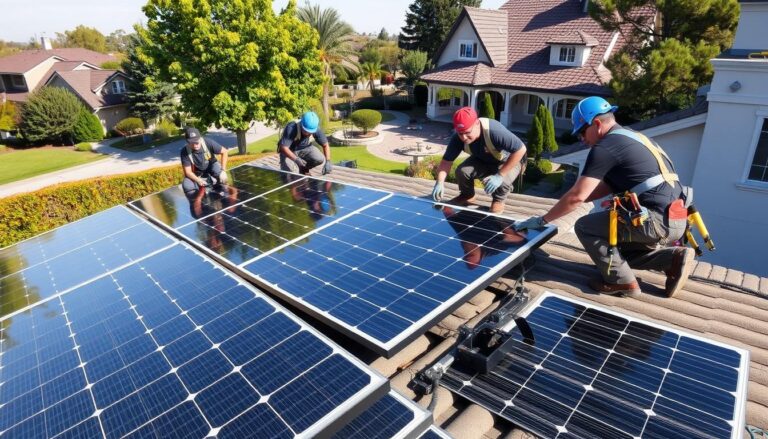
When you invest in solar power for your Fort Walton Beach home, you’re making a 25-year commitment, and your warranty is what protects that investment.
While the Emerald Coast gets plenty of sunshine, it also faces salt air, humidity, and hurricane seasons. That’s why choosing solar panels with strong, long-term warranties is just as important as picking the right installer or financing plan.
In this guide, we’ll break down everything you need to know about solar panel warranties in Fort Walton Beach, what they cover, how they differ, and which brands offer the best protection for Florida homeowners.
Also Read: Solar for First-Time Homebuyers in Panama City Beach (2025 Guide)
Solar Cost Calculator – Florida Panhandle Only
* Estimate based on $3.25 per watt for solar installation.
* For Tesla Powerwall 3 Batteries, $15,000 for the first battery, $12,000 for each additional battery.
* Other variations and types of Batteries are available.
Why Warranties Matter in Coastal Florida
Fort Walton Beach sits right on the Gulf Coast, where homes face unique environmental challenges:
- High humidity and salt corrosion
- Hurricane-force winds and debris impact
- Strong UV exposure and heat
Even though solar panels are built to withstand tough weather, small issues like corrosion, seal failure, or cracked glass can affect long-term performance.
That’s where your warranty comes in. A good warranty doesn’t just protect against defects, it also gives you peace of mind that your solar power system will keep performing for decades.
The Three Main Types of Solar Warranties
Not all warranties are created equal. Most solar systems in 2025 come with three layers of coverage:
1. Product (Equipment) Warranty
This covers defects in materials or workmanship, basically, if the panel itself fails due to manufacturing flaws.
- Typical duration: 12–25 years
- Covers: Cracked glass, junction box failure, delamination, frame issues, or corrosion
- Doesn’t cover: Damage from storms, animals, or installation errors
Tip: Look for a minimum of 20 years for Gulf Coast conditions.
2. Performance (Output) Warranty
Solar panels slowly lose efficiency over time, but a good warranty guarantees that they’ll still produce a specific percentage of power after 25 years.
| Warranty Type | Production After 25 Years | Notes |
|---|---|---|
| Basic | 80% | Older or budget panels |
| Premium | 85–88% | Most Tier-1 brands |
| Ultra-Premium | 90–92% | High-end models like SunPower, REC, or Qcells |
For Fort Walton Beach’s hot and humid climate, choose panels that promise at least 85% output after 25 years.
3. Workmanship / Installation Warranty
This comes from your installer, not the panel manufacturer. It covers:
- Roof leaks from mounting hardware
- Loose wiring or racking
- Improper inverter connections
Typical duration: 10–25 years depending on the installer.
A local Fort Walton Beach installer familiar with coastal codes and hurricane requirements is crucial, even the best panels can fail if installed incorrectly.
Understanding Coastal Coverage: Salt & Wind Certifications
Not every warranty automatically covers coastal conditions. Check for these certifications before signing any contract:
- IEC 61701: Protection against salt mist corrosion, a must for Gulf Coast homes.
- IEC 62716: Resistance to ammonia and humidity.
- ASCE 7 Wind Code Compliance: Panels and racking rated for up to 170 mph winds, standard for Okaloosa County.
If your home is within 3–5 miles of the coastline, be sure your installer registers your system as a coastal install with the manufacturer to maintain full coverage.
Top Solar Panel Brands for Fort Walton Beach Homes
Here’s how leading manufacturers stack up in 2025 for warranty length and coverage:
| Brand | Product Warranty | Performance Warranty | 25-Year Output | Coastal Certified? | Notes |
|---|---|---|---|---|---|
| SunPower (Maxeon) | 40 years | 40 years | 92% | ✅ | Industry-leading; highest price. |
| REC Alpha Pure-R | 25 years | 25 years | 92% | ✅ | Excellent for salt air and high heat. |
| Qcells Q.TRON BLK-G10 | 25 years | 25 years | 90.6% | ✅ | Great balance of price and durability. |
| Canadian Solar HiHero | 25 years | 30 years | 88% | ✅ | Excellent warranty transfer terms. |
| Silfab Elite Series | 30 years | 30 years | 90% | ✅ | North American-made, coastal approved. |
| JA Solar DeepBlue 4.0 | 25 years | 25 years | 88% | ⚠️ Partial | Check coastal distance limits. |
How Warranty Transfers Work When Selling Your Home
If you decide to sell your Fort Walton Beach home, buyers will want assurance that the system’s warranty follows them.
- Most Tier-1 brands (like REC, SunPower, Qcells) allow one free ownership transfer.
- The new owner usually needs to register within 30–90 days of closing.
- Keep your proof of purchase and serial numbers handy.
Tip: Include warranty details and production data in your real estate listing. Homes with solar panels and transferable warranties sell faster and for higher prices in Florida markets.
What’s Not Covered
Even comprehensive warranties have limits. Be aware that most won’t cover:
- Damage from hurricanes, lightning, or flooding (that’s your homeowner’s insurance).
- Breakage due to falling branches, debris, or pests.
- Power loss from shading or dirt buildup.
- Improper installation by non-certified contractors.
That’s why both your manufacturer and installer warranties matter, they fill different gaps in coverage.
How to File a Solar Warranty Claim
If your system underperforms or you notice physical damage:
- Contact your installer first. They’ll diagnose whether it’s a product defect or a local issue (like shading or inverter failure).
- Submit claim documentation:
- Proof of purchase
- System serial numbers
- Installer and permit info
- Photos or inverter performance logs
- Manufacturer reviews the claim. If approved, they typically ship replacement panels or reimburse labor.
The process usually takes 2–6 weeks depending on manufacturer response time.
The Role of Your Installer’s Warranty
In Fort Walton Beach, the installer’s workmanship warranty is as important as the manufacturer’s coverage. Choose a contractor that:
- Uses PE-certified hurricane mounting systems.
- Provides at least 10–15 years workmanship coverage.
- Offers annual inspection or cleaning packages to keep warranties valid.
Reputable local companies often guarantee leak-free roof penetrations for 10+ years, an essential promise in Florida’s rainy climate.
Comparing Example Scenarios
| Situation | Covered by Manufacturer? | Covered by Installer? | Covered by Insurance? |
|---|---|---|---|
| Panel stops producing due to factory defect | ✅ | ❌ | ❌ |
| Roof leak around solar mount | ❌ | ✅ | Possibly |
| Panel blown off by hurricane | ❌ | ❌ | ✅ |
| Salt corrosion on racking bolts | ✅ (if certified) | ✅ (if improper materials used) | Possibly |
| Poor wiring or loose inverter | ❌ | ✅ | ❌ |
This overlap highlights why choosing the right installer is just as critical as choosing the right panels.
Extra Protection: Extended and “All-In-One” Warranties
Some manufacturers now offer extended protection plans:
- SunPower Complete Confidence Warranty
Covers panels, inverters, and racking under one 40-year plan. - REC ProTrust Warranty
Includes labor reimbursement for repairs, only through certified installers. - Qcells Protect+
Provides added workmanship coverage and power monitoring support.
Ask your installer whether they’re authorized partners for these brands, otherwise, you may not qualify for the full warranty.
Pro Tips for Fort Walton Beach Homeowners
Bundle with Home Insurance
Ask your insurer to include solar as a “covered structure” to protect against hurricane loss.
Register Your Warranty Immediately
Manufacturers require registration within 90 days of installation to activate coverage.
Keep All Documentation
Store digital and paper copies of invoices, permits, and serial numbers.
Schedule Annual Inspections
Coastal systems need periodic checks for corrosion and grounding issues.
Avoid Unauthorized Repairs
Only certified technicians should work on your system, DIY fixes can void your warranty.
Example: Fort Walton Beach Coastal Installation
System: 8 kW REC Alpha Pure-R
Location: Near Okaloosa Island
Installer: Local NABCEP-certified contractor
Warranty:
- 25-year product + performance (92% output)
- 15-year workmanship
- IEC 61701 salt mist certified
- Roof penetration warranty for 10 years
Outcome:
After 3 years, a junction box failed due to moisture. REC shipped a replacement panel under warranty, and the installer replaced it free of charge. No cost to the homeowner.
Key Takeaways
- Solar panel warranties are your system’s long-term insurance policy.
- Look for 25+ year coverage and salt mist certification for Fort Walton Beach’s coastal environment.
- Choose an installer who offers a workmanship warranty and hurricane-rated mounting.
- Keep your paperwork and registration up to date to ensure full coverage.
- Strong warranties boost resale value and buyer confidence in your home.
Final Word
A solar system is a major investment, and in Fort Walton Beach, your warranty is the safety net that keeps that investment secure.
When comparing systems, don’t just look at panel efficiency or price. Read the fine print, ask about salt mist certifications, and partner with a local, certified installer who understands Florida’s coastal challenges.
Do that, and your panels will deliver reliable, storm-tested power for decades, backed by the strongest warranties in the industry.
