



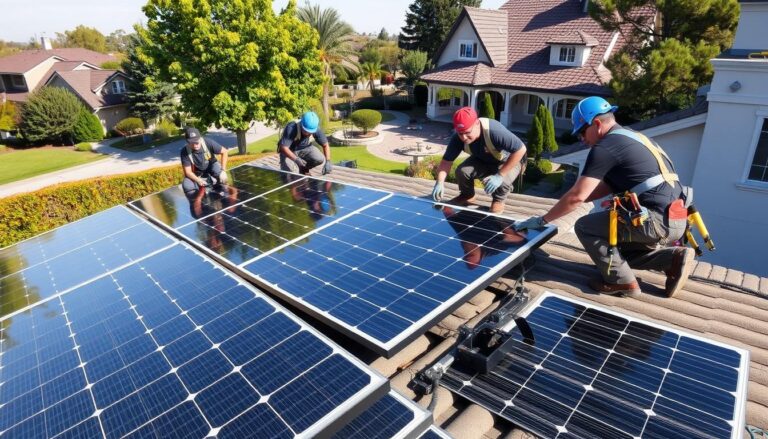
Homeowners across the Florida Panhandle are eager to tap into the abundant sunshine, but many are surprised when their solar panels don’t generate the power they expected. While panels themselves are often the star of the show, the reality is that a series of hidden inefficiencies—collectively known as solar system losses—can shave off a noticeable portion of the energy you pay for.
Understanding these factors, from wiring resistance to heat derating, empowers you to make smarter design choices, keep your system humming at peak performance, and protect your investment over the long run. In this guide we’ll walk through the most common loss mechanisms, explain how they interact, and offer practical tips to minimize their impact, all while keeping the primary keyphrase solar system losses explained front and center.
Find us here:
Solar Cost Calculator – Florida Panhandle Only
* Estimate based on $3.25 per watt for solar installation.
* For Tesla Powerwall 3 Batteries, $15,000 for the first battery, $12,000 for each additional battery.
* Other variations and types of Batteries are available.
What Are Solar System Losses?
When you hear the term “solar system losses explained,” think of it as a bookkeeping exercise for every watt of sunlight that hits your roof. The solar array captures photons, the modules convert them into electricity, and then a series of components—wiring, inverters, mounting hardware, and even the surrounding environment—each introduce a small reduction in the flow of that electricity. The cumulative effect can range from 10 % to 30 % depending on system design, installation quality, and local conditions. By breaking down each loss category, you can pinpoint where the biggest savings lie and take corrective action before the first bill arrives.
Wiring and Connection Losses
Even the most efficient solar panels can’t overcome the resistance that builds up in the copper or aluminum conductors that carry the current to the inverter. This phenomenon, often called voltage drop, becomes more pronounced the longer the cable runs and the higher the current. In a typical residential system, wiring losses account for roughly 2 % to 5 % of the total energy output. Selecting appropriately sized conductors, using high‑quality connectors, and keeping cable runs as short as possible are essential steps to keep these losses low. When solar system losses explained include wiring, the solution is straightforward: prioritize good engineering from the outset.
Tips for Reducing Wiring Losses
- Calculate the required conductor size based on expected current and distance.
- Use copper conductors with low resistance, especially for longer runs.
- Employ MC4 or equivalent high‑quality connectors and tighten them to the manufacturer’s torque specifications.
- Bundle cables neatly to avoid unnecessary length and to improve airflow.
Inverter Efficiency and Conversion Losses
The inverter is the heart of the system, converting the direct current (DC) produced by the panels into alternating current (AC) that powers your home. Modern string inverters typically operate at 95 % to 98 % efficiency, but that still means a 2 % to 5 % loss is inevitable. Micro‑inverters and power optimizers can improve overall performance by reducing the impact of module mismatch, yet they introduce their own small conversion losses. When solar system losses explained include the inverter, the key is to select a unit with a high efficiency rating that matches the size and layout of your array.
Choosing the Right Inverter
- Look for an efficiency rating of 96 % or higher for residential inverters.
- Match the inverter’s maximum DC input to the total wattage of your panel array.
- Consider hybrid inverters if you plan to add battery storage later.
- Check warranty length; reputable brands often offer 10‑year coverage.
Temperature Derating (Heat Losses)
Solar panels are rated under standard test conditions (STC) at 25 °C (77 °F). In the Florida Panhandle, surface temperatures can soar well above 45 °C (113 °F) on a sunny summer day. For every degree Celsius above 25 °C, most silicon panels lose about 0.4 % to 0.5 % of their efficiency—a phenomenon known as temperature derating. This loss can easily reach 10 % to 12 % during peak heat, making it one of the most significant contributors to solar system losses explained. Proper mounting, airflow, and selecting panels with a low temperature coefficient can mitigate this effect.
Design Strategies to Combat Heat
- Mount panels with a slight tilt to promote natural cooling.
- Leave at least a few centimeters of clearance between the panel backsheet and the roof.
- Choose panels with a temperature coefficient of –0.30 %/°C or better.
- Consider installing a ventilation system or reflective roof coating.
Shading and Soiling Losses
Even a small amount of shade—whether from nearby trees, chimneys, or neighboring rooftops—can disproportionately affect output because solar cells are connected in series. A single shaded cell can reduce the current of an entire string, leading to a loss of up to 20 % or more. Likewise, accumulated dust, pollen, bird droppings, and salt spray from the Gulf can create a layer that blocks sunlight, resulting in a gradual efficiency decline of 1 % to 5 % per month if left unchecked. When solar system losses explained cover shading and soiling, the solution is proactive site assessment and regular cleaning.
Maintenance Practices
- Schedule a professional shading analysis during the design phase.
- Trim overhanging branches that could cast shadows during peak sun hours.
- Clean panels at least twice a year, more often after storms.
- Use anti‑soiling coatings or hydrophobic glass to reduce buildup.
Module Mismatch and Degradation
Not all solar panels are created equal, even when they come from the same manufacturer. Slight variations in manufacturing can lead to mismatched voltage and current characteristics across a string, causing the overall performance to drop. Over time, panels naturally degrade—typically 0.5 % to 1 % per year—due to exposure to UV radiation, thermal cycling, and humidity. When solar system losses explained factor in mismatch and degradation, the long‑term impact can be a steady reduction in output that adds up to 10 % or more over a 20‑year lifespan.
Mitigation Techniques
- Use power optimizers or micro‑inverters to isolate each panel’s performance.
- Match panels by manufacturer, model, and production batch when possible.
- Monitor output regularly to detect underperforming modules early.
- Plan for a modest performance warranty that accounts for degradation.
System Design and Orientation
The angle and azimuth of your array determine how much sunlight it captures throughout the year. In the Florida Panhandle, the optimal tilt is roughly equal to the latitude—about 30 ° – 35 °—to maximize annual production. However, many installers choose a flatter angle for aesthetic reasons, which can reduce output by 5 % to 10 % compared to the ideal. Similarly, a deviation of more than 15 ° from true south (or true north in the southern hemisphere) can cause significant losses. When solar system losses explained include design orientation, the fix is simply aligning the array as close to the optimal geometry as the roof allows.
Quick Design Checklist
- Determine the site’s latitude and set the tilt angle accordingly.
- Orient panels toward true south for maximum sun exposure.
- Avoid roof obstructions that could cause shading during peak hours.
- Consider a dual‑axis tracker if the budget permits and the site supports it.
Monitoring and Ongoing Performance Checks
Even with the best design and installation, unforeseen issues can arise—loose connections, inverter faults, or unexpected shading from new construction. A robust monitoring system provides real‑time data that highlights deviations from expected performance. When the output dips below the baseline established during the commissioning phase, you can investigate quickly and address the problem before it becomes a major loss. Incorporating monitoring into the conversation about solar system losses explained ensures that homeowners stay in control of their energy production.
Key Monitoring Features
- Instant alerts for inverter errors or communication failures.
- Historical performance graphs to track degradation trends.
- Energy production vs. expected output comparisons.
- Mobile app access for on‑the‑go checks.
Typical Loss Percentages at a Glance
| Loss Category | Typical Range (%) |
|---|---|
| Wiring & Connections | 2 – 5 |
| Inverter Conversion | 2 – 5 |
| Temperature Derating | 8 – 12 |
| Shading & Soiling | 5 – 15 |
| Module Mismatch/Degradation | 5 – 10 |
| Design & Orientation | 5 – 10 |
The table above condenses the most common contributors to solar system losses explained for the Florida Panhandle. By adding up the upper ends of each range, you can see how a poorly designed or maintained system could lose as much as 45 % of its theoretical output. Conversely, a well‑engineered installation that addresses each factor can keep total losses under 15 %—a dramatic improvement that translates directly into lower electricity bills.
Calculating Your Expected Energy Production
To estimate how much electricity your system will actually deliver, start with the nameplate capacity (in kilowatts), multiply by the average annual sunshine hours for your location (approximately 4,800 kWh/kW for the Panhandle), and then apply a derating factor that accounts for all the losses discussed. For example, a 7 kW system with a 15 % total loss factor would produce roughly:
7 kW × 4,800 kWh/kW × 0.85 ≈ 28,560 kWh per year.
This figure can then be compared to your household’s annual consumption to determine the percentage of your energy needs covered by solar. Using the primary keyphrase solar system losses explained throughout this calculation helps you stay aware of where each reduction originates and what actions you can take to improve the final number.
Bottom‑Line Strategies for Minimizing Losses
- Invest in high‑quality panels with low temperature coefficients.
- Design the array with optimal tilt and true‑south orientation.
- Size conductors correctly and use premium connectors to limit wiring losses.
- Select an inverter with ≥96 % efficiency and consider power optimizers for larger systems.
- Implement a regular cleaning schedule and keep vegetation trimmed.
- Install a reliable monitoring platform to catch performance dips early.
- Plan for future upgrades, such as battery storage, with compatible equipment.
By tackling each of these areas, you effectively reduce the cumulative impact of the factors that solar system losses explained highlight. The result is a more resilient, higher‑producing system that pays for itself faster and delivers cleaner energy for years to come.
In summary, while no solar installation is completely loss‑free, a clear understanding of where those losses originate—and how to address them—gives Florida Panhandle homeowners the confidence to maximize their return on investment. From wiring
