



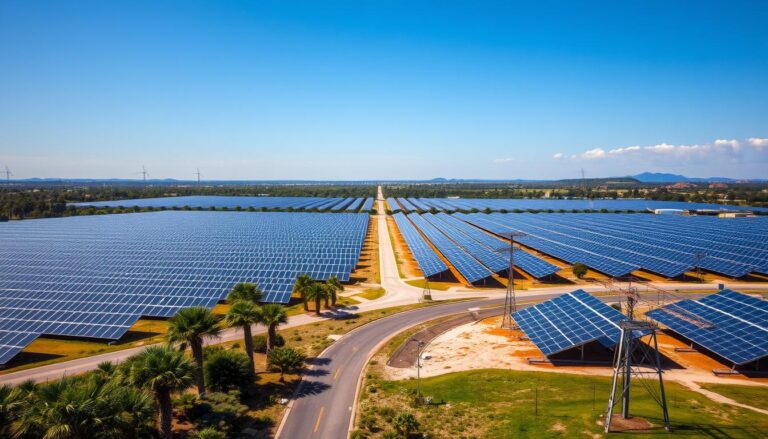
Understanding the Importance of Proper Solar System Sizing
For homeowners in the Florida Panhandle, solar energy is an attractive way to reduce electricity bills and increase energy independence. However, the benefits of a solar installation are closely tied to how well the system matches the home’s actual energy needs. When a system is too large or too small, the homeowner can face hidden expenses that erode the anticipated savings. This article explores the long‑term financial consequences of both oversizing and undersizing a residential solar array, and it highlights the most common solar system sizing mistakes that can turn a promising investment into a costly lesson.
Find us here:
Solar Cost Calculator – Florida Panhandle Only
* Estimate based on $3.25 per watt for solar installation.
* For Tesla Powerwall 3 Batteries, $15,000 for the first battery, $12,000 for each additional battery.
* Other variations and types of Batteries are available.
Why Solar System Sizing Matters
A solar array’s size determines how much electricity it can generate under ideal conditions. If the array produces more power than the home consumes, the excess is either fed back to the grid for credit (depending on the net‑metering policy) or wasted if the grid cannot accept it. Conversely, a system that falls short of the household’s demand forces the owner to rely on grid electricity, diminishing the return on investment. In both scenarios, the mismatch creates inefficiencies that translate into higher overall costs over the life of the system.
Common Solar System Sizing Mistakes
Homeowners often fall into a handful of predictable traps when planning their solar projects. The most frequent solar system sizing mistakes include assuming that a larger system always means greater savings, relying solely on past utility bills without accounting for future changes, and neglecting the impact of seasonal shading or roof orientation. These errors are amplified in the Florida Panhandle, where the climate provides abundant sunshine but also brings occasional storms that can affect system performance. Recognizing these pitfalls early can prevent costly adjustments later.
Oversizing: The Immediate Appeal
It’s tempting to think that installing a solar array that exceeds the home’s average electricity consumption will create a surplus that can be sold back to the utility. Many homeowners believe that a larger system offers a safety net against unexpected spikes in usage and future increases in electricity rates. This line of thinking often leads to the first major solar system sizing mistake: assuming that more kilowatts automatically equal more profit.
In reality, oversizing can generate several hidden costs. First, many utilities impose “export limits” that cap the amount of excess electricity a residential system can feed into the grid. Once the cap is reached, any additional power generated is simply lost, providing no financial return. Second, larger systems require more panels, mounting hardware, and longer wiring runs, all of which increase the upfront capital expense. Finally, the inverter—responsible for converting DC power to AC—may be under‑utilized, reducing its effective lifespan and leading to earlier replacement costs.
Long‑Term Costs of Oversizing
The financial impact of oversizing becomes evident over the typical 25‑year lifespan of a solar installation. Because the system produces more energy than needed, the homeowner pays for capacity that never translates into bill reductions. In addition, the larger array may trigger higher insurance premiums, as insurers often base rates on the total installed value of the system. Maintenance costs can also rise; more panels mean more potential points of failure, and cleaning a larger surface area adds to routine upkeep expenses.
Undersizing: The Hidden Pitfalls
On the opposite end of the spectrum, some homeowners deliberately choose a smaller system to keep the initial outlay low. While this approach reduces the upfront cost, it introduces its own set of challenges. The most common solar system sizing mistake in this category is underestimating future electricity needs. As families grow, appliances are upgraded, and electric vehicle (EV) charging becomes commonplace, the household’s demand can quickly outpace the modest solar production.
Undersized systems force the owner to purchase more grid electricity than anticipated, eroding the projected savings. Moreover, because the system operates closer to its maximum capacity for longer periods, the inverter and panels may experience accelerated wear, potentially shortening their useful life. In regions with time‑of‑use rates, a small system may not be able to shift consumption away from peak‑price periods, resulting in higher utility bills during expensive hours.
How to Find the Right Solar System Size
The key to avoiding both oversizing and undersizing lies in a thorough analysis of the home’s energy profile, roof characteristics, and future usage trends. Accurate sizing begins with a detailed audit of past utility bills, typically spanning the most recent 12 months, to capture seasonal variations. From there, homeowners should factor in projected changes such as the addition of an EV charger, home office equipment, or energy‑efficient upgrades that could alter consumption patterns.
Factors to Consider
- Average daily kilowatt‑hour (kWh) usage based on recent utility statements.
- Projected changes in electricity demand over the next 5‑10 years.
- Roof orientation, pitch, and shading from trees or nearby structures.
- Local net‑metering policies and any export caps imposed by the utility.
- Available incentives, tax credits, and financing options that affect the effective cost per watt.
By combining these data points, homeowners can calculate a target system size that meets at least 90‑100 % of their expected annual consumption, providing a balance between maximizing self‑consumption and avoiding unnecessary excess.
| Parameter | Oversized Impact | Undersized Impact |
|---|---|---|
| Initial Investment | Higher upfront cost due to extra panels and hardware. | Lower upfront cost but may require future expansion. |
| Energy Production vs. Consumption | Excess generation often unrewarded because of export limits. | Frequent reliance on grid electricity, reducing savings. |
| System Longevity | Potentially longer lifespan for panels, but inverter may be under‑utilized. | Inverter operates near capacity longer, possibly shortening its life. |
| Maintenance & Insurance | Increased cleaning, higher insurance premiums. | Lower maintenance but may need earlier upgrade. |
Professional Assessment vs. DIY Sizing
While many homeowners attempt to size their own systems using online calculators, a professional solar consultant brings valuable expertise that can prevent costly solar system sizing mistakes. Certified installers have access to precise shading analysis tools, local weather data, and utility rate structures that are difficult to replicate with generic calculators. Their recommendations often include a buffer for future load growth, ensuring the system remains effective for decades.
Financing and Incentives Impact
The financial landscape of solar projects in the Florida Panhandle includes federal tax credits, state rebates, and utility‑specific incentives that can offset a portion of the installation cost. However, these programs frequently have eligibility criteria tied to system size. Oversizing may disqualify a project from certain rebates, while undersizing could limit the amount of credit received. Understanding how incentives interact with system size is essential to avoid unexpected out‑of‑pocket expenses.
Real‑World Example: A Florida Panhandle Home
Consider a typical 2,500 sq ft. home in Panama City that consumes an average of 1,200 kWh per month. The homeowner initially opted for a 10 kW system, believing the extra capacity would provide a safety net. After two years, the homeowner discovered that the utility’s export limit capped credits at 5 kW of excess generation, meaning roughly 30 % of the produced electricity never earned any return. Additionally, the larger system increased the homeowner’s insurance premium by $150 per year.
In contrast, a neighboring home installed an 8 kW system calibrated to meet 95 % of its projected usage, including a planned EV charger. This system stayed within the utility’s export limits, maximized self‑consumption, and qualified for a $1,200 state rebate that was not available to the oversized installation. Over a five‑year period, the correctly sized system saved the homeowner $3,500 in electricity costs, whereas the oversized system saved only $2,800 after accounting for lost credits and higher insurance.
This example underscores how avoiding common solar system sizing mistakes can translate into tangible financial benefits. By aligning system size with realistic consumption forecasts and local policy constraints, homeowners can secure the maximum return on their solar investment.
In summary, the cost of over‑sizing and under‑sizing a solar system goes far beyond the initial purchase price. Oversized arrays can lead to wasted energy, higher insurance, and reduced incentives, while undersized systems may force continued reliance on grid electricity and accelerate equipment wear. Careful analysis, professional guidance, and a forward‑looking view of household energy needs are the best defenses against these pitfalls.
By taking the time to accurately assess your home’s energy profile and the nuances of local net‑metering rules, you can avoid the most common solar system sizing mistakes and enjoy a reliable, cost‑effective solar solution for years to come.
