



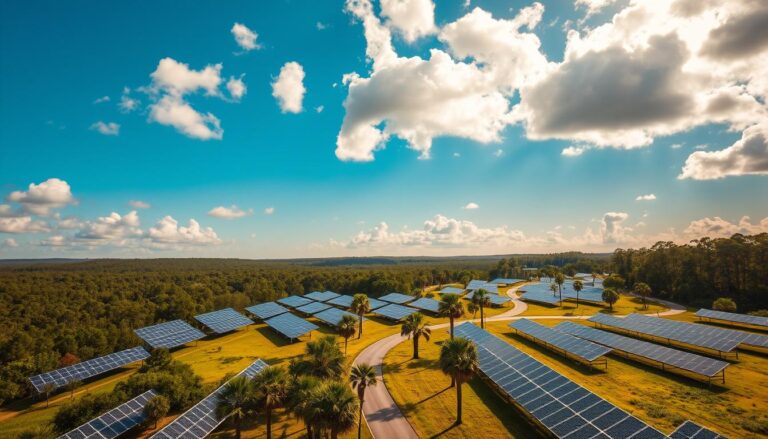
Understanding Solar Viability
Solar energy has moved from a niche hobby to a mainstream power solution, but it isn’t a one‑size‑fits‑all answer for every property. Homeowners in the Florida Panhandle, for example, often wonder when solar makes sense homeowners can truly reap the benefits. The decision hinges on a blend of location‑specific sunlight, roof characteristics, utility rates, and financial goals. By breaking down each factor, you can determine whether a solar investment aligns with your lifestyle and budget, or if other energy‑saving measures might be more appropriate.
Find us here:
Solar Cost Calculator – Florida Panhandle Only
* Estimate based on $3.25 per watt for solar installation.
* For Tesla Powerwall 3 Batteries, $15,000 for the first battery, $12,000 for each additional battery.
* Other variations and types of Batteries are available.
Key Factors That Influence Solar Success
Before installing panels, it’s essential to evaluate the variables that directly affect performance and return on investment. These include the amount of solar irradiance your home receives, the orientation and pitch of your roof, shading from trees or neighboring structures, and the age or condition of your roof itself. Additionally, local net‑metering policies, electricity rates, and available incentives play a pivotal role in shaping the financial picture. Understanding these elements helps you answer the critical question: when solar makes sense homeowners in the Panhandle can expect reliable, cost‑effective power.
Sunlight Exposure and Climate
The Florida Panhandle enjoys an average of 5.5 to 6.0 peak sun hours per day, which is favorable for solar generation. However, micro‑climates can vary—coastal areas may experience more cloud cover, while inland locations often see clearer skies. If your home consistently receives at least four full sun hours, you’re approaching the sweet spot where when solar makes sense homeowners can expect a solid energy yield. Conversely, homes plagued by frequent shading or heavy cloud cover may see diminished returns, making the investment less attractive.
Roof Condition, Orientation, and Age
Solar panels perform best on roofs that face true south (or slightly west) with a tilt between 15° and 30°. If your roof is oriented north or heavily shaded, the panels will capture less sunlight, reducing efficiency. Additionally, the structural integrity of the roof matters; installing solar on an aging roof that will need replacement soon can add unexpected costs. Homeowners should assess whether when solar makes sense homeowners will need to invest in roof repairs before proceeding, ensuring the panels have a stable platform for their 25‑plus year lifespan.
Utility Rates and Net‑Metering Policies
Electricity prices in the Panhandle have risen steadily, making solar a more compelling option for many. Net‑metering allows you to sell excess electricity back to the grid, offsetting your bill and improving the overall economics. However, policy nuances—such as caps on credit roll‑over or changes in compensation rates—can affect the long‑term savings. When evaluating when solar makes sense homeowners should consider both current rates and potential policy shifts that could influence the payback period.
Financial Considerations and Incentives
Solar’s upfront costs have dropped dramatically, but the initial investment still requires careful budgeting. Federal Investment Tax Credit (ITC) offers a 30% credit on system costs, while state and local programs may provide additional rebates or low‑interest loans. These incentives can shorten the payback timeline dramatically. For many, the key question is when solar makes sense homeowners can afford the upfront outlay versus financing options that spread costs over time. Running a detailed cash‑flow analysis helps clarify whether the long‑term savings outweigh the short‑term expense.
Typical Cost Breakdown
- Equipment (panels, inverter, mounting): 45‑55% of total cost
- Installation labor: 15‑20%
- Permitting and inspection fees: 5‑10%
- Electrical upgrades (if needed): 5‑15%
- Contingency for roof repairs: 5‑10%
Incentive Landscape in the Panhandle
Beyond the federal ITC, Florida offers a property tax exemption for the added home value from solar installations, and many utilities provide performance‑based rebates. Some counties also run grant programs for low‑income households. Keeping track of these opportunities is crucial because they can tip the scales in favor of solar. When you’re trying to determine when solar makes sense homeowners can truly benefit, every dollar saved through incentives counts toward a quicker return on investment.
Comparing Solar to Alternative Energy Strategies
Solar isn’t the only way to reduce electricity bills. Energy efficiency upgrades—such as LED lighting, high‑efficiency HVAC systems, and smart thermostats—can lower consumption dramatically with minimal upfront cost. Battery storage adds resilience but also increases expense. For some homes, a combination of modest solar capacity paired with aggressive efficiency measures yields the best balance. Understanding when solar makes sense homeowners can achieve the greatest impact often involves looking at the full energy portfolio rather than focusing on panels alone.
| Factor | Solar Advantage | Alternative Strategy |
|---|---|---|
| Upfront Cost | Moderate to High (with incentives) | Low to Moderate |
| Long‑Term Savings | High (10‑15 years payback) | Moderate |
| Energy Independence | Medium (depends on storage) | Low |
| Maintenance | Low (cleaning, inverter replacement) | Variable |
Case Studies: Real‑World Examples from the Florida Panhandle
To illustrate the decision‑making process, let’s examine three typical Panhandle homes. The first is a 2,500 sq ft coastal property with a south‑facing roof, minimal shading, and a high electricity rate. After applying the ITC and a local rebate, the homeowner found when solar makes sense homeowners can achieve a 12‑year payback and a 30% reduction in annual bills. The second case is a historic inland home with a north‑facing roof and an aging shingle roof slated for replacement. In this scenario, the analysis showed when solar makes sense homeowners would be better served by fixing the roof first, then reconsidering solar after the upgrade. The third example is a modest 1,800 sq ft rental property with limited sun exposure due to mature trees. Here, the calculations revealed that energy‑efficiency upgrades offered a quicker ROI, indicating when solar makes sense homeowners should focus on insulation and efficient appliances before investing in panels.
Steps to Evaluate Your Home’s Solar Potential
- Assess Sunlight: Use a solar irradiance map or a professional site survey to gauge average daily sun hours.
- Check Roof Suitability: Verify orientation, pitch, structural integrity, and any shading issues.
- Calculate Energy Use: Review past utility bills to determine your average monthly consumption.
- Research Incentives: Compile federal, state, and local rebates, tax credits, and financing options.
- Run a Financial Model: Include system cost, incentives, electricity rates, and projected savings over 25 years.
- Compare Alternatives: Evaluate energy‑efficiency upgrades or partial solar systems as complementary solutions.
Following this checklist helps you answer the central question of when solar makes sense homeowners can realistically expect to see value. It also equips you with concrete data to discuss with installers, lenders, and local utility representatives.
Common Misconceptions About Solar in the Panhandle
Many homeowners hold beliefs that can skew their perception of solar viability. One myth is that solar only works in desert‑like climates; in reality, the Panhandle’s average sun exposure is ample for meaningful production. Another misconception is that solar panels require constant maintenance; modern systems are largely self‑cleaning, and inverter warranties often cover major components for 10‑15 years. Finally, some assume that solar will eliminate the electric bill entirely; while it can dramatically reduce it, occasional grid usage may still occur, especially during extended cloudy periods. Recognizing these myths clarifies when solar makes sense homeowners can truly benefit without unrealistic expectations.
Future Trends: How Emerging Technologies May Shift the Equation
Advancements in photovoltaic efficiency, battery storage, and smart‑grid integration are reshaping the solar landscape. Higher‑efficiency panels can generate more power on limited roof space, making solar feasible for homes previously deemed unsuitable. Declining battery costs enable greater self‑consumption, reducing reliance on net‑metering policies that may change over time. Additionally, community solar projects offer a way for renters or those with unsuitable roofs to participate in solar generation. As these technologies mature, the moments when solar makes sense homeowners can invest will expand, potentially turning today’s “no‑go” scenarios into future opportunities.
Final Thoughts: Making an Informed Decision
Solar energy can be a powerful tool for reducing electricity costs and increasing sustainability, but it isn’t universally ideal. By carefully weighing sunlight exposure, roof suitability, utility rates, and available incentives, you can pinpoint when solar makes sense homeowners in the Florida Panhandle should move forward. Use the evaluation steps, consider alternative efficiency measures, and stay informed about emerging technologies to ensure your decision aligns with both your financial goals and environmental values.
Ultimately, the answer lies in a personalized analysis. If the factors align, solar can provide decades of clean, low‑cost power. If they don’t, other strategies may deliver quicker savings. Take the time to assess, compare, and plan—your home’s energy future depends on it.
