



Introduction
When a homeowner in the Florida Panhandle decides to install solar panels, the conversation often centers on panel orientation, inverter size, and financing options. Yet one of the most influential, yet frequently overlooked, factors is the colour of the roof beneath the panels. The way a roof reflects or absorbs sunlight—commonly referred to as roof colour solar heat dynamics—directly affects the temperature of the rooftop surface. In a region where summer temperatures regularly exceed 90°F (32°C), even a few degrees of additional heat can diminish the efficiency of photovoltaic (PV) cells, increase cooling loads inside the house, and shorten the lifespan of roofing materials. Understanding how roof colour solar heat behaves allows homeowners, architects, and installers to make informed decisions that maximize energy production, improve indoor comfort, and protect long‑term investment.
Find us here:
Solar Cost Calculator – Florida Panhandle Only
* Estimate based on $3.25 per watt for solar installation.
* For Tesla Powerwall 3 Batteries, $15,000 for the first battery, $12,000 for each additional battery.
* Other variations and types of Batteries are available.
The Physics Behind Roof Colour Solar Heat Interaction
Sunlight is composed of visible light, infrared (IR) radiation, and ultraviolet (UV) rays. When this radiation strikes a roof, part of it is reflected, part is transmitted, and the remainder is absorbed as heat. Darker surfaces have a lower albedo, meaning they reflect less visible light and absorb more energy, especially in the IR spectrum. This absorbed energy raises the temperature of the roofing material, a phenomenon known as the thermal mass effect. Conversely, lighter coloured roofs possess higher albedo values and reflect a larger proportion of solar radiation, keeping the surface cooler. The term roof colour solar heat encapsulates this interaction, describing how the hue and material composition of a roof dictate the amount of solar heat that is retained or rejected.
Beyond simple colour, the finish (matte vs. glossy), texture, and material type (asphalt shingles, metal, tile, or concrete) also influence heat absorption. For example, a matte white metal roof will reflect more sunlight than a glossy dark‑gray tile roof, even if both appear similar to the naked eye. Moreover, the roof’s insulation and ventilation system can either mitigate or exacerbate the heat buildup caused by roof colour solar heat. In hot climates like the Panhandle, pairing a reflective roof colour with proper attic ventilation can reduce indoor cooling loads by up to 20 percent, according to the U.S. Department of Energy.
Dark Roofing Materials and Temperature Rise in the Florida Panhandle
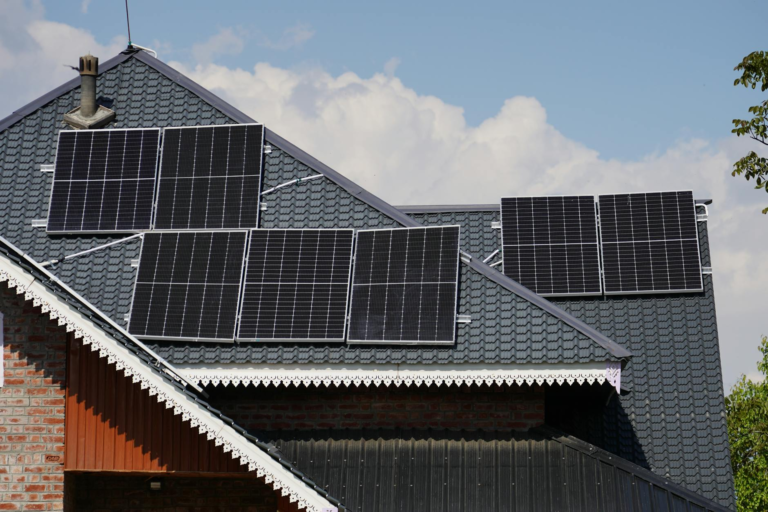
Dark roofing materials—such as charcoal‑gray asphalt shingles, black metal panels, or deep‑red clay tiles—are popular for their aesthetic appeal and perceived durability. However, in the context of roof colour solar heat, these choices can lead to surface temperatures that are 30 °F (≈ 16 °C) higher than ambient air on a clear summer day. In the Florida Panhandle, where humidity and solar intensity are already high, this additional heat can push rooftop temperatures well above the optimal operating range for most PV modules (typically 77–86 °F or 25–30 °C). When solar panels operate at elevated temperatures, their efficiency can drop by roughly 0.5 % for each degree Fahrenheit above the ideal range. Over a typical 30‑year system lifespan, that efficiency loss translates into a measurable reduction in total kilowatt‑hour (kWh) production, impacting both the homeowner’s savings and the return on investment.
Furthermore, the increased roof temperature caused by dark colours can accelerate the aging of roofing membranes, leading to premature cracking, granule loss, and moisture infiltration. In coastal areas of the Panhandle, where salt air already challenges material integrity, the compounded thermal stress from roof colour solar heat may necessitate more frequent repairs or replacement. Homeowners who prioritize longevity often consider lighter colour options or reflective coatings to counteract these effects without sacrificing the structural benefits of their chosen roofing material.
Light Roofing Materials and Their Cooling Effect
Light‑coloured roofing options—such as white or pastel‑tinted metal, reflective asphalt shingles, and cool‑roof ceramic tiles—exhibit high albedo values, often reflecting 65 % to 80 % of incoming solar radiation. In the Panhandle, these roofs can remain 10 °F to 20 °F (≈ 5 °C to 11 °C) cooler than darker counterparts under identical weather conditions. This reduction in roof temperature directly benefits roof colour solar heat dynamics by lowering the baseline temperature of the solar array. Cooler panels operate more efficiently, maintaining a higher power output throughout the day, especially during peak sun hours.
Beyond efficiency gains, cooler roofs also diminish the cooling load on the home’s HVAC system. Studies by the Florida Solar Energy Center indicate that a reflective roof can cut residential air‑conditioning energy use by up to 15 % in the hottest months. This synergistic effect—where a light roof improves solar panel performance while also reducing indoor cooling demand—offers a compelling case for homeowners seeking to maximize the overall energy savings of a solar installation.
How Roof Colour Solar Heat Influences Solar Panel Performance
Photovoltaic cells convert sunlight into electricity, but their output is temperature‑dependent. As the temperature of the solar panel rises, the semiconductor material’s bandgap narrows, causing a drop in voltage while current remains relatively stable. The net effect is a decrease in power output, commonly expressed as the temperature coefficient (typically around –0.4 %/°C for standard silicon panels). When roof colour solar heat raises the rooftop temperature by 15 °C, a panel’s efficiency can decline by approximately 6 %. In practical terms, a 5 kW system could lose up to 300 W of generation capacity during the hottest part of the day, translating into several hundred kilowatt‑hours of lost energy over a year.
Moreover, sustained high temperatures can accelerate the degradation rate of PV modules. While most manufacturers guarantee 80 % of original performance after 25 years under standard test conditions, field data suggests that panels exposed to excessive heat may degrade at a faster pace, potentially reaching the 80 % threshold several years earlier. Selecting a roof colour that mitigates solar heat buildup—whether through reflective pigments, coatings, or a strategic combination of light‑coloured shingles and proper ventilation—helps preserve the long‑term output and reliability of the solar investment.
Selecting the Optimal Roof Colour for Solar Installations
Choosing the right roof colour is not a matter of aesthetics alone; it requires a balanced assessment of climate, roof material, and solar system design. In the Florida Panhandle, the optimal approach often involves a hybrid strategy: using a light‑coloured, high‑albedo roofing material for the portion of the roof that will host the solar array, while retaining darker accents elsewhere for visual harmony. Modern roofing manufacturers offer “cool‑roof” products that combine durable performance with reflective properties, such as polymer‑based shingles infused with titanium dioxide or metal panels coated with ceramic‑based paints. These solutions maintain the structural benefits of traditional dark roofs while significantly reducing roof colour solar heat absorption.
Another consideration is the angle and orientation of the solar panels. A steeper tilt can increase airflow beneath the panels, aiding in heat dissipation. When paired with a reflective roof colour, the combined effect can lower panel temperatures by up to 12 °F (≈ 7 °C) compared with a flat, dark‑roofed installation. Consulting with a certified solar installer who understands local microclimates and can perform a thermal analysis will ensure that roof colour choices complement the overall system design for maximum energy yield.
Practical Steps to Mitigate Excess Heat
Homeowners can take several proactive measures to control roof colour solar heat without undertaking a full roof replacement. Applying a reflective roof coating—such as a silicone‑based or elastomeric paint—can boost the albedo of an existing dark roof by 20 % to 30 %. These coatings are designed to withstand UV exposure, hail, and high winds, making them suitable for the Panhandle’s weather patterns. Additionally, installing ventilation fans or ridge vents in the attic space promotes airflow, allowing hot air to escape and cooler air to circulate, which further reduces rooftop temperature.
Landscaping can also play a role. Strategically placed shade trees or pergolas can provide natural shading for portions of the roof, decreasing direct solar irradiance and thus lowering the roof colour solar heat impact. For new construction, integrating a “cool‑roof” membrane beneath the roofing material adds an extra layer of thermal protection. Finally, routine maintenance—such as cleaning debris from the roof and solar panels—ensures that reflective surfaces remain effective and that heat buildup does not occur due to trapped dust or organic matter.
Comparative Data on Roof Colour Impact
The following table summarizes typical temperature differentials observed between dark and light roofing materials in the Florida Panhandle, based on field measurements taken during peak summer conditions (average ambient temperature ≈ 90 °F). These figures illustrate how roof colour solar heat influences both roof surface temperature and the resulting solar panel operating temperature.
| Roof Colour | Albedo (%) | Surface Temp. Rise Above Ambient | Estimated Panel Temp. Increase |
|---|---|---|---|
| Dark (e.g., charcoal gray asphalt) | 10‑15 | +30 °F (≈ 16 °C) | +20 °F (≈ 11 °C) |
| Medium (e.g., slate gray metal) | 20‑30 | +20 °F (≈ 11 °C) | +13 °F (≈ 7 °C) |
| Light (e.g., white cool‑roof metal) | 65‑80 | +10 °F (≈ 5 °C) | +6 °F (≈ 3 °C) |
From the data, it is evident that a light‑coloured roof can reduce the temperature increase experienced by solar panels by nearly half compared with a dark roof. This temperature reduction directly translates into higher daily energy production and a longer functional lifespan for the PV system, reinforcing the importance of managing roof colour solar heat in the design phase.
