
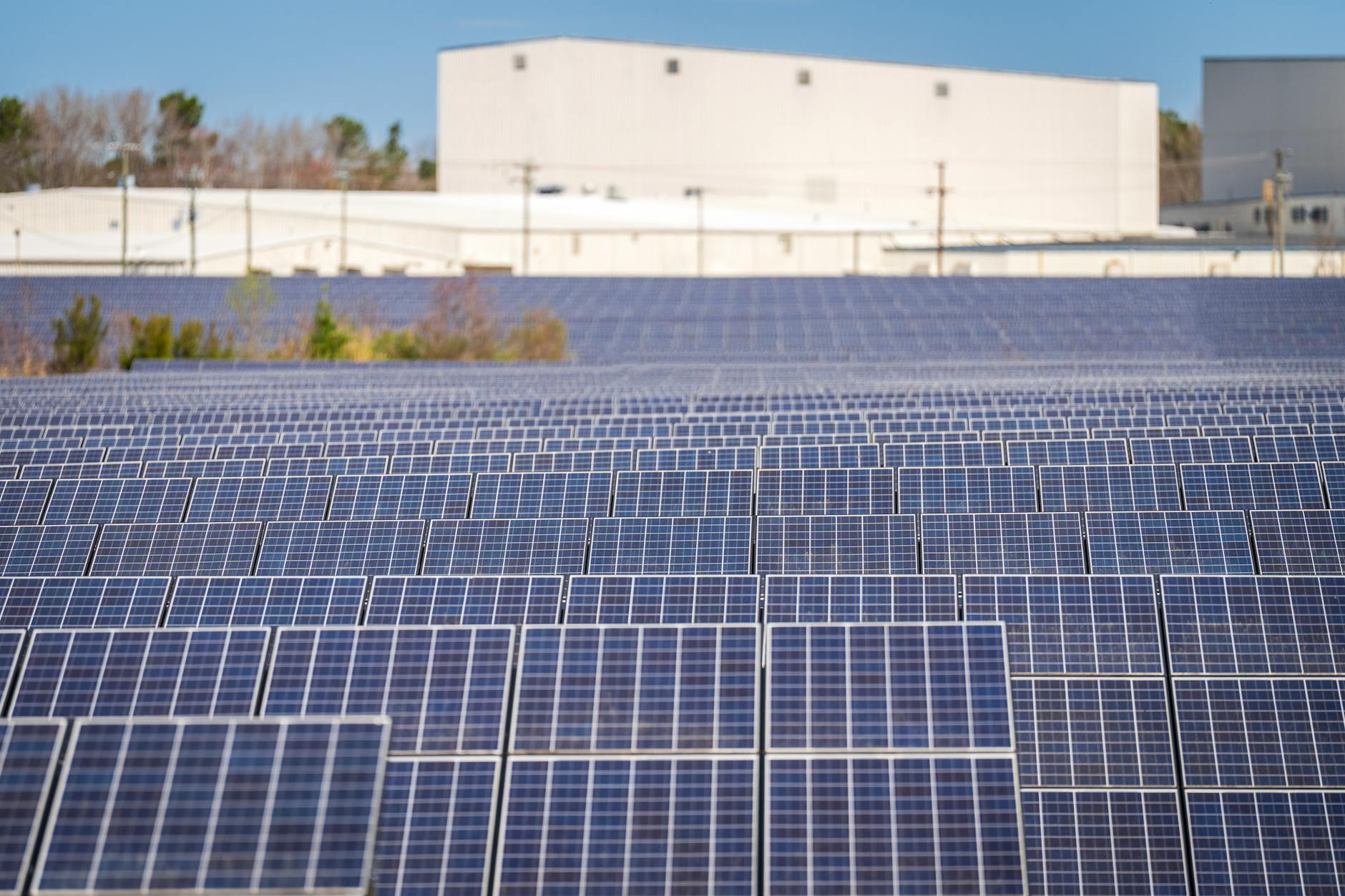
Understanding Short Power Flickers and Their Impact on Solar Installations
Short power flickers—brief, often sub‑second interruptions in the utility grid—can be triggered by anything from a single residential motor starting up to a distant lightning strike. While the average homeowner may not notice these blips, solar systems are far more sensitive because they rely on a continuous, clean power reference to synchronize with the grid. In the Florida Panhandle, where thunderstorms are frequent, these fleeting events happen more often than many realize. Modern solar equipment is designed to respond instantly, preserving both equipment safety and energy production. This automatic reaction is commonly referred to as the solar grid flicker response. By the end of this article, you’ll understand how that response works, why it matters, and what steps you can take to ensure your system stays resilient during every flicker.
Find us here:
Solar Cost Calculator – Florida Panhandle Only
* Estimate based on $3.25 per watt for solar installation.
* For Tesla Powerwall 3 Batteries, $15,000 for the first battery, $12,000 for each additional battery.
* Other variations and types of Batteries are available.
What Exactly Is a Grid Flicker?
A grid flicker is a momentary dip or spike in voltage that typically lasts less than a second. These events are usually caused by large inductive loads—such as air‑conditioner compressors, industrial motor starts, or sudden changes in solar output due to cloud movement. Although the duration is short, the voltage deviation can be enough to confuse the inverter’s synchronization algorithms. If the inverter does not react quickly, it may either feed power out of phase with the grid or shut down unnecessarily, both of which can lead to lost energy and potential equipment stress. The solar grid flicker response is the set of built‑in protections that detect, evaluate, and act on these voltage fluctuations within milliseconds.
Why Short Flickers Matter for Solar Systems
Solar inverters are the heart of any grid‑tied photovoltaic (PV) system. They constantly monitor grid voltage and frequency to ensure they inject power at the correct phase angle. A brief flicker can cause the inverter’s phase‑locked loop to lose lock, prompting a rapid shutdown to protect the grid and the inverter itself. This shutdown, even if only for a few seconds, translates directly into lost kilowatt‑hours—an especially noticeable loss during peak sunlight hours. Moreover, repeated flickers can increase wear on the inverter’s power electronics, shortening its useful life. Hence, a robust solar grid flicker response not only safeguards hardware but also maximizes the economic return on a solar investment.
How Inverters Detect and Classify Flickers
Advanced string and central inverters employ high‑speed voltage sensors coupled with digital signal processors (DSPs) to analyze the grid waveform in real time. Within a few milliseconds, the DSP can differentiate between normal voltage variations (like those caused by normal load changes) and true flicker events that exceed predefined thresholds for amplitude and duration. Once a flicker is identified, the inverter’s firmware consults a lookup table—often configurable by the installer—to decide whether to ride through the event or to initiate an immediate shutdown. This decision‑making process is the core of the solar grid flicker response algorithm, and it has become more sophisticated with the advent of machine‑learning‑enhanced firmware that can adapt to local grid characteristics.
Automatic Shutdown and Ride‑Through Strategies
When a flicker exceeds the inverter’s ride‑through limits, the device will execute an automatic shutdown, disconnecting from the grid within 0.2 to 0.5 seconds. This rapid response protects both the utility and the solar installation. Conversely, for flickers that fall within the acceptable range, modern inverters can stay connected, using built‑in capacitors or fast‑acting power electronics to smooth out the voltage deviation. This ability to “ride through” short events is a key metric that utilities look for when approving new solar projects. In the Florida Panhandle, where the utility companies have specific interconnection standards, the solar grid flicker response must meet or exceed the IEEE 1547‑2018 guidelines for voltage ride‑through.
The Role of Battery Storage in Enhancing Flicker Tolerance
Adding a battery energy storage system (BESS) to a solar installation dramatically improves its ability to handle short grid disturbances. When a flicker is detected, the battery can inject a brief burst of power, effectively buffering the inverter from the voltage dip. This not only keeps the inverter online but also provides ancillary services to the grid, such as voltage support. In many cases, the presence of a BESS allows the system to meet more stringent ride‑through criteria without sacrificing performance. The coordinated solar grid flicker response between inverter and storage controller is now a standard feature in many of the newest hybrid inverters on the market.
Regional Considerations: Why the Florida Panhandle Is Unique
The Florida Panhandle experiences a high frequency of thunderstorms, rapid cloud cover changes, and occasional high‑wind events—all of which can generate frequent short‑duration voltage fluctuations. Utilities in this region, such as Gulf Power and Florida Power & Light, have adopted specific interconnection rules that require a documented solar grid flicker response plan for any new residential or commercial PV system. These rules often mandate a minimum ride‑through capability of 0.6 seconds for voltage dips of up to 20 % below nominal. Installers therefore select inverters with proven flicker‑handling performance and may recommend adding a modest battery pack to meet the local standards. Understanding these regional nuances ensures that your system remains compliant and fully operational year‑round.
Best Practices for Homeowners to Optimize Flicker Response
- Choose an inverter that explicitly lists its ride‑through specifications and complies with IEEE 1547‑2018.
- Consider adding a small battery backup (5‑10 kWh) to provide immediate voltage support during flickers.
- Maintain clear electrical connections and keep all conduit and wiring free of corrosion, especially in humid coastal environments.
- Schedule regular firmware updates for both inverter and battery management system to benefit from the latest flicker‑response algorithms.
- Work with a licensed installer familiar with Florida Panhandle interconnection requirements to ensure proper settings for voltage thresholds.
Performance Comparison of Common Inverter Flicker‑Response Times
| Inverter Model | Detection Time (ms) | Ride‑Through Capability (seconds) |
|---|---|---|
| SolarEdge SE7600H | 12 | 0.8 |
| Enphase IQ7+ | 15 | 0.6 |
| Fronius Primo 6.0‑1 | 10 | 1.0 |
The table above illustrates how detection speed and ride‑through duration can vary across popular inverter brands. Faster detection (lower milliseconds) combined with longer ride‑through periods generally leads to a more resilient solar grid flicker response. When selecting equipment, weigh these specs against your local utility’s requirements and your own tolerance for potential downtime.
Future Trends: Smarter Grids and Adaptive Flicker Management
As smart grid technologies mature, utilities are beginning to share real‑time voltage data with distributed energy resources (DERs) via standardized communication protocols like OpenADR and IEC 61850. This data will enable inverters to anticipate flicker events before they happen, adjusting their output pre‑emptively. Additionally, artificial‑intelligence‑driven firmware can learn the typical flicker patterns of a specific neighborhood, fine‑tuning the solar grid flicker response for optimal performance. In the next five years, we can expect most new installations in the Florida Panhandle to come equipped with these adaptive capabilities, further reducing the impact of short power interruptions on solar production.
Conclusion
Short power flickers are an inevitable part of the utility landscape, especially in storm‑prone regions like the Florida Panhandle. By understanding how modern inverters detect, classify, and react to these events—through rapid shutdowns, ride‑through strategies, and coordinated battery support—homeowners can ensure their solar investment remains productive and compliant. Leveraging the right equipment and following best practices will give you a robust solar grid flicker response that maximizes energy harvest while protecting both your hardware and the grid.