



Understanding Rapid Cloud Movement and Its Impact on Solar Energy
When sunlight reaches a photovoltaic (PV) array, the amount of electricity generated hinges on the intensity and consistency of that light. In coastal regions such as the Florida Panhandle, weather systems can sweep across the sky at speeds that feel almost cinematic, especially during the summer months. This phenomenon, often described as rapid cloud movement, can cause solar irradiance to fluctuate dramatically within minutes. Homeowners who rely on solar power may notice sudden dips in production, followed by quick rebounds as the sun re‑emerges. Understanding why these clouds move so fast, and how the solar panels respond, is essential for optimizing system design, setting realistic expectations, and maintaining reliable energy output.
Find us here:
Solar Cost Calculator – Florida Panhandle Only
* Estimate based on $3.25 per watt for solar installation.
* For Tesla Powerwall 3 Batteries, $15,000 for the first battery, $12,000 for each additional battery.
* Other variations and types of Batteries are available.
The term rapid cloud movement solar captures the intersection of meteorology and photovoltaic performance. While the phrase may sound technical, the underlying concepts are approachable. Clouds form when warm, moist air rises and cools, condensing water vapor into tiny droplets. In the Gulf Coast, sea breezes, low‑pressure fronts, and tropical disturbances can accelerate this process, pushing cloud masses at velocities of 20–30 miles per hour or more. As these clouds travel, they cast moving shadows across solar arrays, creating a pattern of shading that changes faster than most inverters can fully compensate. The result is a “ripple” effect in the power curve, with short‑lived peaks and troughs that can affect everything from daily net metering balances to the long‑term health of the panels.

How Rapid Cloud Movement Solar Variability Affects Panel Output
Photovoltaic cells convert photons into electrical current through the photovoltaic effect. The rate of this conversion is directly proportional to the amount of sunlight striking the cell surface. When a cloud passes overhead, the irradiance can drop from full sun (about 1,000 W/m²) to as low as 200 W/m² within seconds. This sudden reduction triggers a cascade of responses within the solar inverter, which must adjust voltage and current to match the new conditions. Modern string inverters are equipped with Maximum Power Point Tracking (MPPT) algorithms that seek the optimal operating point, but they are limited by the speed at which they can react to rapid changes caused by swift cloud movement.
During these brief shading events, the inverter may experience a temporary mismatch between the power generated by individual strings and the overall system demand. If the cloud moves quickly enough, the inverter can “hunt” for the new maximum power point, causing a momentary dip in output that can be as low as 30 % of the rated capacity. Once the cloud clears, the system rapidly rebounds, often overshooting the previous power level before settling back to a stable output. This oscillation is a hallmark of rapid cloud movement solar scenarios and can lead to increased wear on inverter components if it occurs frequently over the lifespan of the system.
Technical Factors That Influence the Response
Several technical variables dictate how a solar installation reacts to fast‑moving clouds. First, the orientation and tilt of the panels determine how much of the moving shadow will intersect the array. A south‑facing system with a tilt optimized for the latitude will experience a different shading pattern than a flat‑roof installation. Second, the type of inverter—centralized, string, or micro‑inverter—plays a crucial role. Micro‑inverters, installed on each panel, can isolate shading effects, allowing unaffected panels to continue delivering power at full capacity, thereby mitigating the overall impact of rapid cloud movement.
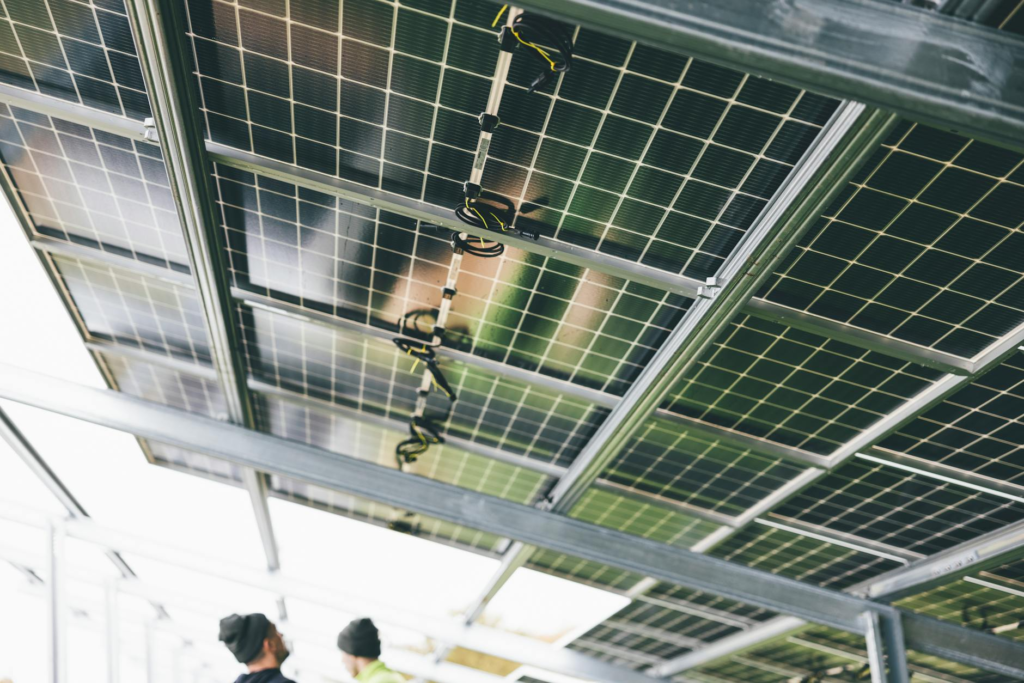
Third, the presence of bypass diodes within the solar modules helps protect against hot‑spot formation when a portion of a panel is shaded. These diodes allow current to “skip” the shaded cells, preserving the flow of electricity and reducing the voltage drop across the module. Finally, the system’s energy storage configuration, such as battery capacity and charge‑controller settings, can buffer the fluctuations. A well‑sized battery can store excess energy during brief sunbursts and release it when clouds obscure the panels, smoothing out the rapid cloud movement solar effect on the household’s net load.
Mitigation Strategies for Homeowners in the Florida Panhandle
Homeowners who have invested in solar power on the Gulf Coast can adopt several practical measures to lessen the impact of rapid cloud movement. One of the most effective approaches is to select a system design that incorporates micro‑inverters or power optimizers. These devices decentralize the MPPT process, enabling each panel to operate at its own optimum regardless of shading on neighboring modules. Additionally, installing panels with high‑efficiency cells and low temperature coefficients can improve performance during intermittent cloud cover.
- Choose a mounting structure that maximizes clearance from nearby trees and structures to reduce additional shading.
- Incorporate a modest battery storage solution (e.g., a 5‑10 kWh lithium‑ion system) to capture surplus energy during clear intervals.
- Utilize real‑time monitoring tools that alert you to rapid drops in output, allowing you to verify weather conditions.
- Schedule routine cleaning to maintain optimal panel transparency, as dust can exacerbate shading effects.
Another strategy involves strategic panel placement. By staggering rows and orienting some panels slightly eastward, homeowners can capture early‑morning sunlight before the dominant southerly clouds arrive, thereby diversifying the temporal profile of generation. Pairing this layout with a smart inverter that supports “shade‑tolerant” MPPT modes can further enhance resilience against the rapid cloud movement solar challenge.
Monitoring Tools and Data Interpretation
Accurate monitoring is essential for diagnosing and adapting to the rapid cloud movement solar phenomenon. Modern solar monitoring platforms, such as SolarEdge’s Monitoring Portal or Enphase Enlighten, provide granular data down to the minute. By reviewing irradiance graphs alongside power output, homeowners can pinpoint the exact moments when clouds passed overhead. These platforms often include a “performance ratio” metric, which compares actual production to expected production under standard test conditions. A sudden dip in the performance ratio that aligns with a cloud event confirms the shading impact.
For those who prefer a more hands‑on approach, installing a small pyranometer or a weather station on the roof can supply real‑time solar irradiance readings. When paired with a data logger, this information can be cross‑referenced with the inverter’s output to create a detailed correlation matrix. Over time, the collected data can inform predictive models that anticipate periods of rapid cloud movement, allowing homeowners to adjust battery discharge schedules or shift flexible loads to periods of higher solar availability.
Case Study: Rapid Cloud Movement Solar Effects in a Gulf Coast Home
Consider a typical single‑family residence in Pensacola, Florida, equipped with a 7 kW rooftop solar system consisting of 24 high‑efficiency panels and a string inverter. During a summer afternoon, a fast‑moving thunderstorm system advanced from the Gulf, delivering cloud speeds of approximately 25 mph. Within a span of five minutes, the system’s output plummeted from 6.8 kW to 2.1 kW, before rebounding to 6.5 kW as the clouds cleared. The homeowner’s monitoring dashboard highlighted a sharp dip in the performance ratio from 0.96 to 0.31, directly correlating with the cloud passage.
To mitigate future losses, the homeowner upgraded to micro‑inverters and added a 6 kWh battery. Post‑upgrade data showed that the same rapid cloud movement solar event resulted in a reduced output dip—only a 15 % decline instead of 70 %—and the battery supplied the missing energy, maintaining a stable net load. This real‑world example underscores how technology choices can dramatically influence a system’s resilience to rapid cloud movement in the Florida Panhandle.
Comparative Overview of System Performance
| Configuration | Average Output Drop During Rapid Cloud Movement | Recovery Time (seconds) | Battery Support |
|---|---|---|---|
| String Inverter + No Battery | ≈ 65 % | 120‑180 | No |
| Micro‑Inverters + No Battery | ≈ 35 % | 60‑90 | No |
| String Inverter + 6 kWh Battery | ≈ 45 % | 80‑120 | Partial |
| Micro‑Inverters + 6 kWh Battery | ≈ 15 % | 30‑60 | Full |
The table above illustrates how different hardware choices influence the system’s response to rapid cloud movement solar events. Micro‑inverters consistently outperform string inverters in limiting output drops and shortening recovery times. When paired with a modest battery, the combination offers the most robust protection, delivering near‑continuous power even as clouds race across the sky.
Future Outlook: Weather‑Adaptive Solar Technologies
Researchers are actively developing adaptive solar technologies that can anticipate and respond to rapid cloud movement. One promising avenue is the integration of AI‑driven forecasting algorithms within inverter firmware. By analyzing real‑time weather radar data, these smart inverters could pre‑emptively adjust MPPT settings, reducing the magnitude of output fluctuations before the cloud shadow arrives. Another emerging solution involves dynamic panel tilting systems that subtly change the angle of the array in response to cloud speed and direction, optimizing incident sunlight throughout the day.
In addition, advances in bifacial panel designs—where both the front and rear sides generate electricity—can capture diffuse light reflected from the ground, partially offsetting the loss caused by fast‑moving clouds. Coupled with high‑capacity, fast‑charging batteries, these innovations promise to make solar installations on the Gulf Coast more resilient than ever, turning the challenge of rapid cloud movement into an opportunity for smarter energy management.
For homeowners, staying informed about these developments and selecting equipment that supports future upgrades can safeguard their investment. As the industry evolves, the combination of adaptive hardware, sophisticated monitoring, and strategic system design will ensure that even the most dynamic weather patterns—like rapid cloud movement solar scenarios—remain manageable and predictable.
In summary, rapid cloud movement across the Florida Panhandle creates a unique set of challenges for solar energy production. By understanding the meteorological drivers, recognizing how inverters and panels respond, and implementing mitigation strategies such as micro‑inverters, battery storage, and proactive monitoring, homeowners can maintain stable and efficient solar performance despite the ever‑changing sky.
