



Understanding the Relationship Between Pollen and Solar Panel Performance
When homeowners in Tallahassee and Crestview look at their monthly electricity bills, a sudden dip in solar generation during late spring can be puzzling. The culprit is often an invisible, yet powerful, natural phenomenon: pollen. During high pollen seasons, airborne particles settle on the surface of photovoltaic (PV) modules, creating a thin veil that interferes with sunlight absorption. This article explores how pollen impacts solar panel performance, why the effect is temporary, and what practical steps you can take to maintain optimal output throughout the year.
Find us here:
Solar Cost Calculator – Florida Panhandle Only
* Estimate based on $3.25 per watt for solar installation.
* For Tesla Powerwall 3 Batteries, $15,000 for the first battery, $12,000 for each additional battery.
* Other variations and types of Batteries are available.
How Pollen Accumulates on Solar Panels
Pollen grains are microscopic, ranging from 10 to 100 micrometers in diameter. When wind carries these grains across the Gulf Coast, they eventually settle on any exposed surface, including solar panels. Because panels are typically installed at a 15‑30 degree tilt, gravity helps some of the pollen slide off, but a significant portion remains lodged in the micro‑textures of the glass. Over several days of heavy pollination, a thin, dusty layer can build up, reducing the amount of light that reaches the solar cells beneath.
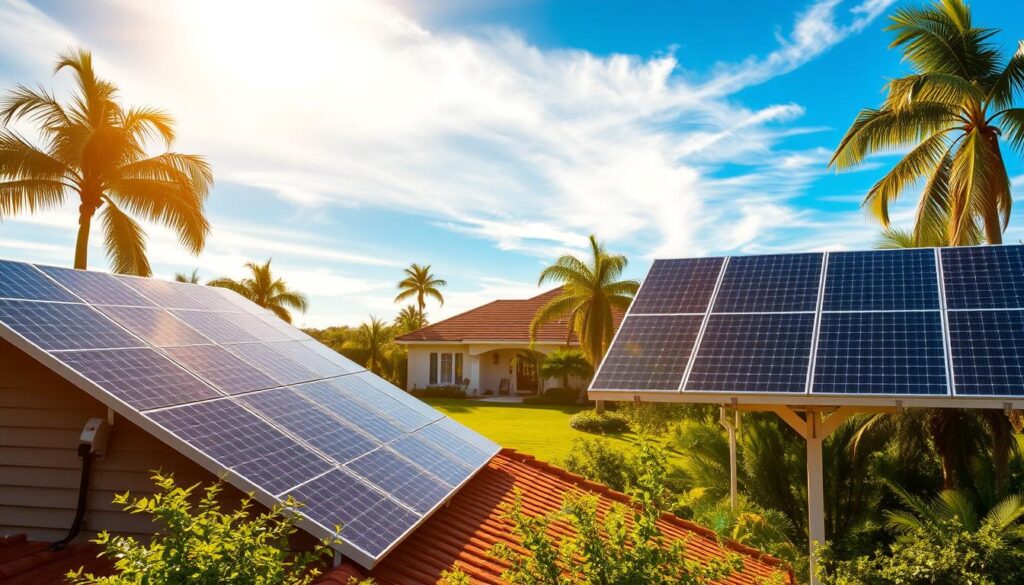
The accumulation process is not uniform. Panels that face the prevailing wind direction or are positioned lower on a roof tend to collect more pollen. Additionally, humidity can cause pollen to become sticky, adhering more strongly to the glass surface. This is why homeowners often notice a sharper performance decline on the south‑facing arrays during the peak of the ragweed season in Tallahassee.
Seasonal Pollen Patterns in Tallahassee and Crestview
Both Tallahassee and Crestview sit within the humid subtropical climate zone, which experiences two major pollen spikes each year. The first, occurring from late February to early May, is dominated by tree pollen such as oak, pine, and cypress. The second, from August through October, is driven by grass and weed pollen, especially ragweed. During these periods, airborne pollen counts can exceed 10,000 grains per cubic meter, creating ideal conditions for rapid panel fouling.
Understanding these timelines helps solar owners anticipate when pollen solar panel performance might dip. By aligning cleaning schedules with the onset of each pollen wave, you can minimize energy loss without resorting to excessive maintenance.
Quantifying the Impact on Energy Output
Numerous studies have measured the effect of particulate deposition on photovoltaic efficiency. In general, a thin layer of pollen can reduce panel output by 2% to 5% per week of continuous exposure. For a 5 kW residential system, that translates to a loss of roughly 0.1 kW to 0.25 kW during peak sunlight hours. While the reduction seems modest, over a full month it can amount to a loss of 30 kWh to 75 kWh—enough to offset the savings from a single clean‑energy day.
Measuring Performance Loss in Real Time
Modern inverters and monitoring apps provide real‑time data on panel voltage, current, and overall system yield. By tracking these metrics before, during, and after a pollen event, you can directly observe the correlation between surface fouling and output. Look for a gradual decline in the “energy today” figure that does not correspond to changes in weather conditions. When the drop aligns with high pollen counts reported by local aerobiology stations, you have concrete evidence of pollen solar panel performance issues.

Some advanced monitoring platforms also allow you to set alerts when daily production falls below a predefined threshold. This feature can act as an early warning system, prompting you to schedule a cleaning before the loss becomes financially significant.
Effective Cleaning Strategies for High Pollen Seasons
Cleaning solar panels is not a one‑size‑fits‑all activity. The goal is to remove pollen efficiently while preserving the integrity of the glass coating and the underlying cells. Below are three proven approaches that balance effectiveness, safety, and cost.
- Manual soft‑brush cleaning with de‑ionized water.
- Scheduled rain‑wash utilization.
- Automated robotic cleaning systems.
Routine Maintenance Schedule Aligned with Pollen Peaks
For most residential installations, a bi‑weekly cleaning cadence during peak pollen months is sufficient. This frequency prevents the pollen layer from reaching a thickness that would cause more than a 2% efficiency drop. Outside of pollen season, monthly or quarterly cleanings typically keep the panels operating near optimal levels.
When planning your schedule, consider local rainfall patterns. A heavy rainstorm can naturally wash away up to 70% of accumulated pollen, effectively resetting the need for manual cleaning. In Tallahassee, the summer months bring frequent afternoon showers, which can be leveraged to reduce cleaning labor.
Automated Cleaning Options for Commercial Installations
Large solar farms or multi‑family complexes often invest in robotic cleaners that glide across the panel surface, using microfiber pads and low‑pressure water jets. These systems can operate on a programmed schedule, ensuring consistent removal of pollen without manual labor. While the upfront cost is higher, the reduction in energy loss during high pollen periods can quickly offset the investment, especially in regions with prolonged ragweed activity.
| Cleaning Method | Pros | Cons |
|---|---|---|
| Manual soft‑brush | Low cost, precise control | Labor intensive, safety concerns on roofs |
| Rain‑wash utilization | Zero cost, eco‑friendly | Unpredictable timing, incomplete removal |
| Robotic cleaners | Consistent, scalable | Higher upfront expense |
Selecting the Right Cleaning Products
When you do need to supplement natural rain with a manual wash, choose cleaning agents that are specifically formulated for photovoltaic surfaces. These products are typically pH‑neutral, non‑abrasive, and free of silica that could scratch the anti‑reflective coating. Avoid household detergents, as they may leave residues that attract more pollen or cause long‑term degradation.
For the environmentally conscious homeowner in Crestview, biodegradable cleaning solutions are widely available and perform just as well as conventional options. Pair the solution with a soft, lint‑free cloth or a non‑static microfiber mop to avoid static charge buildup that could attract additional pollen particles.
Environmental Considerations When Cleaning
Water usage is a legitimate concern, especially during the dry months that follow the pollen season. To minimize waste, use a low‑flow hose or a bucket of water, and recycle runoff when possible. Some municipalities in the Tallahassee area offer reclaimed water programs that provide a sustainable source for solar panel cleaning.
Additionally, consider the carbon footprint of cleaning equipment. Battery‑powered electric pressure washers produce zero emissions on site and align with the clean‑energy ethos of solar power.
Cost‑Benefit Analysis of Cleaning Frequency
To determine the optimal cleaning frequency, calculate the expected energy loss from pollen and compare it to the cost of cleaning. For example, if a 5 kW system loses 50 kWh per month due to pollen, at an electricity rate of $0.13 /kWh, that equates to $6.50 in lost savings. If a professional cleaning service charges $80 per visit, cleaning twice a month would not be cost‑effective. However, a DIY cleaning using a garden hose and a $15 cleaning solution would result in a net gain of roughly $30 per season.
Frequently Asked Questions About Pollen and Solar Panels
- Can pollen permanently damage solar panels? No, pollen itself is not corrosive. The primary risk is a temporary reduction in performance. Long‑term damage usually results from neglect, leading to moisture retention under the pollen layer.
- Is it safe to clean panels during a rainstorm? It’s best to wait until the rain subsides. Wet panels can become slippery, increasing the risk of falls. Light misting after a rain can help remove residual pollen.
- Do anti‑soiling coatings help? Yes, anti‑soiling or hydrophobic coatings can reduce pollen adhesion, extending the interval between cleanings. However, they add to the initial installation cost.
By understanding the dynamics of pollen solar panel performance, homeowners in Tallahassee, Crestview, and similar regions can make informed decisions that protect both their investment and the environment.
In summary, high pollen seasons do cause a measurable, though temporary, dip in solar output. Regular monitoring, strategic cleaning, and the occasional use of anti‑soiling technologies ensure that your system continues to deliver clean, reliable energy year after year.
