



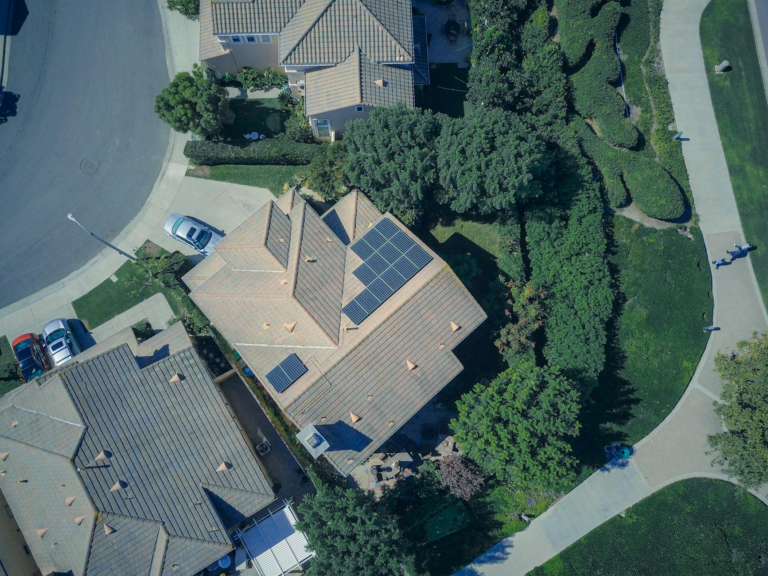
Florida’s Panhandle is experiencing a surge in clean‑energy adoption, and many homeowners are pairing solar panels with the state’s advanced utility infrastructure. At the heart of this synergy lies a technology that often goes unnoticed: the smart meter. When properly integrated, smart meters residential solar setups can provide real‑time visibility into energy flow, help balance grid demand, and empower consumers to make smarter choices about consumption and production. In this article we’ll explore the technical foundations, practical benefits, and regulatory nuances that define how smart meters work alongside residential solar systems, with a special focus on the unique characteristics of the Florida Panhandle market.
Find us here:
Solar Cost Calculator – Florida Panhandle Only
* Estimate based on $3.25 per watt for solar installation.
* For Tesla Powerwall 3 Batteries, $15,000 for the first battery, $12,000 for each additional battery.
* Other variations and types of Batteries are available.
What Is a Smart Meter and How Does It Differ From a Traditional Meter?
A smart meter is an electronic device that records electricity usage in intervals as short as every 15 minutes and transmits that data automatically to the utility company. Unlike the analog kilowatt‑hour (kWh) counters that require a manual read, smart meters residential solar owners benefit from instantaneous data, two‑way communication, and remote firmware updates. This digital capability enables utilities to monitor load patterns, detect outages, and manage demand‑response programs without sending a technician to the field.

Beyond simple data collection, smart meters are equipped with communication modules—typically cellular, RF mesh, or power line carrier—that allow them to send and receive signals. This two‑way dialogue is what makes them an essential partner for residential solar, because the meter can not only record how much electricity the home draws from the grid, but also how much excess energy it feeds back into the distribution network.
How Residential Solar Systems Generate and Export Electricity
Residential solar installations consist of photovoltaic (PV) panels, an inverter, and often a battery storage system. When sunlight strikes the PV cells, it creates a flow of electrons that the inverter converts from direct current (DC) to alternating current (AC), matching the voltage and frequency required by household appliances and the utility grid. If the panels produce more power than the home consumes at any given moment, the surplus is sent back to the grid through a process called net metering.
Net metering policies vary by state, but in Florida they generally allow homeowners to receive credit at the retail rate for every kilowatt‑hour exported. This credit appears on the monthly utility bill, offsetting the cost of electricity drawn from the grid during periods when the solar system is not producing—such as nighttime or cloudy days. Smart meters residential solar systems rely on accurate measurement of both import and export to ensure that these credits are calculated correctly.
Integration Points Between Smart Meters and Solar Inverters
The connection between a smart meter and a residential solar inverter is facilitated by a device known as a communication gateway or by built‑in protocols within the inverter itself. Modern inverters often support standards like IEEE 1547, which define how distributed energy resources (DERs) must interact with the grid. Through these standards, the inverter can report generation data to the smart meter, which then aggregates the information and sends it to the utility’s data management system.
When the inverter detects that the home’s load is lower than the solar output, it automatically switches to export mode, and the smart meter records the reverse flow of electricity. Conversely, when the solar output drops below the home’s demand, the meter logs the import of power from the grid. This continuous, bidirectional measurement is essential for accurate net metering calculations and for enabling advanced services such as time‑of‑use pricing.
Key Benefits for Homeowners Using Smart Meters with Solar
- Real‑time visibility: Homeowners can monitor production, consumption, and net export through utility portals or third‑party apps.
- Accurate billing: Precise interval data reduces disputes over net‑metering credits.
- Demand‑response participation: Utilities can send price signals that encourage solar owners to shift usage to off‑peak periods.
- Enhanced grid reliability: Distributed solar combined with smart metering helps balance local voltage and reduces strain on aging infrastructure.
- Future‑proofing: As battery storage becomes more common, smart meters can coordinate charge‑discharge cycles to maximize self‑consumption.
These advantages translate into tangible savings and environmental impact. For example, a typical 6 kW system in the Panhandle can generate roughly 9,000 kWh per year. When paired with a smart meter that provides granular usage data, homeowners can fine‑tune their consumption patterns—running high‑energy appliances like dishwashers or water heaters during peak solar production hours, thereby maximizing self‑consumption and reducing reliance on grid imports.
Common Misconceptions About Smart Meters and Solar
Despite their growing prevalence, several myths persist around the interaction of smart meters and residential solar. One frequent misunderstanding is that smart meters “steal” excess solar energy by siphoning it away before it reaches the homeowner’s battery. In reality, the meter simply records the flow; it does not influence the direction of power. Another myth suggests that smart meters increase electricity rates for solar users. While utilities may introduce new rate structures, these changes are typically transparent and subject to regulatory approval.
It’s also worth noting that smart meters residential solar installations do not require any special hardware beyond a compatible inverter and, in some cases, a communication gateway. The utility company handles the meter’s installation and maintenance, ensuring that the system complies with local interconnection standards.
Regulatory Landscape in the Florida Panhandle
The Florida Public Service Commission (FPSC) governs the deployment of smart meters and the rules surrounding net metering. Recent amendments have encouraged utilities to adopt advanced metering infrastructure (AMI) across the Panhandle, citing the region’s high solar potential and the need for a more resilient grid. Under current FPSC guidelines, utilities must provide solar customers with detailed usage reports, typically accessible through an online portal that updates every 15 minutes.
Additionally, the state’s “Solar Energy System Interconnection Standards” require that any inverter connected to the grid must be capable of communicating with the utility’s metering system. This requirement ensures that smart meters residential solar setups can reliably track export data, which is essential for accurate billing and for maintaining grid stability during peak generation periods.
Practical Tips for Maximizing the Value of Smart Meters with Solar
- Enroll in your utility’s online portal to view interval data and identify peak production windows.
- Consider adding a battery storage system that can be programmed to charge during high‑production periods and discharge when rates are higher.
- Schedule high‑energy tasks—such as running the dryer or charging an electric vehicle—during midday when solar output is strongest.
- Review your utility’s time‑of‑use (TOU) rates, if available, and adjust your consumption accordingly.
- Keep your inverter’s firmware up to date to maintain compatibility with the utility’s smart metering protocols.
Comparing Energy Flow Before and After Solar Integration
| Metric | Pre‑Solar (Traditional Meter) | Post‑Solar (Smart Meter) |
|---|---|---|
| Data granularity | Monthly read | 15‑minute intervals |
| Export tracking | Not available | Accurate kWh export recorded |
| Billing accuracy | Estimated usage | Actual usage & export |
| Demand‑response eligibility | Limited | Full participation possible |
The table above illustrates how the transition from a traditional meter to a smart meter transforms the homeowner’s visibility into energy flows. By capturing detailed export data, utilities can reliably credit solar generation, and homeowners can better align their consumption with production, ultimately lowering their electricity bills.
Future Trends: Smart Meters, Solar, and the Evolving Grid
Looking ahead, the convergence of smart metering, residential solar, and emerging technologies such as vehicle‑to‑grid (V2G) and community solar will redefine how power is managed at the neighborhood level. As more homes adopt solar-plus-storage, smart meters will play a pivotal role in orchestrating distributed resources, ensuring that excess generation is dispatched where it’s needed most, and that grid operators maintain voltage stability. In the Florida Panhandle, where sunny days are abundant, these advancements promise to accelerate the shift toward a more decentralized, resilient energy ecosystem.
For homeowners, staying informed about how smart meters residential solar systems operate is essential. By leveraging the data provided by these meters, residents can optimize their energy usage, participate in utility programs, and contribute to a greener, more reliable grid. The synergy between smart meters and solar panels is not just a technical convenience—it’s a cornerstone of the modern, sustainable energy future.
In conclusion, smart meters and residential solar together create a powerful feedback loop that benefits both consumers and utilities. By delivering real‑time insight, accurate billing, and the ability to engage in advanced grid services, this partnership is reshaping how households in the Florida Panhandle—and across the nation—manage electricity. Embracing this technology today positions homeowners to reap financial savings, support grid stability, and play an active role in the transition to clean energy.
