



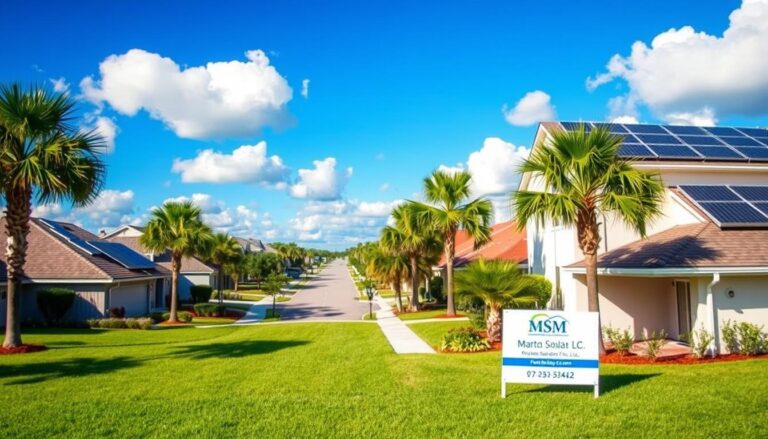
If you live in Crestview, Florida, you know that summer isn’t just warm, it’s relentless. With heat indexes soaring above 100°F and humidity that barely lets up, your air conditioner is likely the hardest-working appliance in your home.
But what if you could run that A/C without worrying about your power bill?
That’s exactly what many Crestview homeowners are doing with solar-powered air conditioning systems. Thanks to Florida’s abundant sunshine and high-efficiency technology, solar can now cover most, and sometimes all, of your cooling needs, even in the peak of summer.
Let’s explore how it works, what it costs, and whether it’s right for your home in 2025.
Also Read: Understanding Roof Wind-Load and Uplift Ratings for Solar in Pensacola’s Wind Zone
Solar Cost Calculator – Florida Panhandle Only
* Estimate based on $3.25 per watt for solar installation.
* For Tesla Powerwall 3 Batteries, $15,000 for the first battery, $12,000 for each additional battery.
* Other variations and types of Batteries are available.
The Problem: Cooling = High Bills in Crestview
Air conditioning makes up 40–60% of total electricity use for most Florida homes, especially inland areas like Crestview where temperatures run higher than the coastal breeze zones.
| Month | Avg. High Temp | Typical A/C Share of Bill | Total Monthly Bill (Average) |
|---|---|---|---|
| May | 88°F | 40% | $160 |
| June | 92°F | 50% | $180 |
| July | 94°F | 55% | $210 |
| August | 93°F | 50% | $190 |
That’s nearly $800 in cooling costs over just four months, and that’s before rate hikes from Florida Power & Light (FPL) or Choctawhatchee Electric Cooperative (CHELCO).
Solar offers a direct way to bring those costs under control by producing your own electricity when your A/C needs it most, during the day.
Can Solar Really Run an Air Conditioner?
Yes, and quite effectively.
Your A/C and your solar system peak at the same time: when the sun is hottest.
A well-sized solar array can power both your cooling system and the rest of your home simultaneously. Any excess energy flows back to the grid, earning you credits through Florida’s net metering program.
Here’s how the math works for Crestview:
- A 1-ton A/C unit uses about 1,200–1,500 watts.
- A typical 3-ton system uses 3.6–4.5 kW when running.
- Crestview averages 5.3 peak sun hours/day.
So a 7–8 kW solar system can cover most of the energy required to run a 3- to 4-ton central air conditioner, plus your home’s other appliances.
Real-World Example
Home: 2,000 sq ft, 3-bed single-family home in Crestview
System: 8 kW rooftop solar (20 panels)
Cost (before incentives): ~$22,000
After 30% Federal Tax Credit: ~$15,400
A/C: 3.5-ton SEER 18 high-efficiency system
Average Cooling Hours: 10 hours/day in summer
Result:
- Solar covers ~85–95% of total cooling energy use.
- Average summer electric bill drops from $200+ to $30–$40/month.
Even with A/C running daily, this Crestview homeowner stays almost net-zero on electricity during summer.
How Solar-Powered Air Conditioning Works
Solar power doesn’t directly connect to your air conditioner, instead, your solar panels generate electricity for your whole home. Your A/C simply runs off that solar-generated power first, and the grid second.
Step-by-Step:
- Sunlight hits your panels, creating direct current (DC).
- An inverter converts that into alternating current (AC) power.
- Your home consumes that solar energy instantly, prioritizing large loads like your A/C.
- Any excess feeds the grid (earning credits).
- At night, your system draws grid power using those credits.
It’s seamless, and requires no manual switching.
Best A/C Types for Solar Homes
If your air conditioner is older or less efficient, pairing solar with a new high-efficiency model can supercharge your savings.
| System Type | SEER Rating | Notes |
|---|---|---|
| Standard Central A/C | 14–16 | Works well but uses more power. |
| High-Efficiency Split (Variable Speed) | 18–22 | Ideal for solar; adjusts to cooling demand. |
| Ductless Mini-Split | 20–25 | Perfect for smaller or zoned homes. |
| Hybrid Heat Pump | 18–21 | Provides both heating & cooling efficiently. |
In 2025, Florida homeowners upgrading HVAC systems can also qualify for federal efficiency rebates, further improving ROI.
Cost Breakdown for Solar + Cooling
| Item | Typical Range (2025) |
|---|---|
| 7–8 kW Solar System | $20,000–$24,000 |
| After 30% ITC | $14,000–$17,000 |
| New SEER 18 A/C System | $7,000–$10,000 |
| Total Project (Both) | $21,000–$27,000 |
| Combined Savings | $1,800–$2,200/year |
With both upgrades, most Crestview homeowners see a payback period of 8–10 years and lifetime savings of $35,000–$45,000.
Net Metering Keeps You Cool After Dark
Florida’s net metering policy ensures your solar panels work for you even when the sun goes down.
During daylight hours, your panels overproduce power while your A/C runs hardest. The extra energy flows to the grid, earning credits from FPL or CHELCO.
At night, when your A/C still cycles occasionally, you pull from those credits, effectively balancing your bill close to zero.
As of 2025, Florida’s full retail-rate net metering remains active statewide.
What About Batteries?
Adding a solar battery (like the Tesla Powerwall or Enphase IQ Battery 5P) can help store excess solar energy for nighttime cooling.
- Backup Duration: 8–12 hours depending on usage.
- Added Cost: ~$9,000–$12,000 (before incentives).
- Tax Credit: Still eligible for the 30% federal ITC.
For Crestview homeowners in rural or outage-prone zones, batteries are worth considering, they can keep your home cool and powered even during grid interruptions.
Hurricane-Proof Solar for Crestview
Solar panels aren’t just efficient, they’re engineered for Florida’s toughest weather.
- Panels installed in Okaloosa County must meet ASCE 7 hurricane codes (rated up to 170 mph winds).
- PE-certified racking and hurricane clips ensure long-term stability.
- Solar systems often protect your roof by absorbing wind load and shading shingles.
Choose marine-grade hardware (stainless steel, anodized aluminum) to prevent corrosion in Crestview’s humid environment.
Smart Cooling Tips to Maximize Solar Benefits
- Pre-cool during peak sunlight hours.
Let your solar energy do the heavy lifting from 10 AM to 4 PM. - Use a programmable thermostat.
Schedule temperature rises when you’re away, and cool again when solar output peaks. - Add attic insulation and radiant barriers.
Lower your cooling load by up to 15%. - Shade windows and doors.
Even small shading improvements can save hundreds annually. - Track performance in real time.
Solar apps (like Enphase, SolarEdge, or Tesla) let you monitor A/C power use vs. solar generation.
ROI Example for Crestview Home
| Item | Before Solar | After Solar |
|---|---|---|
| Avg. Summer Bill | $200/mo | $40/mo |
| Avg. Winter Bill | $120/mo | $15/mo |
| Annual Savings | – | $1,800 |
| 25-Year Savings | – | $40,000+ |
| System Payback | – | 8 years |
After payback, your A/C effectively runs on free energy every summer.
Environmental Bonus
A typical 8 kW solar system in Crestview offsets 9 tons of CO₂ per year, equivalent to planting 200+ trees annually.
That’s good for the environment, and even better for your wallet, especially when combined with energy-efficient cooling.
Incentives & Rebates (2025)
- 30% Federal Investment Tax Credit (ITC) – Applies to panels, batteries, and inverters.
- Florida Sales Tax Exemption – No 6% sales tax on solar equipment.
- Florida Property Tax Exemption – Added solar value is 100% exempt.
- FPL & CHELCO Rebates – Occasional local incentives for energy-efficient A/C upgrades.
These stack together, helping Crestview homeowners reduce upfront costs by 35–40%.
Key Takeaways
- Solar panels can easily power air conditioning in Crestview’s hot climate.
- A 7–8 kW system covers 80–100% of A/C energy needs.
- Pairing solar with a high-efficiency HVAC system accelerates payback.
- Net metering lets you store summer energy credits for nighttime use.
- Hurricane-rated solar hardware ensures reliability through Florida storms.
Final Word
Crestview summers are tough, but your energy bills don’t have to be. With a well-designed solar system, your air conditioner can run smoothly on clean, free sunshine while your utility costs drop dramatically.
Whether you’re cooling your home, adding backup storage, or planning a full HVAC upgrade, solar power is the smart way to stay comfortable in Florida’s Panhandle, no matter how high the temperature climbs.
