




Introduction
In the past decade, the renewable energy sector has witnessed a remarkable transformation, and at the heart of this shift lies the ability to predict how much electricity a solar array will generate on any given day. Accurate solar production forecasting has moved from a niche scientific pursuit to a cornerstone of grid reliability, financial planning, and environmental compliance. As utilities, developers, and investors seek to maximize the value of their assets, the demand for precise, real‑time predictions has never been higher. This article explores the technological, methodological, and regional factors that are driving this surge in forecasting accuracy, with a special focus on installations across the Florida Panhandle.
Find us here:
Solar Cost Calculator – Florida Panhandle Only
* Estimate based on $3.25 per watt for solar installation.
* For Tesla Powerwall 3 Batteries, $15,000 for the first battery, $12,000 for each additional battery.
* Other variations and types of Batteries are available.
The Rise of Data‑Driven Modeling
Traditional solar forecasting relied heavily on simple statistical methods that used historical generation data combined with basic weather inputs. While these approaches provided a rough estimate, they often fell short during rapid weather changes or when new technologies altered the performance characteristics of panels. The advent of high‑resolution satellite imagery, dense weather sensor networks, and powerful computing platforms has fundamentally changed the landscape. Modern models ingest terabytes of data each day, allowing analysts to capture subtle variations in cloud cover, aerosol concentrations, and temperature gradients that directly impact photovoltaic output.
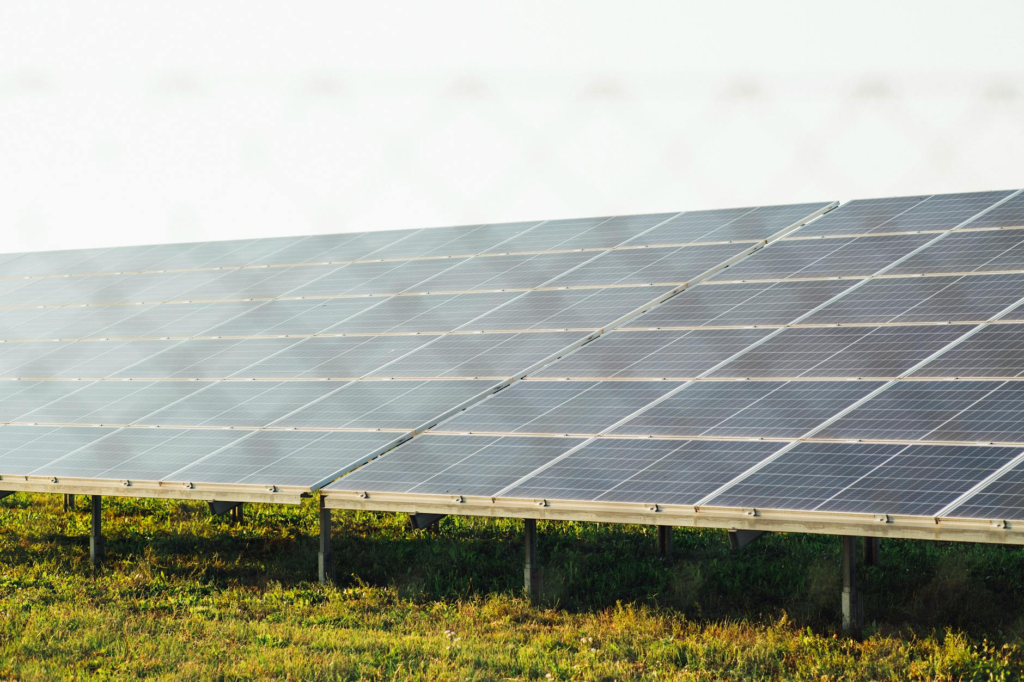
Satellite and Weather Data Integration
One of the most significant breakthroughs in solar production forecasting has been the seamless integration of satellite‑derived irradiance maps with ground‑based meteorological observations. High‑frequency geostationary satellites now provide cloud motion vectors every five minutes, enabling forecasters to anticipate shading events minutes before they occur. When paired with mesoscale weather models that predict temperature, humidity, and wind speed at a granular level, the resulting forecasts achieve a level of precision that was unimaginable just a few years ago.
Machine Learning Advances
Artificial intelligence has accelerated the evolution of solar forecasting by automating pattern recognition across massive datasets. Deep learning networks, especially convolutional neural networks (CNNs) and recurrent neural networks (RNNs), can learn complex relationships between sky imagery, atmospheric conditions, and photovoltaic response. These models continuously improve as they ingest new data, reducing error margins and delivering probabilistic forecasts that quantify uncertainty—a crucial feature for grid operators managing variable renewable resources.
Regional Focus: Florida Panhandle
The Florida Panhandle presents a unique testing ground for advanced forecasting techniques. Known for its humid subtropical climate, the region experiences rapid transitions between clear skies and dense, low‑level cloud decks driven by sea breezes and Gulf moisture. Moreover, the high solar irradiance levels make the area a hotspot for utility‑scale solar farms, community projects, and rooftop installations. Accurate solar production forecasting here not only supports local utilities but also helps mitigate the impact of occasional tropical storms that can cause abrupt drops in generation.

Unique Climate Challenges
Seasonal variations in the Panhandle are pronounced. Winter months bring clearer skies and higher solar angles, while summer introduces frequent afternoon convection, haze, and occasional tropical disturbances. Traditional models that rely on static climatology struggle to capture these dynamics. By leveraging real‑time satellite observations and localized weather radar, modern forecasting systems can adjust predictions on the fly, reflecting the rapid onset of cloud shadows or the clearing of the sky after a passing front.
Tools Improving Accuracy
Several cutting‑edge tools have emerged as industry standards for enhancing forecast fidelity. These platforms combine physics‑based modeling with data‑driven algorithms, delivering multi‑hour ahead predictions that are both granular and reliable. The synergy between numerical weather prediction (NWP) models and AI engines creates a feedback loop where each system validates and refines the other’s output.
Numerical Weather Prediction (NWP) Models
State‑of‑the‑art NWP models such as the High‑Resolution Rapid Refresh (HRRR) and the European Centre for Medium‑Range Weather Forecasts (ECMWF) provide forecasts at resolutions as fine as 1–3 km, capturing localized weather phenomena that directly affect solar irradiance. When these models are downscaled using statistical techniques tailored to a specific site, the resulting solar forecasts can achieve mean absolute errors of less than 5 % for day‑ahead predictions.
AI‑Powered Forecast Engines
AI‑driven platforms ingest historical generation data, satellite imagery, NWP outputs, and even social media weather reports to produce ensemble forecasts. By generating multiple scenarios and weighting them based on real‑time performance, these engines provide operators with a probability distribution rather than a single deterministic value. This probabilistic approach is especially valuable for managing reserve margins and scheduling maintenance in a high‑penetration solar environment.
Benefits of More Accurate Forecasts
When forecasts become more reliable, the entire solar value chain reaps tangible benefits. Utilities can reduce reliance on expensive peaker plants, developers can secure better financing terms, and end‑users enjoy more predictable electricity bills. Moreover, accurate predictions help mitigate curtailment risks, ensuring that every kilowatt‑hour produced reaches the grid.
- Reduced operating reserve costs for grid operators.
- Lower financial risk for project investors.
- Minimized solar curtailment during peak generation periods.
- Improved scheduling of maintenance and cleaning activities.
- Enhanced integration of storage solutions by aligning charge/discharge cycles with expected production.
Case Study Snapshot
A recent analysis of a 150 MW solar farm in the Florida Panhandle illustrates the impact of modern forecasting tools. Prior to adopting AI‑enhanced models, the facility experienced a day‑ahead mean absolute error (MAE) of 12 %. After integrating satellite‑based irradiance data and a custom deep‑learning algorithm, the MAE dropped to 4.3 %, representing a 64 % improvement. This reduction translated into an estimated $1.2 million annual revenue gain through optimized market bidding and reduced curtailment.
| Metric | Before AI Integration | After AI Integration |
|---|---|---|
| Day‑Ahead MAE (%) | 12.0 | 4.3 |
| Revenue Impact (USD/yr) | — | +1,200,000 |
| Curtailment Hours (yr) | 85 | 32 |
Future Trends
The trajectory of solar production forecasting points toward even tighter integration with grid operations and distributed energy resources. Emerging technologies such as edge computing, Internet of Things (IoT) sensors on inverters, and blockchain‑based data sharing promise to deliver hyper‑local insights, further shrinking forecast error windows.
Real‑time Grid Integration
Next‑generation energy management systems are beginning to consume forecast data in sub‑hourly intervals, allowing dispatchers to adjust generation schedules in near real time. By coupling forecasts with automated demand response and battery storage controls, operators can smooth out variability and maintain grid stability without resorting to fossil‑fuel backup.
Distributed Forecasting Networks
As rooftop solar and community microgrids proliferate, a decentralized network of micro‑forecasters will emerge. Each node will generate localized predictions based on its own sensor suite, feeding into a regional aggregation platform. This distributed approach not only improves overall accuracy but also enhances resilience against data outages or single‑point failures.
Conclusion
Advancements in data collection, modeling techniques, and artificial intelligence are making solar production forecasting more precise than ever before. For the Florida Panhandle and similar regions, these improvements translate into economic gains, operational efficiencies, and a smoother path toward a fully renewable energy future.
