
New solar panel installation in the Florida Panhandle
Turn-key residential and commercial solar installation from Pensacola to Apalachicola — site survey, engineering, permits, install and final briefing, all handled by one owner-operated crew with 40+ years in aircraft mechanical and electrical work.

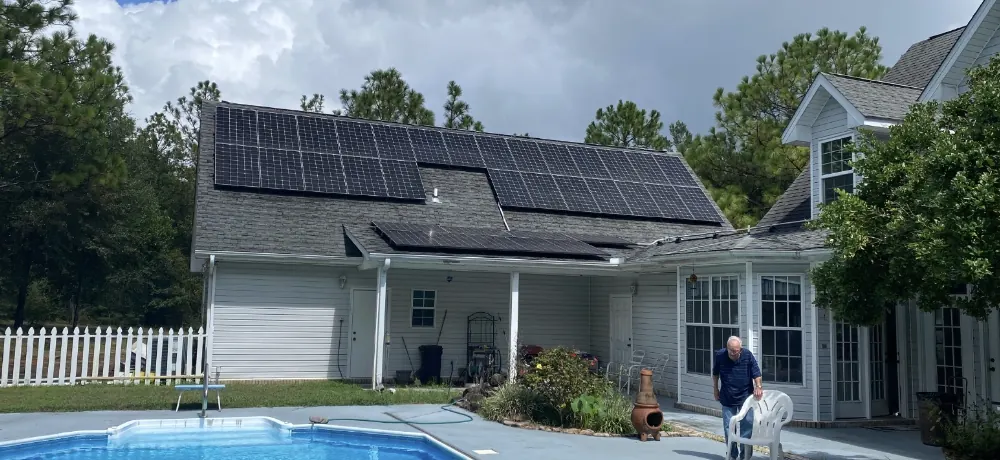
A system you own beats a bill that never ends.
Every month you pay the utility, you are funding generation you will never own. A purchased solar system reverses that: financing can often be structured at or below your current bill, and when the loan is paid the production is yours for the remaining warranty life of the equipment.
We design for your actual consumption — not a sales quota. That starts with your last twelve months of usage, your roof's orientation and pitch, shading through the day, and the loads that run around the clock. If solar is a poor fit for your roof, we will tell you before you spend a dollar.
- Design sized to your real 12-month usage and base load, not a template.
- Non-collateral solar financing available — no lien placed on the home.
- Battery-ready layouts so storage can be added later without rework.
- Aerospace-standard workmanship: torqued hardware, labelled conductors, documented work.
Six steps from first call
to switch-on
No mystery, no radio silence. Here is exactly what happens, in order, and what you are responsible for at each stage — which is very little.
Site survey
We set an appointment and walk the property: roof condition, pitch and orientation, rafter layout, main panel and breaker capacity, meter location, shading through the day, and your usage history. Everything needed to design the system properly is captured in one visit.
Engineering & design
Survey data goes to our engineering team, who produce the array layout, string design, inverter selection, structural attachment detail and full installation drawings — sized for optimal production on your specific roof, and code-compliant for Florida wind loads.
Review with you
Before anything is ordered we walk you through the drawings — panel placement, conduit routing, inverter and disconnect locations, and expected production. Aesthetics matter, so if you want panels off a street-facing plane, this is the moment to say so.
Permits & approvals
We prepare and submit the full permit package to your county or city building department, file the notice of commencement, and handle the utility interconnection application. Every filing, every follow-up, every correction is ours.
Installation
Once the permit is issued we confirm your preferred date and install — typically one to three days on site for a residential system. Mounts are flashed and sealed, conductors labelled, and the site left clean each evening.
Inspection, PTO & briefing
We meet the county inspector, secure permission to operate from the utility, commission the system, then sit down with you: how it works, what normal production looks like, and how to read your monitoring app. You leave that conversation in control of your own system.
Ready to see real numbers for your roof?
A free site survey and a written quote — no obligation, no pressure, and an honest answer if solar is not right for your home.
Honest Panhandle pricing
Every roof is different, so treat these as planning figures rather than a quote. Your written quote comes after the survey, with production estimates and financing options laid out in plain language.
What moves the number
Roof material and pitch, how many separate planes the array spans, main-panel upgrades, trenching for detached buildings, and whether you add storage. Shading is the big one — a system that loses four hours of afternoon sun needs to be designed differently, not just made bigger.
Built for hurricanes,
heat and salt air
Solar on the Gulf Coast is not solar in Arizona. Wind uplift governs the attachment design, salt air governs the hardware, and afternoon thunderstorms govern how production is modelled. This is where installers cutting corners get found out — usually three years later, at the flashing.
- Attachment spacing and rail spans engineered to Florida wind-load requirements for your county.
- Corrosion-rated fasteners and flashing for coastal and bay-front homes.
- Roof penetrations flashed and sealed, then documented — not just caulked.
- Production modelled on real Panhandle irradiance, including summer storm patterns.
| Roof type | What it means for your install |
|---|---|
| Asphalt shingle | Most common here. Flashed penetrations; if shingles are past 12–15 years we recommend re-roofing first. |
| Metal standing seam | Often the best case — clamped attachments, no penetrations at all. |
| Metal 5V / corrugated | Workable with the correct gasketed hardware and careful fastener placement. |
| Tile | Possible, slower, more costly — tiles are lifted and hooks set into the deck. |
| Flat / low slope | Ballasted or tilted racking; drainage and membrane detail decide the approach. |
New installation FAQs
How long does a new solar installation take from start to finish?
One to three days on site for most homes. End to end — survey, engineering, permit, install, inspection and utility permission to operate — usually runs four to eight weeks, and most of that is waiting on county and utility turnaround rather than work on your roof.
Do I need a new roof before installing solar?
If your shingles are past roughly 12–15 years, yes — re-roof first. Removing and reinstalling an array later is real money that you can avoid by sequencing the work. We assess remaining roof life during the survey and tell you plainly.
Will solar work during a hurricane or power outage?
Panels are engineered for Florida wind loads and routinely come through storms intact. But a grid-tied system without a battery shuts down in an outage for lineworker safety. If keeping the lights on matters, you need battery storage — we will size it to the loads you actually need to run.
How big a system do I need?
It comes from your usage, not your roof size. We start with twelve months of bills, identify your base load — what the house draws around the clock — then size for the offset you want. Most Panhandle homes land between 6 kW and 12 kW.
What financing is available?
Non-collateral solar loans are available, meaning no lien on your home, and payments can often be set at or below your current utility bill. We will show you the numbers side by side so the comparison is honest rather than flattering.
Who handles the permits and the utility paperwork?
We do — all of it. Installation drawings, the permit package to your county or city, the notice of commencement, the utility interconnection application, and meeting the inspector on site. You sign where required and nothing else.
What warranties come with the system?
Panels typically carry 25-year performance warranties, inverters 10–25 years depending on model, and batteries their own manufacturer terms. Our workmanship stands behind the installation itself — and because we do service calls, we are the ones who come back.
Do you install for businesses as well as homes?
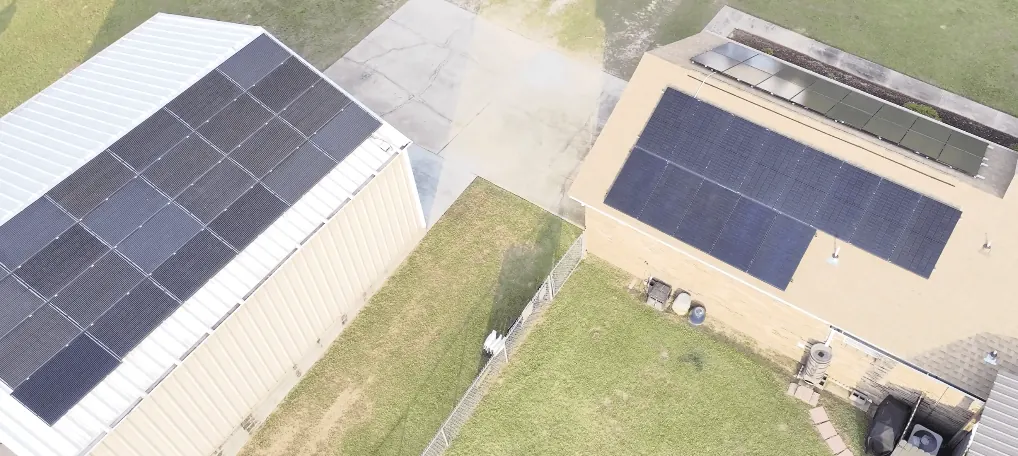
Yes. Commercial and agricultural installs, shops, warehouses and multi-building properties, including splitting production across buildings on a single interconnection.
Question not here? Ask us directly — a real person answers.
New installations across
the Florida Panhandle
From Pensacola and Gulf Breeze east through Destin, 30A, Panama City and Apalachicola. Find your town and get in touch:
Start with a free site survey.
One visit, one written quote, and a straight answer about whether solar makes sense for your home.