
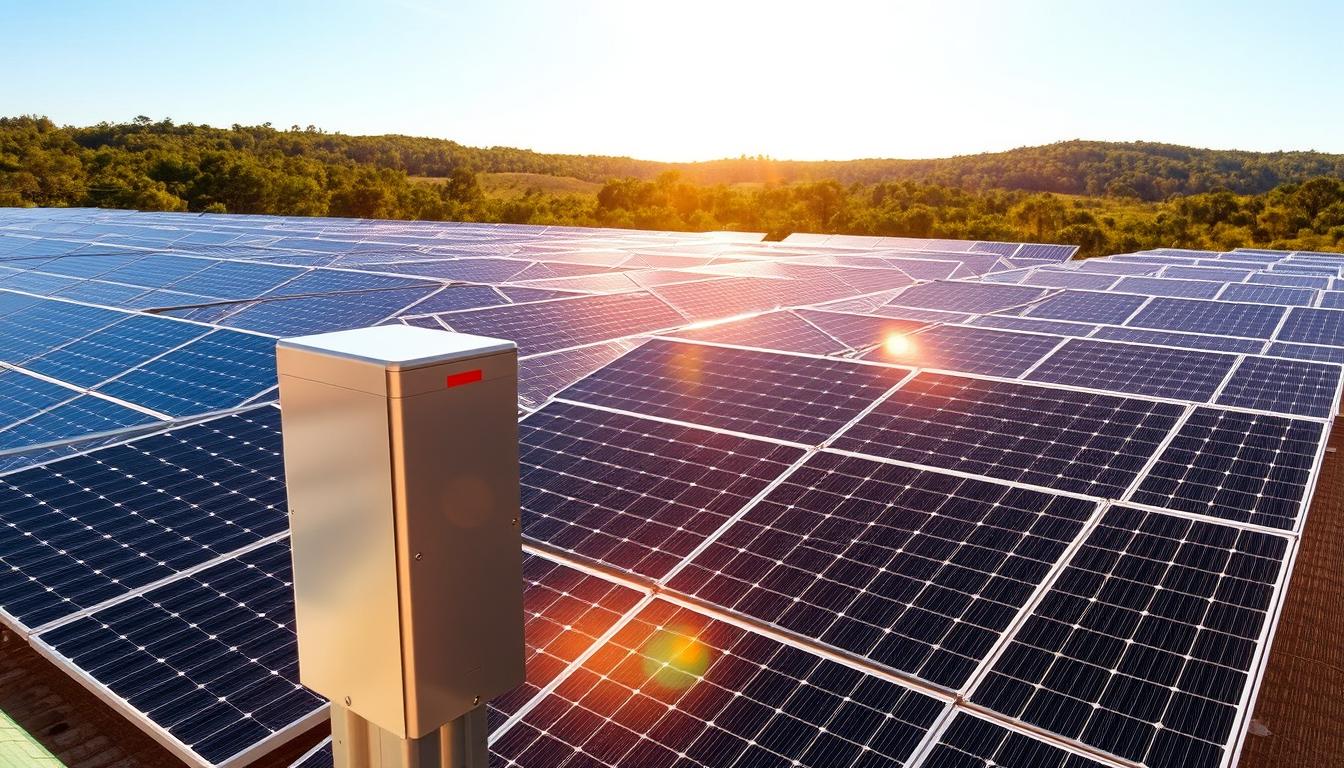
If a tree shades your roof for more than an hour or two in the middle of the day, it will cut your solar production, and trimming is usually the first step to try before removal. The right answer depends on where the shade falls, what time of day it hits, what kind of inverter the system uses, and whether the tree is on your lot or your neighbor's. This guide walks Florida Panhandle homeowners through how to make that call before a single panel goes up.
Why shade matters more than most people expect
A solar panel is made of many cells wired together. When part of a panel is shaded, the shaded cells produce less current, and because the cells are connected in series, they can hold back the cells around them. Panels have bypass diodes that let current route around a shaded section, but that section still stops contributing. A shadow that covers only a small corner of a panel can drop that panel's output by far more than the share of glass it covers.
On older systems that use a single string inverter, one shaded panel can also pull down the output of every other panel on the same string. That is why a tall pine or live oak on the south or west side of a house deserves a careful look before you sign a contract, not after.
Which shade hurts the most
Not all shade is equal. In the Panhandle, panels do most of their work between roughly mid-morning and mid-afternoon, when the sun is highest. Shade that falls on the array during those hours costs the most energy. A tree that only shades the roof at sunrise or late in the evening usually costs very little.
- South side: Trees to the south matter most because the sun crosses the southern sky all day. A tall tree here can shade a south-facing roof for hours, especially in winter.
- West side: Western trees shade panels in the afternoon, which is when many homes run air conditioning hardest.
- East side: Eastern trees mostly affect the early morning hours, when output is lower anyway.
- North side: Trees to the north rarely shade a roof enough to matter for panels facing south, east or west.
Seasons change the picture too. The winter sun sits much lower in the sky, so a tree that clears the roof in June can cast a long shadow across it in December. Deciduous trees drop leaves in winter, but bare branches still cast shadows, and Southern pines keep their needles year-round.
How a site survey measures shade
Guessing from the ground is not reliable. A proper site survey measures how much sunlight each section of roof receives across the whole year, not just on the day of the visit. Installers use shade-analysis tools that map nearby trees and structures against the sun's path, then estimate how much energy each roof face can produce.
MSM Solar offers free site surveys and written quotes. During a survey, shading is one of the first things we look at, along with roof condition, roof orientation and your electrical panel. If shade is a problem, the quote should say so plainly and explain the options. You can learn more about how a project comes together on our new solar installations page.
Trim, remove or work around it
Once you know where the shade falls, there are four realistic paths:
- Trim the tree. Raising the canopy or thinning the limbs that hang toward the roof often solves the problem without losing the tree. Trimming also reduces the chance of limbs falling on the array during a storm.
- Remove the tree. If a large tree shades the best roof face for most of the day, removal may be the only way to make solar worthwhile. This is a personal decision, and it also has cost, permit and shade-cooling trade-offs.
- Move the panels. A different roof face, a smaller array on the unshaded section, or a ground mount in a sunny part of the yard can avoid the tree altogether.
- Change the equipment. Microinverters or panel-level optimizers let each panel work on its own, so one shaded panel no longer drags down the rest. This limits the damage from light, partial shade, but it does not create energy from a panel that sits in heavy shade.
Sometimes the honest answer is that a roof is too shaded for solar to make sense. A good installer will tell you that rather than sell you a system that underperforms.
Storm risk: the other reason to look up
Panhandle homeowners know what hurricanes and strong summer storms do to trees. Large limbs hanging over a roof are a risk to shingles, gutters and panels alike. Before solar goes on, it is worth having a qualified tree service look at any trees close enough to reach the roof if they fail.
Pine needles and leaves also collect around panel edges, in the gap between the array and the roof, and in gutters. Heavy debris can hold moisture against the roof and block water flow. Trimming back overhanging branches reduces this buildup and makes the roof easier to inspect after a storm.
Rules to check before you cut
Before removing a tree, check the rules that apply where you live. Some cities and counties have their own tree rules, and homeowners associations often have their own requirements for landscaping changes. If the tree sits on a property line, talk with your neighbor before anyone cuts anything.
If the shade comes from a neighbor's tree, you generally cannot trim or remove it without their permission, and Florida does not give homeowners an automatic right to sunlight across a neighboring lot. Florida law does allow solar easements, which are written agreements between neighbors to keep sunlight reaching a system, but they only exist if both sides agree and record them. For most people, a friendly conversation is the practical place to start.
Also think about future growth. A young tree that casts no shade today may shade the array in ten years. Solar panels are a long-term investment, so plan for what the yard will look like over the life of the system.
What shade means for your savings
Every hour of lost sun is energy you buy from the utility instead of making yourself. If you are on FPL, which now serves the former Gulf Power territory, net-metered exports are credited at the retail rate, so each lost kilowatt-hour has the same value whether you would have used it or exported it. If you are a member of a co-op such as CHELCO, Gulf Coast Electric, West Florida Electric, Escambia River Electric or Talquin, check how your co-op credits exported energy, since co-ops set their own rules.
Keep in mind that the 30% federal residential solar tax credit ended for systems installed after December 31, 2025, so the system needs to pay for itself through energy savings. That makes shade analysis more important, not less. Florida still exempts solar equipment from sales tax and excludes the added home value from property tax assessments.
To see a rough estimate for your home, try the calculator below and compare the result with a shaded and unshaded roof face.
Solar Cost Calculator – Florida Panhandle Only
* Estimate based on $3.25 per watt for solar installation.
* For Tesla Powerwall 3 Batteries, $15,000 for the first battery, $12,000 for each additional battery.
* Other variations and types of Batteries are available.
What to do if you already have solar and the trees grew
Many homes in towns like Crestview, Niceville and DeFuniak Springs had panels installed years ago, and the trees nearby have kept growing. If your production has slowly dropped, check your monitoring app and look at the roof at midday. New shade is a common cause of lower output.
Trimming may restore most of the lost production. If the trees cannot be cut back, moving some panels to a sunnier part of the roof or adding panels elsewhere may help. MSM Solar repairs and adjusts systems of any brand and age, including orphaned systems whose original installer has closed. Our solar service calls page explains how service visits work, and service-call pricing is quoted up front.
Frequently asked questions
Will a little shade ruin my solar system?
No. Light shade early or late in the day usually has a small effect. Shade that covers panels in the middle of the day, or that falls across many panels at once, is what makes a real difference.
Do microinverters fix shading problems?
They reduce the damage by letting each panel work on its own, so unshaded panels keep producing fully. A panel that is heavily shaded will still produce little energy.
Should I remove trees before or after getting a quote?
Get the site survey first. The survey shows which trees actually affect production, so you do not cut down a tree that was never the problem.
Can a ground mount solve a shaded roof?
Often, yes, if part of your yard gets full sun for most of the day. Ground mounts need open space, setbacks and trenching for wiring, so the survey should confirm whether one fits your lot.
Conclusion
MSM Solar works with homeowners in Perdido Key, Cantonment, Greensboro, Havana and Holt, and in every town between Pensacola and Apalachicola.
Trees and solar panels can live together if you plan for it. Find out where the shade falls during the hours that matter, trim before you remove, and consider panel placement or equipment that handles partial shade. If a roof simply gets too little sun, it is better to know before you invest. MSM Solar is based in Crestview at 5662 Old Bethel Rd and holds Florida Certified Solar Contractor License CVC57236. Call (850) 737-5197 to book a free site survey and get a written quote that shows how shade affects your home.