
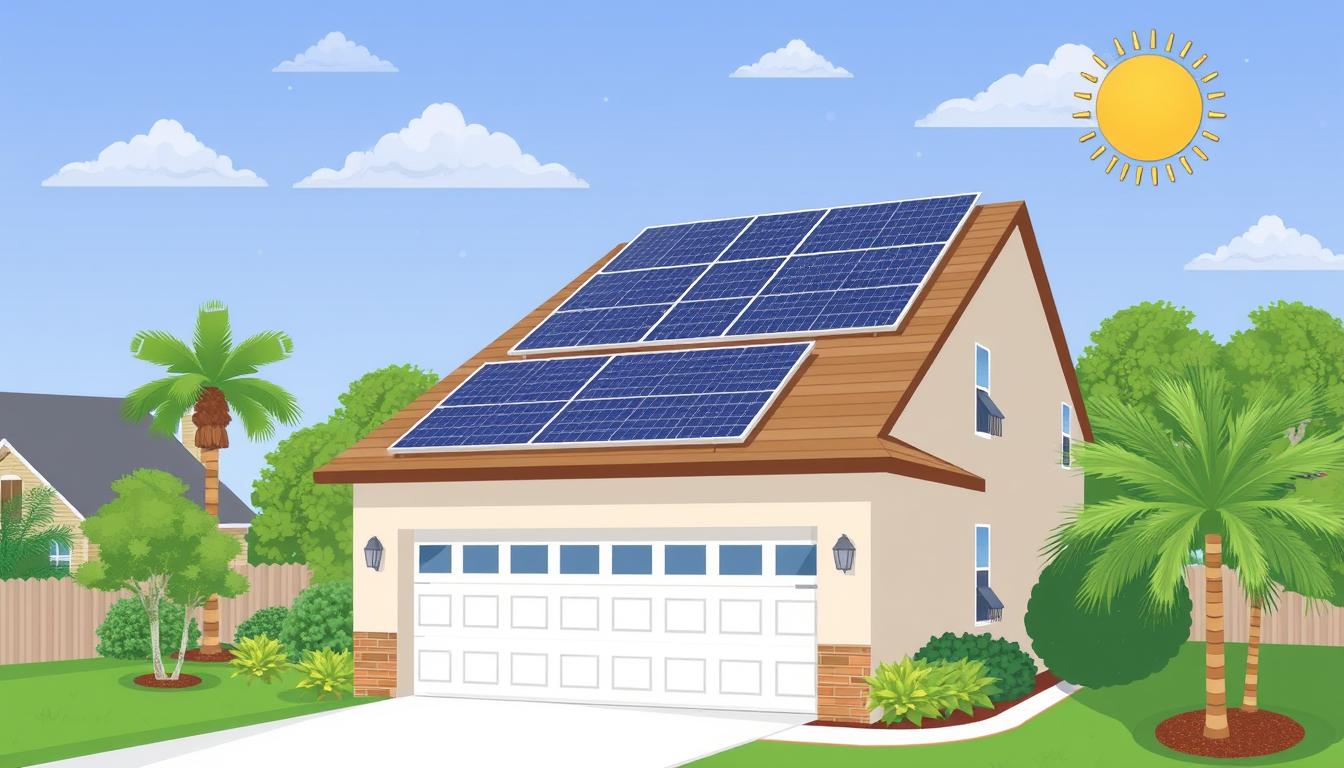
A swimming pool is one of the pleasures of living in Gulf Breeze, Destin or Panama City Beach, and one of the quieter drains on the electric bill. Pool pump electricity cost is easy to overlook because the pump sits out of sight and runs while you are at work. In many Panhandle homes it is the second or third largest electrical load. The good news is that it is also one of the easiest to reduce without giving up a clean pool.
Solar Cost Calculator – Florida Panhandle Only
* Estimate based on $3.25 per watt for solar installation.
* For Tesla Powerwall 3 Batteries, $15,000 for the first battery, $12,000 for each additional battery.
* Other variations and types of Batteries are available.
How much electricity a pool pump uses
A typical older single-speed pump has a motor of 1 to 2 horsepower and draws roughly 1.5 to 2.5 kilowatts whenever it runs. To estimate your own cost, multiply three numbers:
- The pump's draw in kilowatts (watts on the label divided by 1,000).
- The hours it runs each day.
- Your electricity price per kilowatt-hour, found by dividing your bill total by the kilowatt-hours used.
For example, a pump drawing 2 kilowatts for 8 hours uses 16 kilowatt-hours a day, or close to 500 a month. At your own rate per kilowatt-hour, that single appliance can be a visible slice of the bill, twelve months a year.
Why single-speed pumps cost so much
A single-speed pump has one setting, which is full power. Moving water through pipes follows a useful rule: when you halve the flow, the power needed drops to roughly one eighth. Running slowly for longer therefore moves the same amount of water for far less energy. A single-speed pump cannot take advantage of that. A variable-speed pump can.
Variable-speed pumps
A variable-speed pump lets you set low speeds for everyday filtering and higher speeds only for vacuuming, heating or running a spa. They are quieter, the motors run cooler and tend to last longer, and they commonly use a small fraction of the energy of the pump they replace. Federal efficiency rules introduced in 2021 mean most new replacement pumps of standard pool sizes are now variable-speed in any case. If your pump is more than ten years old, replacement is usually the single biggest pool saving available. Check whether your utility offers a rebate before you buy.
How long should you run the pump?
The aim is to pass all the pool's water through the filter about once a day, which is called one turnover. Many pools are run far longer than that out of habit.
- Single-speed pump: start at 8 hours in summer and reduce by an hour a week until the water starts to look dull, then go back up one step. Many pools stay clear at 6 hours in summer and 4 in winter.
- Variable-speed pump: run longer at low speed, often 10 to 12 hours, which still uses much less energy than 6 hours at full speed.
- After storms or heavy use: add a few hours for a day or two.
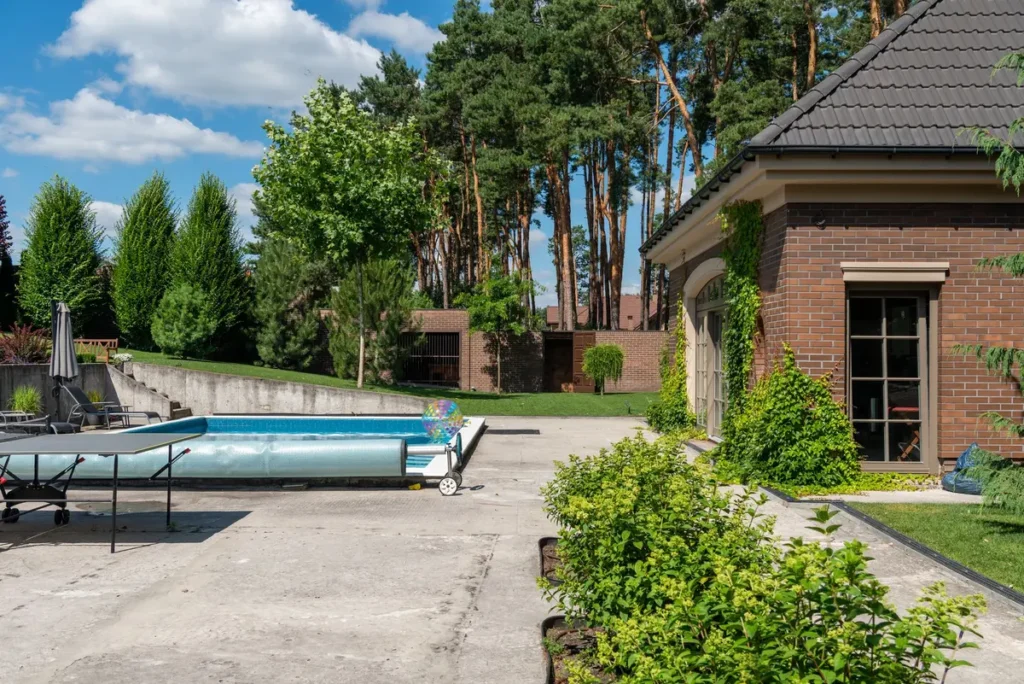
Other ways to cut pool running costs
- Keep the filter and baskets clean. A dirty filter makes the pump work harder for less flow.
- Use a timer. A pump left on by mistake for a weekend wastes more than most people expect.
- Cover the pool when it is heated. Most heat is lost from the surface by evaporation. A cover is the cheapest way to reduce heating cost.
- Choose a heat pump pool heater over electric resistance if you heat the pool. It uses much less electricity for the same warmth.
- Check for leaks and air in the system. Bubbles at the return jets mean the pump is pulling air and losing efficiency.
- Switch pool and landscape lights to LED.
Screen enclosures, shade and algae
Pools in full sun need more circulation and more chlorine than shaded or screened ones, because sunlight breaks chlorine down and warm water feeds algae. A screen enclosure also keeps leaves and pollen out, so the filter clogs more slowly. If you are fighting green water every August, improving water chemistry and brushing is usually more effective than running the pump for longer.
Running the pump on solar power
A pool pump is close to an ideal load for rooftop solar. It runs every day, it can run whenever you choose, and the best time for filtering, the middle of the day, is when panels produce the most. Setting the pump schedule from mid-morning to mid-afternoon means it runs largely on your own solar power, with less drawn from the utility.
When a solar system is designed, the pool should be counted in the usage. We covered the sizing questions in how pool pumps, EVs and HVAC skew solar calculations, and an earlier case study looked at a solar and pool pump combination for Marianna homes. For your own numbers, the solar calculator gives a quick estimate, and a free site survey from MSM Solar gives a written quote for homes in Gulf Breeze, Destin, Panama City Beach and across the Panhandle.
A simple pool energy plan
- Read the pump label and work out what it costs you each month.
- Put it on a timer and trim the run time step by step.
- Clean the filter and baskets on a schedule.
- When the pump is due for replacement, fit a variable-speed model.
- If you have or want solar, move the run time to the middle of the day.
Frequently asked questions
Is it cheaper to run a pool pump at night?
Only if you are on a time-of-use rate with cheaper night power. On a standard flat rate the cost is the same at any hour, and daytime running helps chlorine circulate when the sun is strongest.
Can I turn the pool pump off in winter?
Not completely. Reduce the hours, because cooler water needs less filtering, but keep daily circulation. On freezing nights, run the pump to protect the plumbing.
How much can a variable-speed pump save?
It depends on your current pump and schedule, but savings on pump energy of more than half are common, and often much higher.
Can solar panels run a pool pump directly?
There are dedicated solar pool pumps, but most homeowners simply run a standard pump on household power offset by a rooftop solar system.
Conclusion
Pool pump electricity cost comes down to how much power the pump draws and how many hours it runs. Trim the hours, keep the system clean, and move to a variable-speed pump when the old one is due. Those three steps typically remove most of the waste.
MSM Solar works with homeowners in Freeport, Graceville, Greensboro, Havana and Holt, and in every town between Pensacola and Apalachicola.
If you would like the pool, and the rest of the house, to run on your own power, call MSM Solar at (850) 737-5197 or request a free quote, and we will call you back no later than two business days.