

Humidity in a Florida home is the part of summer that the thermostat does not show. Two houses in Navarre can both read 76 degrees, and one feels crisp while the other feels sticky, smells musty and grows mildew in the closets. The difference is moisture. Getting indoor humidity under control makes a house more comfortable at a higher temperature, protects the building, and usually lowers the power bill as well.
Solar Cost Calculator – Florida Panhandle Only
* Estimate based on $3.25 per watt for solar installation.
* For Tesla Powerwall 3 Batteries, $15,000 for the first battery, $12,000 for each additional battery.
* Other variations and types of Batteries are available.
What indoor humidity should be
Aim for 45 to 55 percent relative humidity. Below 60 percent, dust mites and mold struggle. Above 60 percent for long periods, they thrive. A digital hygrometer costs about the same as a lunch and tells you the number in each room. Put one in the main living area and one in the room that smells the worst, and watch them for a week before you spend money on anything.
Signs your house is too humid
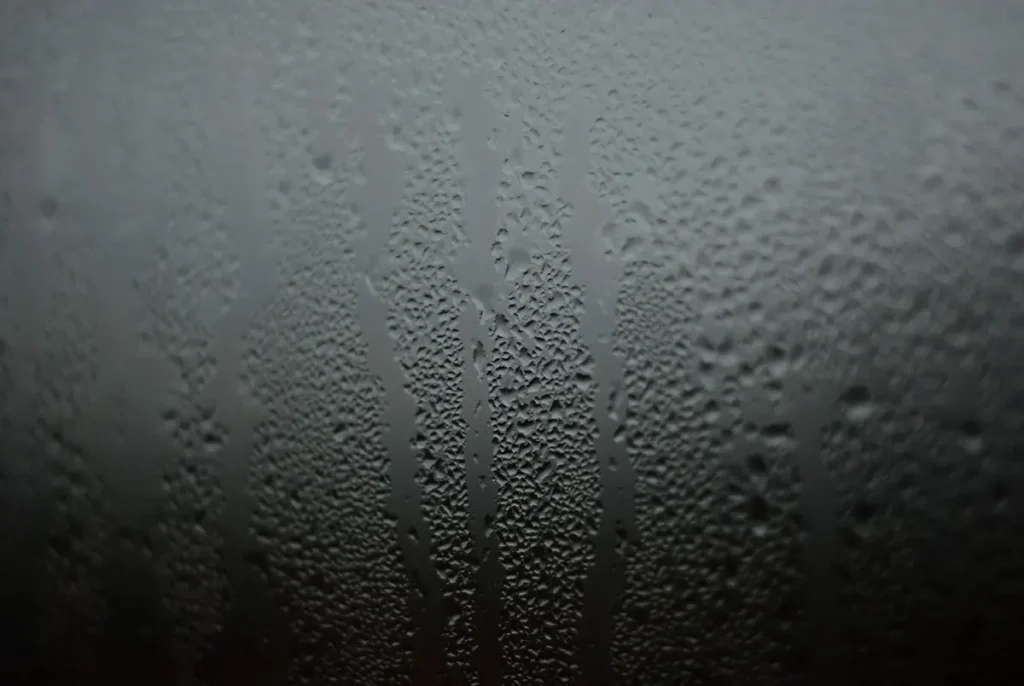
- Condensation on the inside of windows or on air vents.
- A musty smell in closets, cabinets or the laundry room.
- Mildew on bathroom ceilings, window sills or the backs of furniture.
- Sheets and towels that feel damp.
- Wood doors that stick in summer and free up in winter.
- Feeling clammy even when the thermostat says the house is cool.
Where the moisture comes from
Outdoor air on the Gulf Coast often carries a great deal of water, so every gap in the house lets moisture in. The main sources are:
- Air leaks. Gaps around doors, windows, attic hatches, recessed lights and plumbing penetrations.
- Leaky return ducts. A return duct with a hole in the attic or garage pulls in hot, wet air and feeds it straight to the system.
- Daily life. Showers, cooking, laundry and breathing all add water to the air.
- The ground. Vented crawl spaces under older homes in Pensacola and Milton can feed moisture upwards.
- Ventilation done badly. Bath fans that vent into the attic and dryers with crushed or disconnected vent hoses.
Let the air conditioner do its job
Your air conditioner is the main dehumidifier in the house. It removes water only while the coil is cold and air is passing over it, so how it runs matters.
- Set the fan to Auto. With the fan set to On, moisture on the coil evaporates back into the house between cycles.
- Keep the filter clean and the coil serviced so air flows properly.
- Do not switch the system off when you are away. Set it to 80 to 82 degrees.
- Be wary of an oversized unit. It cools quickly and shuts off before it has removed much moisture. If a replacement is due, ask for a proper load calculation and consider a two-stage or variable-speed system, which runs longer at low power and dries the air far better.
Dehumidifier or air conditioner?
They do related but different jobs. An air conditioner cools and dries. A dehumidifier dries and adds a little heat. In spring and fall, when it is damp but not hot, the air conditioner barely runs and humidity creeps up. That is when a dehumidifier earns its place.
| Option | Best for | Notes |
|---|---|---|
| Portable dehumidifier | One damp room, a closet area, a garage workshop | Needs emptying or a drain hose; choose an efficient model |
| Whole-house dehumidifier | Homes that stay above 60 percent despite a healthy AC | Tied into the ductwork and drained automatically |
| AC with humidity control | New system installations | Variable-speed equipment with a thermostat that targets humidity |
Fix the sources
- Run the bathroom fan during a shower and for 20 minutes afterward, and check that it vents outdoors.
- Use the range hood when boiling or frying.
- Make sure the dryer vent is clear and reaches the outside wall.
- Seal obvious air leaks with caulk and weatherstrip, starting with the attic hatch.
- Have the ducts checked for leaks, especially on the return side.
- Keep gutters clear and soil sloped away from the house.
- In a crawl space, lay a ground vapor barrier or ask a specialist about sealing it.
Preventing mold
Mold needs moisture, a surface and time. Remove the moisture and it cannot grow. Wipe small patches from hard surfaces with detergent and dry the area fully. Leave space behind furniture on outside walls so air can circulate. If you find mold on more than a few square feet, or it keeps returning, there is a moisture source to find first, and a professional assessment is worthwhile.
Humidity and your power bill
Dry air feels cooler, so a house at 50 percent humidity is comfortable at a higher thermostat setting than a house at 65 percent. Every degree you can raise the setting saves cooling energy. Tightening the house and fixing ducts therefore pays twice: less moisture gets in, and less cooled air leaks out. A dehumidifier does use electricity, so treat it as a tool for the damp seasons, and fix leaks first.
Cooling and drying a home through a Gulf Coast summer is a large, steady electrical load that falls mostly in daylight hours, which is exactly when solar panels produce. That match is why homes with higher cooling demand often benefit more from solar. Once the house is tight and dry, a solar installation sized on your real usage can cover a large share of that load. See what it might look like for a home in Navarre, Pensacola or Milton with the solar calculator.
Frequently asked questions
What is a normal humidity level in a Florida home?
Between 45 and 55 percent is the target. Brief readings up to 60 percent on very wet days are normal. Staying above 60 percent is a problem to fix.
Why is my house humid when the AC is running?
Common reasons are the fan set to On, an oversized unit that short-cycles, leaking return ducts, or a dirty coil.
Does a dehumidifier lower the electric bill?
Not directly, since it uses power. It can let you set the thermostat higher in comfort, which offsets some of its cost.
Should I open windows to reduce humidity?
Rarely in a Panhandle summer. Outdoor air usually holds more moisture than indoor air, so opening windows makes it worse.
Conclusion
Controlling humidity in a Florida home comes down to three things: keep wet outdoor air out, remove moisture at the source, and let a correctly sized air conditioner run in a way that dries the air. Measure first with a hygrometer, fix leaks and fans, and add a dehumidifier only if the numbers still say you need one.
MSM Solar works with homeowners in Laurel Hill, Miramar Beach, Pace, Ponce de Leon and Quincy, and in every town between Pensacola and Apalachicola.
When the house is comfortable and you want to lower what it costs to keep it that way, call MSM Solar at (850) 737-5197 or request a free quote, and we will call you back no later than two business days.