
A secondary water barrier is a sealed layer under your roof covering that keeps rain out of the house if shingles, tiles or metal panels are torn off in a storm. On a Florida Panhandle home, it is one of the most practical roof upgrades you can make, and the best time to add one is when the roof is being replaced anyway. It can also count as a credit on a wind mitigation inspection.
What a secondary water barrier is
Every roof has layers. On top is the roof covering you see: shingles, metal or tile. Under that is underlayment, and under that is the roof deck, usually plywood or OSB sheathing nailed to the rafters or trusses. The deck is made of separate sheets with seams between them.
A secondary water barrier, often called secondary water resistance or a sealed roof deck, closes those seams so water cannot pour through even when the covering is gone. Ordinary felt underlayment helps shed water while the roof is intact, but strong wind can strip it away along with the shingles. A true secondary water barrier is bonded to the deck so it stays put.
Why it matters for Panhandle homes
The Panhandle sits in the path of Gulf hurricanes and tropical storms, and even strong summer thunderstorms can lift a section of shingles. When that happens on a roof without a sealed deck, rain driven by the wind runs straight through the seams between deck sheets. Water gets into the attic, soaks insulation, stains ceilings and can damage drywall, wiring and flooring long before anyone can get a tarp on the roof.
The roof covering may only be partly damaged, yet the interior damage can be far more expensive to repair. A sealed deck buys time: a home with missing shingles but a bonded barrier underneath is much more likely to stay dry until a roofer can make repairs. That is why it is a common recommendation for homes from Pensacola and Navarre to Panama City and inland communities.
Common types of secondary water barrier
Roofers use a few different methods. Which one fits depends on the roof covering, the budget and what your local building department accepts.
- Self-adhered tape over deck seams. Strips of peel-and-stick membrane are applied over every joint between deck sheets, then standard underlayment goes on top. This is often the lowest-cost approach.
- Full self-adhered membrane. The entire deck is covered with peel-and-stick underlayment. It costs more in material but seals the whole surface, not just the joints.
- Closed-cell spray foam from the attic. Foam applied to the underside of the deck can seal the seams from below. This is one of the few ways to add a barrier without removing the roof, though it changes how the attic handles heat and moisture, so it needs careful evaluation.
Plain felt or standard synthetic underlayment that is only nailed or stapled in place is generally not treated as a secondary water barrier on its own.
How it shows up on a wind mitigation inspection
Florida's standard wind mitigation inspection form includes a question about secondary water resistance. If the inspector can document that your roof has a qualifying barrier, insurers may apply a credit to the windstorm portion of your premium. The size of any credit depends on your insurer and the rest of the inspection, so ask your agent before you assume a specific amount.
Documentation matters. An inspector usually needs photos taken during the re-roof, a permit or invoice that describes the barrier, or a view of the material from the attic. If you are re-roofing, ask your roofer to photograph the deck after the barrier is installed and keep those photos with your permit paperwork. Our guide to the Florida wind mitigation inspection explains the other items on the form.
When you can add a secondary water barrier
Because the barrier goes directly on the deck, the practical time to add one is when the roof covering is removed for a full replacement. Trying to add it otherwise means tearing off a roof that may have years of life left. The spray foam method is the main exception, and it comes with its own trade-offs.
The Florida Building Code has specific underlayment requirements when a roof is replaced, and those requirements have tightened over time. Your roofing contractor and your local building department can tell you what is required for your home and permit. Many homeowners choose to go beyond the minimum, especially on homes close to the coast.
If your roof is approaching the end of its life, see how long roofs last in Florida and metal roof vs shingles in Florida to plan the replacement.
Secondary water barriers and solar panels
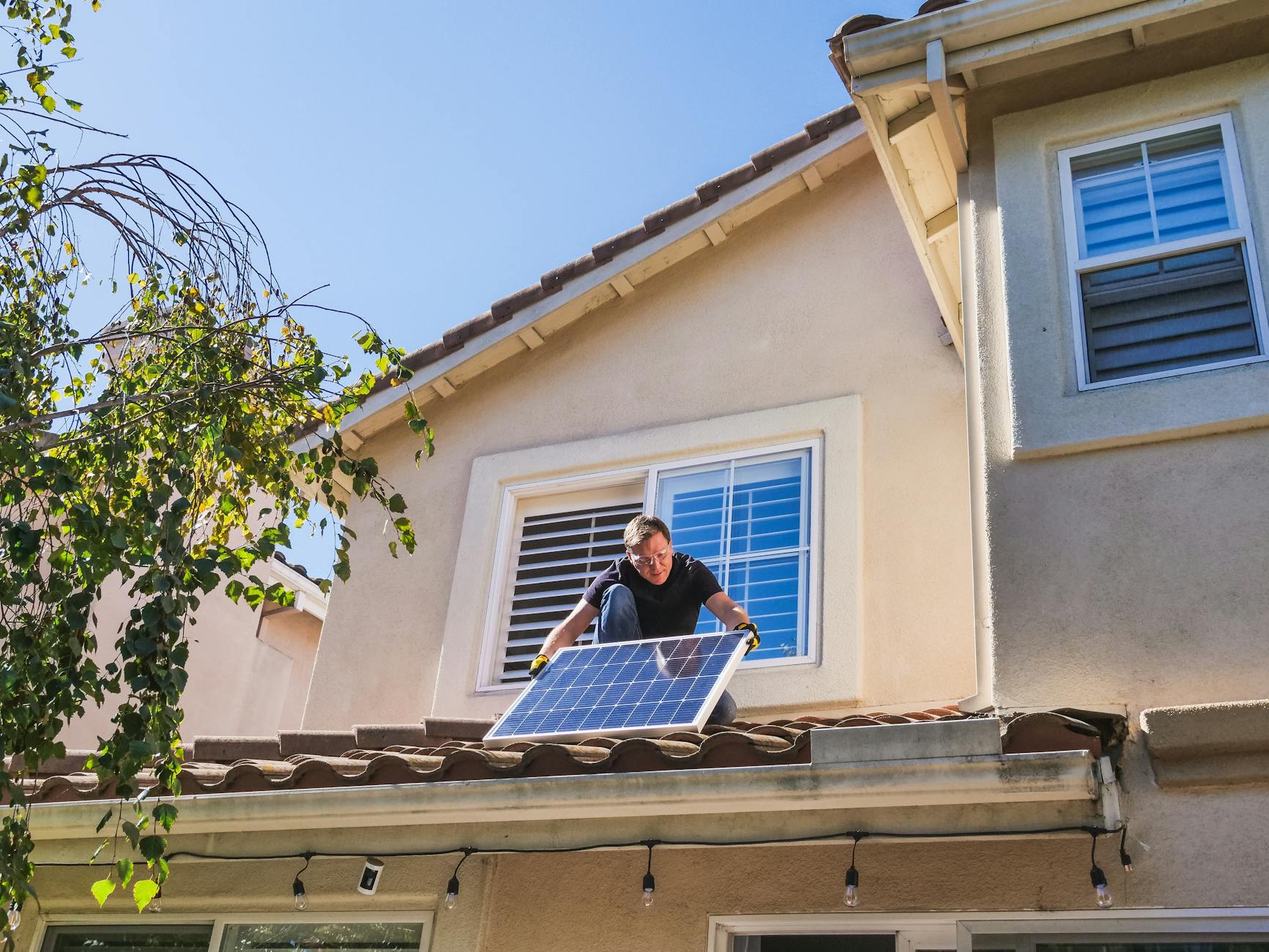
If your home has solar panels, re-roofing means the panels and racking must come off first and go back on after the new roof is in. That is a good moment to add a secondary water barrier, because the deck will be fully exposed. MSM Solar handles solar removal and reinstall for re-roofing on any brand and age of system, including orphaned systems whose original installer has closed.
A few points help the job go smoothly:
- Schedule both contractors together. The solar crew removes the array, the roofer installs the deck repairs, barrier and covering, then the solar crew reinstalls.
- Talk about attachment points. Solar mounts pass through the roof covering and the barrier. They need proper flashing and sealing so they do not become the weak spot.
- Keep records. Photos of the barrier and the reinstalled mounts help with future inspections, insurance questions and resale.
If you are planning solar on a roof that is due for replacement soon, it usually makes sense to replace the roof first, with a secondary water barrier, and install solar afterward. MSM offers free site surveys and written quotes for new solar installations, and after a storm we can inspect an existing system through our solar service calls, with pricing quoted up front.
Questions to ask your roofer
When you collect re-roof quotes, ask each contractor the same questions so you can compare them fairly:
- Is a secondary water barrier included, and which method will you use?
- Will you replace damaged or soft deck sheets before the barrier goes on?
- Will you photograph the barrier and give me documentation for a wind mitigation inspection?
- Does the quote include upgraded roof-to-deck nailing if the deck needs it?
- If I have solar panels, how will you coordinate with the solar contractor for removal and reinstall?
Written answers make it easier to see what each price actually includes.
Solar Cost Calculator – Florida Panhandle Only
* Estimate based on $3.25 per watt for solar installation.
* For Tesla Powerwall 3 Batteries, $15,000 for the first battery, $12,000 for each additional battery.
* Other variations and types of Batteries are available.
Frequently asked questions
Can I add a secondary water barrier without replacing my roof?
Usually only with closed-cell spray foam applied from the attic. Tape and membrane methods go directly on the deck, so they require removing the roof covering.
Will a secondary water barrier lower my insurance?
It may. The wind mitigation form includes secondary water resistance, and many insurers give a credit when it is documented. Ask your agent how much it would affect your policy.
Is peel-and-stick underlayment the same as a secondary water barrier?
Self-adhered underlayment over the whole deck, or self-adhered tape over all deck seams, is one of the common ways to create a secondary water barrier. Standard nailed underlayment alone generally does not qualify.
Do I need to remove my solar panels to re-roof?
Yes. The panels and racking must come off so the roofer can replace the covering and add a barrier, then they are reinstalled and checked.
Conclusion
MSM Solar works with homeowners in Miramar Beach, Pace, Perdido Key and Ponce de Leon, and in every town between Pensacola and Apalachicola.
A secondary water barrier is a quiet upgrade that can make the difference between a few missing shingles and a soaked attic after a Panhandle storm. The best time to add one is during a full roof replacement, and good documentation can help on a wind mitigation inspection. If your home has solar, plan the panel removal and reinstall alongside the re-roof. MSM Solar is based in Crestview at 5662 Old Bethel Rd, holds Florida Certified Solar Contractor License CVC57236, and offers free site surveys and written quotes. Call (850) 737-5197; a real person calls back within 2 business days.