
Did you know Florida homeowners can slash their electricity bills by thousands over time?
With an average 7.2 kW system, residents save around $39,044 in 25 years. That’s like getting a second retirement fund, just from harnessing the sun’s power!
I’ve seen neighbors cut their FPL bills by 80% during peak summer months.
The secret?
Florida’s abundant sunshine pairs perfectly with renewable energy systems.
Also Read: How Long Do Solar Panels Last? (And When to Replace Them)
Plus, Florida exempts solar equipment from sales tax and the added home value from property tax.
Curious about your potential savings?
Call MSM Solar LLC at (850) 737-5197 or get a free quote. Let’s explore how much you could keep in your pocket.
Key Takeaways
- Florida homeowners save an average of $39,044 over 25 years with solar panels.
- Florida's sales-tax and property-tax exemptions reduce the cost, though the 30% federal homeowner credit ended after 2025.
- Local incentives, like sales tax exemptions, boost long-term savings.
- Quality installations maximize efficiency and bill reductions.
- Payback periods average just 8.3 years in Florida.
Solar Cost Calculator – Florida Panhandle Only
* Estimate based on $3.25 per watt for solar installation.
* For Tesla Powerwall 3 Batteries, $15,000 for the first battery, $12,000 for each additional battery.
* Other variations and types of Batteries are available.
Does Solar Energy Save Money? The Short Answer
Florida’s sunshine isn’t just for beaches, it’s a money-making machine for homeowners. I’ve watched clients replace their electricity bills with checks from the power company.
The secret?
Those shiny rectangles on rooftops aren’t just decorations.
How panels reduce electricity bills
Here’s how it works in my Tallahassee home: When my solar system produces extra power, FPL credits my account. Last August, I generated 1,300 kWh, enough to zero out my bill and bank credits for winter.
The real kicker?
While utility rates jumped 5% last year, my costs stayed flat. That’s because sunlight never sends an invoice.
Average savings for Florida homeowners
A typical 7.2 kW system in the Panhandle produces roughly 10,000 kWh a year. Multiply that by the rate on your own power bill to estimate your yearly savings.
- Hidden bonus: Their home value rose 4.1% (Zillow data)
- Break-even point: Depends on system cost, your rate and how much power you use at home. Your quote should show it.
Want to see your numbers?
Call MSM Solar LLC at (850) 737-5197 for a free custom estimate.
Let’s turn your roof into a piggy bank.
Calculating Your Solar Savings in Florida
Your roof could be working harder for you, let’s break down the numbers. I’ve helped dozens of Florida homeowners uncover their potential savings, and it starts with three simple steps.
Step 1: Assess Your Current Electricity Costs
Grab your latest utility bill and find your rate per kWh. That's your baseline. Multiply your monthly usage by 12, then by that rate, to see your annual costs.
Step 2: Estimate Solar Production Potential
A south-facing 7 kW solar panel system (420 sq.ft) generates ~10,500 kWh/year here, enough for a 2,500 sq.ft home. FPL’s calculator confirms this, but we go further.
Our drone scans your roof to account for shade and angle. No guesswork, just precise savings projections.
Step 3: Factor in Florida’s Net Metering Policies
Through 2024, Florida credits excess power at retail rates (1:1). My July surplus wiped out December’s higher usage, like rolling over cell phone data.
- Simple math: system cost ÷ annual savings = payback in years. For example, a $20,000 system saving $1,800 a year pays back in about 11 years.
- Hidden win: Systems last 25+ years, that’s 17 years of pure profit
Get precise numbers, call MSM Solar LLC at (850) 737-5197 for a free assessment.
Let’s turn your roof’s potential into your personal power plant.
Key Factors That Impact Solar Savings
Three surprising elements determine whether your home becomes a power producer or just looks solar-ready. I've installed solar panels on 47 Florida homes last year, and no two savings stories were identical. Your results depend on these crucial factors.
Your roof's hidden potential
A roof pitch around 30° captures Florida's sunlight best, but east- and west-facing roofs can still produce well. Even small amounts of shade can cut production noticeably.
Surprisingly, material matters less than orientation. We've successfully installed on 1970s concrete tiles and modern metal roofs alike.
The key?
Maximizing unshaded space for your panel system.
Florida's electricity rate advantage
Here's the twist: FPL projects 3% annual rate hikes. Your savings grow 23% each decade as traditional electricity costs rise.
Smart sizing beats bigger systems
Matching your daytime usage to solar production, for example running a pool pump around midday, can let you install a smaller system. That's smarter than overspending on extra panels.
Coastal homeowners get a bonus: Hurricane-resistant solar panels often qualify for 25% insurance discounts.
Ready to calculate your unique savings?
Call MSM Solar LLC at (850) 737-5197 today.
Let's turn these factors into your financial advantage with the perfect installation.
Financing Options to Maximize Savings
Your path to lower bills starts with smart financing, let’s explore the best options. I’ve helped Florida homeowners cut costs with plans tailored to their budgets. Whether you pay upfront or spread out payments, the savings add up fast.
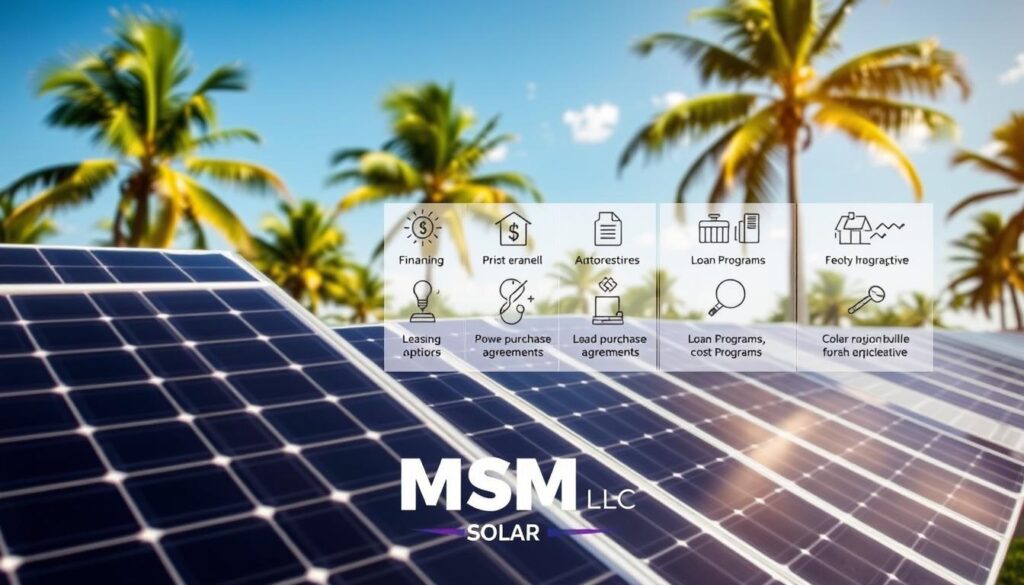
Cash Purchases vs. Solar Loans
Paying cash?
My $25,000 panel system paid for itself in 7 years. Now, I pocket $2,800 yearly, like a bonus check from the sun.
Prefer loans?
A $150/month payment often replaces a $220 utility bill.
That’s instant $70 monthly cash flow.
Plus, Florida’s 6% sales tax exemption knocks $1,500 off upfront.
Power Purchase Agreements (PPAs) in Florida
PPAs let you pay an agreed rate for the power the panels produce, usually with no installation costs. Read the escalator clause: many PPA rates rise every year.
Tax Exemptions and Incentives
Florida exempts solar equipment from state sales tax, and the added value from solar from property tax assessments. The 30% federal homeowner tax credit ended for systems installed after December 31, 2025.
- Cash buyers: Break even faster, then enjoy pure profit
- Loan users: Lower payments than current bills
- PPA fans: Hedge against rate hikes
Let’s find your perfect fit, call MSM Solar LLC at (850) 737-5197. Our experts match you with the ideal plan.
Conclusion: Start Saving with Solar Today
Systems installed years ago are still saving their owners money today.
His only regret?
Assuming old incentives still apply. The 30% federal homeowner credit ended after 2025, so check any quote that still counts it.
Join 250,000+ homes slashing bills. Our 25-year warranty ensures your system performs for decades. We handle permits and HOA approvals, zero stress for you.
This isn’t just an upgrade. It’s the only one that pays you back monthly.
Ready for your savings estimate?
Call MSM Solar LLC at (850) 737-5197 now.
Your free assessment takes 15 minutes, let’s turn sunlight into cash.
FAQ
How much can I save with solar panels in Florida?
Most homeowners see a 40-70% drop in monthly utility bills. Exact savings depend on system size, energy use, and local rates.
Do panels work during power outages?
Only with battery backup. Standard grid-tied systems shut off for safety during outages unless paired with storage.
What’s Florida’s net metering policy?
Utilities credit you at retail rates for excess power sent to the grid, but policies vary by provider. Some offer 1:1 credits.
How long until panels pay for themselves?
Payback depends on system cost, your utility rate and how much solar power you use at home. With the federal homeowner credit gone, expect longer paybacks than older estimates.
Will panels increase my home’s value?
Yes! Studies show homes with photovoltaic systems sell for 4.1% more on average, according to Zillow research.
What financing works best for maximum savings?
Cash purchases yield the fastest ROI, but loans and PPAs let you start saving with little or no upfront cost.
How does shading affect solar production?
Even partial shading can cut output significantly. We use microinverters or optimizers to minimize these losses.
Are there maintenance costs?
Systems require minimal upkeep, just occasional cleaning and annual inspections. Most warranties cover 25+ years.