
When engineers study homes damaged by hurricanes, they keep finding the same starting point: the garage door. It is the largest opening in most houses and, on older homes, the weakest. A hurricane garage door, meaning one that is rated and reinforced for high wind, is among the most cost-effective storm upgrades a Florida homeowner can make. This guide explains why the door matters so much, how wind ratings work, what your options and likely costs are, and how a stronger door affects your insurance.
Solar Cost Calculator – Florida Panhandle Only
* Estimate based on $3.25 per watt for solar installation.
* For Tesla Powerwall 3 Batteries, $15,000 for the first battery, $12,000 for each additional battery.
* Other variations and types of Batteries are available.
Why the garage door matters so much
A two-car garage door is about 16 feet wide and made of thin steel panels held in tracks by a handful of rollers. In hurricane-force wind, an unreinforced door can bow inward, pop out of its tracks and collapse. That leaves a hole the size of a wall in the side of the house.
What happens next does the real damage. Wind rushes into the garage and pressurizes the building from the inside, pushing up on the roof and out on the walls at the same moment that wind outside is pulling on them. Roofs that would otherwise have held are lifted off. Researchers who surveyed the Panhandle after Hurricane Michael saw this pattern again and again in Panama City Beach, Lynn Haven and the communities inland toward Marianna and Blountstown.
How wind ratings work
Garage doors are tested for the pressure they can resist, measured in pounds per square foot and written as a design pressure, with one figure for wind pushing in and one for wind pulling out. Manufacturers often translate this into a wind-load or W rating and an approximate wind speed.
The Florida Building Code sets the design wind speed for every location in the state. Requirements are highest along the coast and step down as you move inland, so a door that meets code in Chipley may not meet it in Destin or on St. George Island. Your installer should confirm the requirement for your address with the local building department.
Two more terms are worth knowing:
- Wind-rated means the door resists wind pressure.
- Impact-rated means it has also passed a test for flying debris. Homes in designated wind-borne debris regions, which cover much of the coastal Panhandle, need impact protection on all openings.
Any door sold for use in Florida should carry a Florida Product Approval number. Keep that number with your house records.
How to tell what you have now
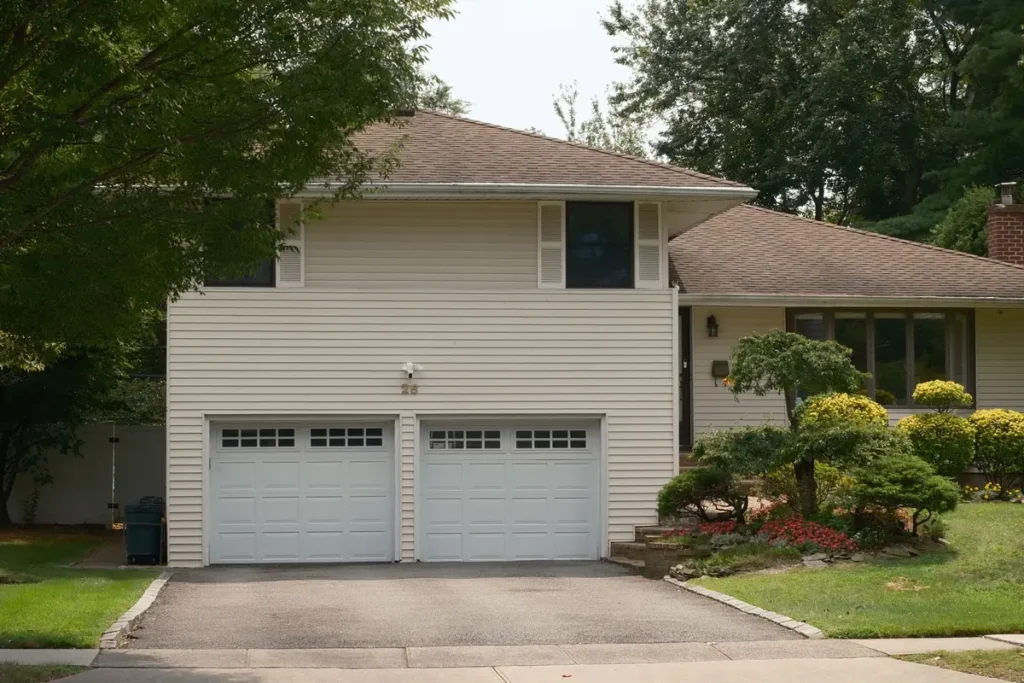
Open the garage and look at the inside of the door.
- Look for a label. Rated doors have a sticker, usually on the inside edge or end of a panel, listing the design pressure, the product approval number and the manufacturer.
- Look for horizontal reinforcement. A wind-rated door has heavy steel struts running across each section.
- Check the hardware. Rated doors have thicker tracks, more brackets fastening the track to the wall and heavier hinges and rollers.
- Consider the age. Florida strengthened its building code statewide in 2002. If the house was built before then and still has its original door, the door is probably not rated.
No label, thin panels and light hardware mean you should assume the door is a weak point.
Your three options
Replace the door
A new wind-rated or impact-rated door is the best solution. It comes as a tested system with matching tracks and hardware, it carries a product approval, and it is ready at all times with nothing to set up when a storm is coming.
Brace the existing door
Bracing kits use vertical aluminum or steel posts that anchor into the floor and the header above the door. They are far cheaper than a new door and can be effective if the kit is approved for your door. The drawbacks are that you must install the posts before each storm and you cannot use the door while they are in place.
Cover the opening
Approved fabric screens or storm panels can be fitted over the outside of the opening. Like braces, they need to be put up ahead of the storm.
For an older, lightweight door, bracing has limits. If the panels themselves are weak, replacement is the better use of money.
What a hurricane garage door costs
Price depends on the size of the door, the rating required at your address, insulation, windows and finish. As a broad guide, a wind-rated single door installed often runs from about $1,200 to $2,500, and a double door from about $2,000 to $5,000 or more, with impact-rated and custom doors at the upper end. Bracing kits generally cost a few hundred dollars per door. Get two or three written quotes and make sure each one states the design pressure and the product approval number.
Permits and installation
Replacing a garage door in Florida normally requires a building permit, and the installation is inspected. This protects you. The rating applies only when the door is installed exactly as it was tested, with the specified fasteners into sound framing. A rated door hung on the old tracks, or fastened to rotted wood, will not perform as labeled. Use a licensed contractor, and keep the permit and final inspection record.
Insurance and wind mitigation credits
Florida insurers are required to offer discounts for features that reduce wind damage, and opening protection is one of the categories on the wind mitigation inspection form. To receive the full credit, every opening in the house, including windows, entry doors, skylights and the garage door, must be protected to the same standard. One unrated garage door can prevent you from qualifying, even if you have spent thousands on impact windows.
After a new door is installed, order an updated wind mitigation inspection and send it to your insurer. Ask your agent in advance what the credit would be worth on your policy.
The salt air factor
Near the Gulf, corrosion is as much a threat as wind. Springs, cables, rollers and tracks rust quickly in homes close to the water in Gulf Breeze, Navarre, Santa Rosa Beach and Port St. Joe, and corroded hardware fails under load. Rinse the door and hardware with fresh water from time to time, lubricate moving parts with a garage door lubricant twice a year, and replace rusted springs and cables before storm season. When buying new, ask about galvanized or stainless hardware and coastal finish options.
Getting in and out when the power is off
An electric garage door opener does not work in an outage. Learn how to use the red emergency release cord so you can open the door by hand, and practice once before you need it. Many new openers include a small backup battery that will open the door a number of times without power.
For longer outages, a whole-home battery keeps the opener working along with the refrigerator, lights and other essentials, and it recharges from solar panels each day. Our new installations page explains how solar and battery backup are designed together. A Tesla Powerwall from MSM Solar is $15,000 for the first unit and $12,000 for each additional one. If you already have solar and want it checked before storm season, see our service call page.
Before a storm
- Close and lock the garage door. Engage the manual slide locks if your door has them.
- Install braces or covers early, while the weather is still calm.
- Move vehicles inside or away from trees.
- Clear the area in front of the door of anything that could become a projectile.
Frequently asked questions
Is a hurricane garage door required in Florida?
New and replacement garage doors must meet the wind-load requirement of the Florida Building Code for the home's location. Existing older doors are not required to be upgraded, but they remain a weak point.
How do I know if my garage door is hurricane rated?
Look for a label on the inside of the door showing the design pressure and Florida Product Approval number, and for heavy horizontal steel struts across each section.
Can I reinforce my existing garage door?
Yes, with an approved bracing kit suited to your door. It costs much less than replacement but has to be installed before each storm.
Does a hurricane garage door lower insurance?
It can, as part of the opening protection credit on a wind mitigation inspection. All openings in the home generally need to be protected to earn the full credit.
Conclusion
A hurricane garage door protects far more than the garage. By keeping the largest opening in the house closed, it helps keep the roof on and the rain out. Check the label on your current door, compare the cost of bracing and replacement, pull a permit and update your wind mitigation report when the work is finished.
When you are ready to add backup power so your home keeps running after the storm has passed, MSM Solar can help. Call us at (850) 737-5197 or request a free quote, and we will call you back no later than two business days.