
Short answer: Solar panels don't damage a roof when they're installed properly. The mounts are bolted into the rafters and sealed with flashing designed for your roof type, and the panels then shade and shield the roofing beneath them. Leaks and damage come from poor installation, or from putting panels on a roof that's near the end of its life.
Common myths, and what's actually true
- Myth: every bolt hole is a future leak. Each attachment is sealed with flashing (a metal or composite boot that sheds water over the hole) plus sealant. Done correctly, a flashed mount is as watertight as the roof around it.
- Myth: panels are too heavy for most roofs. A typical rooftop array adds about 3 to 4 pounds per square foot, spread across many attachment points. Most sound roofs handle that easily, and a permit review checks the structure.
- Myth: solar voids your roof warranty. It can, if the installer ignores the roofing manufacturer's requirements. Many roofing warranties stay valid when approved flashing and methods are used. Ask your roofer and installer to confirm before work starts.
- Myth: panels trap heat and age the shingles. The panels actually shade the roof and keep sun, rain and debris off the covered area.
How a proper installation protects your roof
- Roof inspection first. The installer checks the age and condition of the roofing, the decking and the framing before designing the system.
- Attachments into the rafters. Lag bolts go into the framing, not just the decking, so the array is held by the structure.
- Flashing made for your roof. Shingle, tile and metal roofs each use different mounts. Metal roofs often need no holes at all (see solar on metal roofs).
- Permitted and engineered to code. In Florida, the racking has to meet the Florida Building Code wind-load requirements for your location, and the job is inspected.
- Workmanship warranty. A good installer stands behind the roof penetrations as well as the electrical work.
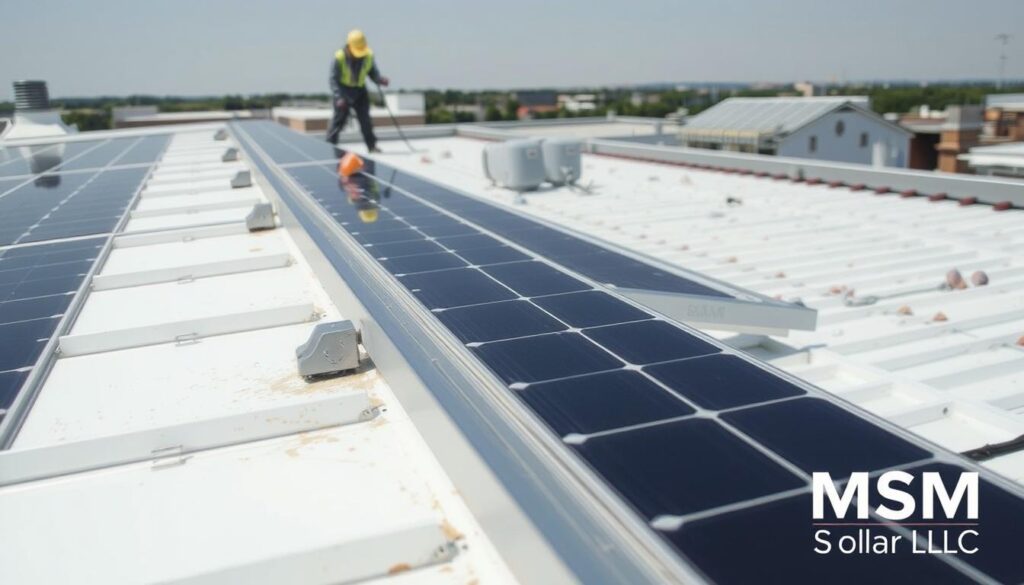
When solar can cause roof problems
- Poor installation: missed rafters, no flashing, sealant only, or the wrong mounts for the roof type.
- An old roof: if your shingles have only a few years left, the panels will need to come off when the roof is replaced, which adds cost. It's usually cheaper to reroof first.
- Unapproved changes later: someone walking on panels, or a roofer working around the array without removing it.
Should you replace your roof before going solar?
As a rule of thumb, if your roof is more than about 10 to 15 years old, or the installer finds damage, it's worth getting a roofer's opinion before installing. Panels last 25 years or more, so the roof under them should too. Asphalt shingles in Florida's sun and storms often need replacing sooner than in milder climates, while metal roofs typically outlast the panels.
If you already have solar and need a new roof, the panels can be removed, stored and reinstalled. Plan this with both your roofer and a solar company.
Signs of a roof problem around your solar panels
- Water stains on ceilings or in the attic near where the array sits
- Loose, cracked or lifted shingles around mounts
- Rust streaks or gaps around flashing
- Debris or nests building up under the panels
If you see any of these, have the array and roof inspected. Leaks at mounts are usually a straightforward repair when caught early. After a hailstorm, see what hail does to solar panels.
Frequently asked questions
Do solar panels cause roof leaks?
Not when installed properly. Leaks come from attachments that miss the rafters, skip flashing or rely on sealant alone. Flashed, properly sealed mounts are watertight.
Will installing solar void my roof warranty?
It depends on your roofing manufacturer and installer. Many warranties stay valid when approved flashing and methods are used. Confirm in writing before installation.
Is my roof strong enough for solar panels?
Most sound roofs are. Panels add about 3 to 4 pounds per square foot, and the permit and engineering review checks the structure.
Do solar panels protect your roof?
They shade and cover the roofing beneath them, which shields that area from sun, rain and debris.
What happens to my solar panels when I need a new roof?
The panels are removed, stored and reinstalled after the new roof goes on. It's usually cheaper to replace an older roof before installing solar.
Get a roof and solar assessment or call (850) 737-5197.